7 Tips for Finding a Trash Compactor Near Me?
Finding a Trash Compactor Near Me can feel simple until size, noise, power, and service options enter the decision. A nearby listing may show an attractive price, but the machine might not fit beneath your counter. Some models also require specific cabinet space, ventilation, or electrical connections.
These seven tips focus on practical checks that make local shopping more reliable. Measure the available opening with a tape measure, including height, width, and depth. Then compare the compactor’s capacity with your household’s daily waste. A small kitchen may need a compact model, while a busy family may benefit from stronger compression and a larger bin. Ask local retailers about delivery, installation, repairs, replacement parts, and warranty coverage. Those details often matter more than a polished product photograph.
Read recent customer reviews carefully. Look for comments about odors, jammed drawers, vibration, and cleaning difficulty. A professional appliance technician can also explain whether a model suits your home’s wiring and cabinet layout. Still, no guide replaces checking the actual unit. Availability changes quickly. Prices can be misleading. I have found that a low-cost option sometimes becomes expensive after delivery and installation fees. That is worth remembering.
Take a few photos of the installation area before visiting a store. Bring your measurements, waste habits, and budget. Compare at least two local suppliers, and confirm every promise in writing. A thoughtful search may take longer, but it can prevent a frustrating purchase and help you choose a dependable compactor for everyday use.
Define Your Trash Compactor Needs Before Starting the Search
7 Tips for Finding a Trash Compactor Near Me?
Define Your Trash Compactor Needs Before Starting the Search
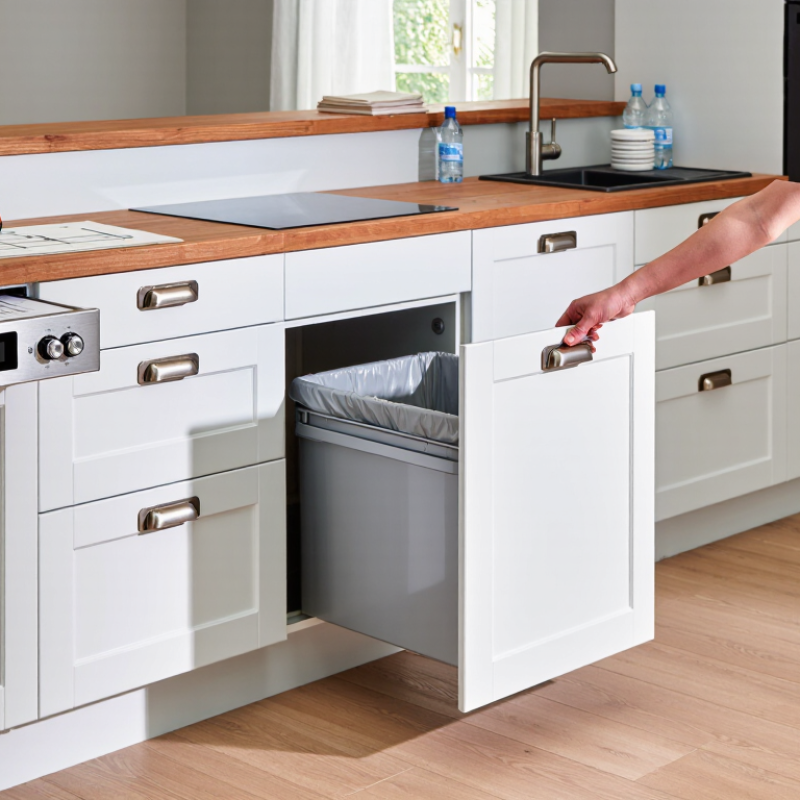
Before searching locally, measure the space where the trash compactor will stand. Record width, depth, height, and door clearance.
A kitchen unit may need a different capacity than one used in a busy workshop. Estimate your weekly waste volume, not just your household size.
I once underestimated storage needs and had to empty the container too often. My first estimate was wrong.
Decide whether you need a built-in or freestanding model. Built-in units require suitable cabinetry, ventilation space, and a nearby electrical connection.
Check the waste materials you usually handle. Food packaging, cans, and ordinary household refuse may compress differently from damp materials.
Avoid guessing about power requirements. Review the technical specifications, then ask a qualified installer to confirm the outlet and installation conditions.
Noise can matter in open-plan kitchens. Ask about operating sound levels and read reviews describing real household use.
Think about maintenance before contacting nearby suppliers. Removable containers, washable surfaces, and accessible controls can save time later.
Local waste collection rules may affect your preferred container size. Confirm accepted materials and collection limits with your municipal service.
When comparing nearby options, bring your measurements and estimated weekly volume. A salesperson can then recommend a practical capacity instead of making a vague guess.
Leave room for uncertainty. Waste habits change during holidays, renovations, or family events. A slightly larger capacity may be useful, but excessive capacity can waste space and money.
Explore Local Retailers, Dealers, and Appliance Service Providers
7 Tips for Finding a Trash Compactor Near Me?
Explore Local Retailers, Dealers, and Appliance Service Providers
Search local retailers with appliance departments, then call before visiting. Ask whether compactors are in stock, displayed, or available by order. Compare cabinet width, depth, noise ratings, and loading capacity. Measure your kitchen space carefully. Include door clearance and nearby electrical access.
Visit authorized local dealers for technical guidance and installation details. A knowledgeable salesperson should explain cycle settings, bin sizes, and ventilation requirements. Ask for written warranty terms and replacement-part availability. Check customer reviews for repeated complaints about service delays or difficult repairs. Reviews can be imperfect, but patterns matter. Request an itemized quote, including delivery, installation, old-unit removal, and possible electrical work.
Appliance service providers can help before and after purchase. Ask whether their technicians regularly repair trash compactors and carry common parts. Confirm licensing, insurance, service rates, and response times. I once measured the cabinet but forgot the hallway turn. That mistake caused a delivery delay. Recheck every route from the entrance to the installation area. Get at least two local opinions, and do not choose only by the lowest price. Reliable support may cost slightly more, but it can prevent repeated visits, damaged cabinetry, and long periods without a working unit.
7 Tips for Finding a Trash Compactor Near Me? - Explore Local Retailers, Dealers, and Appliance Service Providers
| Tip | What to Check | Useful Local Search Terms | Evidence to Request | Why It Matters |
|---|---|---|---|---|
| 1. Search by service type | Identify whether you need a new appliance, a replacement unit, installation, repair, or parts. | “Built-in trash compactor near me,” “appliance repair near me,” or “trash compactor installation.” | A written description of the services offered and whether the provider handles built-in or freestanding units. | Different local businesses may sell, install, or repair compactors, but not necessarily all three. |
| 2. Confirm local inventory | Check whether the retailer has a suitable unit available locally instead of only listing it for special order. | “Appliance showroom trash compactor,” “local appliance inventory,” or “under-counter compactor.” | Current stock status, estimated arrival date, pickup options, and return conditions. | Availability can vary by location, and special-order appliances may have longer delivery times. |
| 3. Measure the installation space | Measure the opening width, height, depth, door clearance, and nearby cabinet or wall space. | “Trash compactor dimensions,” “under-counter appliance measurements,” or “compactor installation opening.” | The product specification sheet and the provider’s confirmation that the unit fits the measured opening. | A small dimensional difference can prevent proper installation or door operation. |
| 4. Verify electrical requirements | Compare the appliance’s required voltage, circuit needs, plug configuration, and grounding requirements with the existing outlet. | “Appliance electrical inspection,” “trash compactor power requirements,” or “appliance electrician near me.” | The manufacturer’s installation instructions and, when needed, an electrician’s assessment. | Electrical requirements differ by model and must be matched to local code and the home’s wiring. |
| 5. Compare installation coverage | Ask whether delivery, removal of the old unit, cabinet adjustments, connection, testing, and cleanup are included. | “Appliance delivery and installation,” “built-in compactor replacement,” or “old appliance removal.” | An itemized installation quote showing included and excluded work. | Extra labor, disposal, electrical, or carpentry charges may apply if they are not included in the initial price. |
| 6. Check repair capability | Confirm that the service provider diagnoses compactors and stocks or sources compatible parts such as switches, drive components, and ram-related parts. | “Trash compactor repair,” “appliance parts supplier,” or “compactor service technician.” | Service area, diagnostic fee, estimated response time, parts warranty, and labor warranty. | Some appliance technicians service only selected appliance categories or may need to order parts. |
| 7. Review total cost and policies | Compare the purchase price, delivery, installation, taxes, disposal, repair, warranty, and return terms. | “Local appliance quote,” “trash compactor warranty service,” or “appliance disposal near me.” | A dated written quote, warranty terms, return window, cancellation policy, and disposal fee. | The lowest advertised price may not be the lowest total cost after services and policy restrictions are added. |
Compare Compactor Types, Features, Prices, and Available Locations
Finding a trash compactor near me starts with the right type. An under-counter model suits a small kitchen and hides behind a cabinet door. Freestanding units offer easier installation and more flexible placement. Commercial compactors handle larger volumes but require stronger floors and careful clearance checks. Choose the type that matches your daily waste, not your ideal future needs.
Compare key features before visiting a local seller. Check capacity, cycle time, noise level, odor control, and safety locks. Look for removable bins and washable surfaces. Measure the doorway, outlet, and installation space. Small details matter. I once ignored door clearance and had to rearrange an entire utility area. Prices vary widely, but residential models often cost about $700 to $2,000. Commercial equipment may cost several thousand dollars, excluding delivery and installation. Ask about warranties, service response times, replacement parts, and energy use.
Search appliance stores, equipment dealers, rental companies, and local resale listings. Confirm whether each location has the unit in stock, not merely listed online. Request a written quote with delivery, setup, taxes, and removal fees. Compare at least three offers. Read recent customer feedback, but treat extreme reviews carefully. A nearby supplier may provide faster repairs, while a distant seller could offer a lower purchase price. Availability can change weekly. Call before driving across town.
Verify Product Condition, Warranty Coverage, Delivery, and Installation
When searching for a trash compactor near me, inspect its condition before discussing price. Ask whether it is new, refurbished, or previously installed. Open the drawer and check the ram, tracks, seals, and control panel. Small dents may be cosmetic, but bent rails can cause expensive problems. Request clear photos of the interior, power cord, and rear panel. If possible, run a complete cycle and listen for grinding or unusual vibration. Test the safety switch too. I once overlooked a worn gasket because the exterior looked nearly perfect.
Warranty details require careful reading. Confirm what parts are covered, how long protection lasts, and whether labor or service visits cost extra. Ask who handles repairs and how quickly claims are usually processed. Get these answers in writing. Verbal promises fade quickly. A reliable seller should provide an invoice, model information, and warranty terms that match the actual unit. Check whether refurbished equipment has separate coverage.
Delivery and installation can create unexpected costs. Measure the doorway, hallway, cabinet opening, and available depth. Include trim, hinges, and ventilation space. Tell the delivery team about stairs, narrow turns, or parking limits. Confirm whether they connect the unit, level it, test it, and remove packaging. Some services exclude old-unit removal or electrical changes. Ask about those charges before scheduling. I should have measured the stair landing earlier; assumptions are risky. Leave enough time for a final inspection after installation.
Evaluate Reviews and Choose the Best Nearby Trash Compactor Option
When searching for a trash compactor near me, I treat reviews as evidence, not decoration. BrightLocal’s 2024 Local Consumer Review Survey reports that 91% of consumers read online reviews for local businesses. I check several platforms, not one perfect-looking page. Recent comments matter most. A review from last month may reveal delayed delivery, poor installation, or slow service.
Look for details about noise, odor control, drawer movement, and actual capacity. “Works great” tells me very little. A useful review may mention a compacting cycle at night, a 15-inch cabinet opening, or a technician arriving within two days. The Spiegel Research Center found that purchase likelihood rises sharply when products have reviews, while extremely perfect ratings can seem less trustworthy. That feels practical. Five stars alone are not enough.
I also compare negative comments with the seller’s replies. Do they explain the repair process? Do they offer clear warranty terms? Local service distance matters, especially for a heavy appliance that cannot easily be returned. Ask whether installation, haul-away, and replacement parts are available nearby. One overlooked detail: measure the cabinet and doorway before choosing. I have seen attractive options fail at that step. Reviews can still be wrong, incomplete, or outdated. Check the review date, reviewer history, and matching model details before spending.
7 Tips for Finding a Trash Compactor Near Me
Use this 100-point evaluation framework to compare nearby trash compactors without relying on brand names. Prioritize review quality, local convenience, performance, and ownership costs.
How to Use the Chart
Check several local options, read recent customer reviews, confirm availability, and score each option against these criteria. A higher total score indicates a better overall fit for your needs and location.
Related Posts
-
What Are the Top Waste Compactor Types in 2026?
-
How to Choose the Right Garbage Compactors for Your Home Needs?
-
How to Choose the Right Industrial Compactor
-
The Ultimate Resource for Global Buyers on Automatic Trash Compactor Innovations
-
2026 Top Waste Machinery Types for Global Buyers?
-

Setting the Benchmark for In Home Trash Compactors in Global Manufacturing Standards