2026 Top Waste Machinery Types for Global Buyers?
Choosing the right Waste Machinery in 2026 starts with understanding the material, not the machine catalog. A recycling plant handling clean cardboard has different needs from a municipal site processing mixed household waste. Moisture, contamination, daily tonnage, and available floor space all affect equipment choice. A small detail matters: a few wet loads can slow a sorting line and increase maintenance demands.
This guide explores major machinery types global buyers may consider, including shredders, balers, sorting systems, composting equipment, and waste-to-energy solutions. Each has a distinct role. Shredders reduce material size; balers create compact, easier-to-store bundles. Optical sorters can identify selected materials, but their performance depends on feed quality and setup. There is no universal best choice.
Look beyond the purchase price. Check rated capacity, power use, wear-part availability, operator training, and after-sales support. Ask suppliers for test results using material similar to yours, and verify what those figures measure. A quoted throughput may not reflect real operating conditions. That deserves a second look.
Buyers should also assess site requirements and applicable environmental and safety standards in their operating region. Equipment specifications and service networks vary between markets, so confirm details directly with manufacturers and qualified local advisers. The right shortlist depends on your waste stream, budget, and operating goals. Mistakes happen. Careful comparison can make them less costly.
Global Waste Growth: 2.01 Billion Tonnes of MSW and 2026 Equipment Demand
2026 Top Waste Machinery Types for Global Buyers
Global municipal solid waste is widely estimated at about 2.01 billion tonnes annually. That figure is not just a statistic. It means collection trucks arrive with mixed bags, wet food scraps, cardboard, glass, and occasional bulky items. The scale is physical. Moisture changes everything.
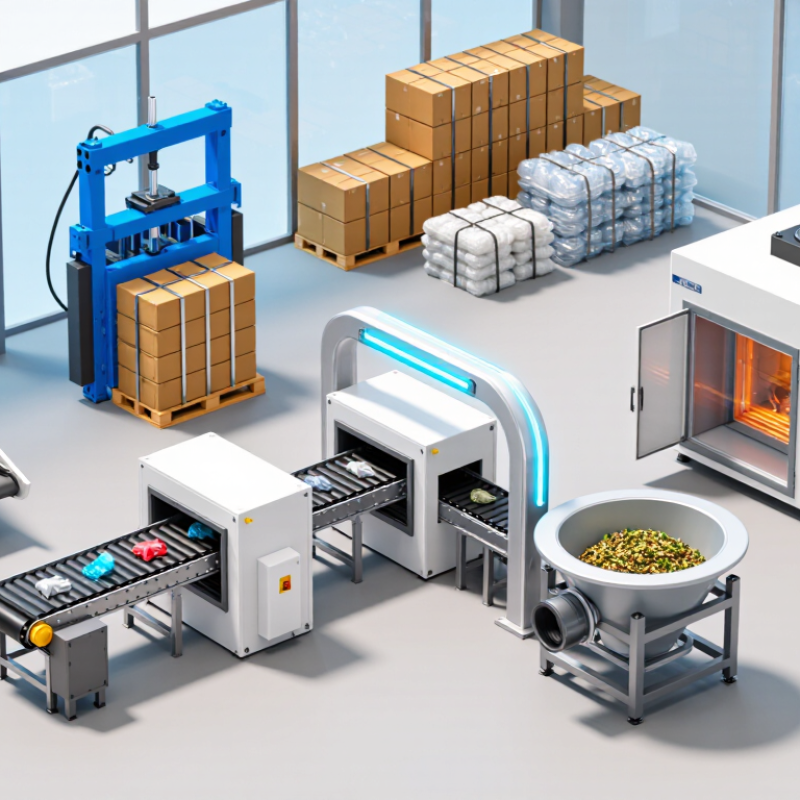
For 2026 procurement, buyers should match machinery to local waste conditions, not catalog photographs. Compactors remain essential where transport distance is high. Trommel screens help separate organic fines from larger materials. Shredders reduce bulky waste, but their cutting systems need protection from hidden metal. Sorting lines with magnets, eddy-current separators, and optical units can improve recovery when feed quality is stable. Organic waste may require dedicated conveyors, dewatering equipment, or composting systems.
In project assessments, I look closely at hourly throughput, power demand, spare parts, cleaning access, and operator training. A machine rated for 30 tonnes per hour may perform far below that figure with wet, tangled waste. Real conditions are messier. Buyers should request test data using representative local samples, not ideal materials. Dust control and emergency stops also deserve early attention. A lower purchase price can become expensive after repeated blockages, worn blades, or delayed maintenance. There is no perfect equipment list. Some facilities may still over-mechanize before improving collection and manual inspection. That uncomfortable point deserves review.
Sorting Machinery: MRFs and Optical Sorters Amid 62 Million Tonnes of E-Waste
2026 Top Waste Machinery Types for Global Buyers?
Sorting machinery will remain central to waste facility upgrades in 2026. The Global E-waste Monitor 2024 reported 62 million tonnes of e-waste generated worldwide in 2022. Only 22.3% entered documented formal collection and recycling systems. The volume could reach 82 million tonnes by 2030. MRFs can separate mixed municipal waste before materials move to specialized recovery lines. Optical sorters then identify plastics, paper, metals, and small electronic components using cameras, sensors, and controlled air jets.
Real-world performance depends on more than machine speed. Dust, moisture, tangled cables, and crushed devices can confuse sensors. A clean conveyor is not always a productive one. Operators should examine detection accuracy, maintenance access, spare-part availability, and data reporting. The International Solid Waste Association has repeatedly emphasized better collection, traceability, and resource recovery across waste systems. Still, published recovery rates may not match daily plant conditions. That gap deserves honest evaluation.
Tips: Request test results using your own waste samples. Check performance during peak conveyor loads. Leave space for manual quality checks. Review energy use per tonne, not only hourly capacity. Optical sorting can improve purity, but it cannot replace trained operators or reliable collection systems.
Size-Reduction Equipment: Shredders and Crushers for Diverse Waste Streams
2026 Top Waste Machinery Types for Global Buyers
Waste volumes are rising faster than many processing plans. The World Bank’s What a Waste 2.0 report projects municipal waste from 2.01 billion tonnes in 2016 to 3.40 billion tonnes by 2050. UNEP’s Global Waste Management Outlook 2024 estimates 2.3 billion tonnes were generated in 2023. Size-reduction equipment will remain essential.
Shredders suit bulky and mixed waste streams. Twin-shaft models handle irregular feedstock with high starting torque. Single-shaft machines can produce more controlled particle sizes with a screen. Crushers are better for mineral-heavy construction waste, concrete, bricks, and selected glass streams. Moisture, abrasiveness, and contamination can change performance dramatically. A neat specification sheet can still mislead. Trial testing with real local waste is wiser than relying on brochure capacity.
Tips: Check the feed opening, cutter material, screen access, dust control, and emergency stops. Ask for measured throughput, not theoretical ratings. Confirm spare-part availability and operator training before purchase. The Global E-waste Monitor 2024 recorded 62 million tonnes of e-waste in 2022, yet electronic streams need careful pre-sorting. One machine rarely fits every fraction. That assumption deserves challenge.
Biological Treatment: Composters and Digesters for Organic Waste Recovery
2026 Top Waste Machinery Types for Global Buyers?
Biological Treatment: Composters and Digesters for Organic Waste Recovery
Organic waste recovery machinery is becoming a practical priority for global buyers in 2026. Composters turn food scraps, yard trimmings, and agricultural residues into soil amendment. Digesters process wet organics in oxygen-free tanks and produce biogas plus nutrient-rich digestate. The right choice depends on moisture, contamination, daily volume, climate, and local handling capacity. A small hotel may need a compact in-vessel composter, while a food-processing site may require a sealed digester with gas controls.
Good purchasing decisions begin with measurable operating data. Buyers should request throughput ranges, retention time, energy demand, noise levels, cleaning procedures, and maintenance access. A reliable composter needs controlled airflow, temperature monitoring, and moisture adjustment. Digesters need stable feeding, pressure protection, leak detection, and safe gas management. Operators should inspect magnets, screens, pumps, seals, and sensors regularly. Small failures become expensive quickly.
Real sites rarely match laboratory assumptions. Not always. Plastic film may arrive with kitchen waste. Seasonal feedstock can change moisture and acidity. Staff training also affects results. A machine that looks efficient on paper may underperform without spare parts and local technicians. Pilot testing is worth the cost. Track odor, output quality, downtime, and electricity use for several weeks. The data may challenge the original purchase plan.
Thermal and Landfill Equipment as Waste Could Reach 3.4 Billion Tonnes by 2050
Forecasts suggest global waste could reach 3.4 billion tonnes annually by 2050, though estimates depend on population and consumption trends. The scale is sobering. Cities and industrial operators need equipment plans that match local waste composition, collection capacity, and available space. A forecast is not a guarantee; it is a reason to prepare carefully.
Thermal systems can reduce waste volume and produce usable energy when the incoming material and facility design are suitable. Feed conveyors, combustion controls, flue-gas treatment, and ash handling all affect reliable operation. Landfill equipment serves a different role: compactors and dozers shape cells, while pumps support leachate management. Neither option works well without trained operators, maintenance schedules, and careful site assessment. Even experienced teams can misjudge changing waste streams.
Tips: Check the waste mix before choosing machinery. Ask suppliers for documented capacity figures, maintenance needs, and operating conditions. Compare these with site records, not just ideal specifications. Small details matter. Leave room for uncertainty; actual results may differ from projections.
| Machinery type | Main waste stream | What it does | Key buyer considerations | Useful performance or design data |
|---|---|---|---|---|
| Moving-grate waste-to-energy incinerator | Residual municipal solid waste (MSW) | Combusts mixed residual waste and can recover energy as heat and electricity. | Check waste composition and heating value, emissions-control systems, ash handling, energy-use plan, permitting, and continuous emissions monitoring requirements. | Designed for residual waste after prevention, reuse, and recycling options have been considered. Bottom ash and air-pollution-control residues require separate management. |
| Rotary-kiln thermal treatment system | Selected hazardous, medical, and industrial wastes | Rotates waste through a heated chamber; systems commonly include a secondary combustion chamber and flue-gas treatment. | Confirm permitted waste types, feed preparation, temperature and residence-time controls, emissions treatment, residue testing, and local regulatory approval. | Suitable waste and operating conditions are facility-specific; hazardous-waste treatment requires controls appropriate to the waste’s chemical and physical properties. |
| Landfill compactor | Waste placed in engineered landfills | Compacts and spreads waste to support efficient use of landfill airspace and stable working surfaces. | Assess machine operating weight, traction, blade design, site gradients, daily operating hours, maintenance access, and compatibility with the landfill’s operating plan. | Compaction performance depends on waste composition, moisture, layer thickness, and operating practice; compare tested site results rather than relying on a single universal density figure. |
| Landfill-gas collection and flaring system | Biodegradable waste decomposing in landfills | Collects landfill gas through wells and pipework; a flare combusts collected gas when it is not used for energy. | Review gas-well layout, condensate management, blowers, flare capacity, gas monitoring, uptime, and applicable methane-control rules. | Landfill gas commonly contains methane and carbon dioxide, with proportions varying by site, age, and operating conditions. Gas testing is needed for system design. |
| Landfill-gas engine-generator | Collected landfill gas with suitable quality and flow | Uses cleaned landfill gas in an engine-generator to produce electricity; recovered heat may also be usable. | Check gas flow and quality, treatment requirements, engine availability, grid connection, emissions permits, maintenance needs, and the plan for gas when the engine is offline. | Power output is site-dependent and should be based on measured gas flow and composition, not landfill capacity alone. |
| Leachate treatment plant | Liquid collected from landfill drainage systems | Treats leachate using a process train selected for its pollutant profile and the required discharge or reuse standard. | Obtain seasonal flow and laboratory data; evaluate pretreatment, biological or membrane processes, concentrate management, residuals disposal, and discharge permits. | Leachate composition varies with waste, landfill age, rainfall, and site operation; representative sampling is essential before equipment selection. |
| Material-recovery and sorting line | Separately collected recyclables or suitable mixed waste | Uses equipment such as screens, magnets, eddy-current separators, and optical sorters to separate material fractions. | Match the line to incoming material, contamination levels, target products, required product quality, building layout, and downstream buyers. | Magnets recover ferrous metals; eddy-current separators can recover non-ferrous metals; optical sorting depends on material presentation and sensor configuration. |
| Recyclables baler | Separated paper, cardboard, plastics, or other recoverable materials | Compresses material into bales for storage and transport. | Specify material type, feed method, bale dimensions and mass, throughput under actual operating conditions, safety interlocks, and service support. | Bale density and quality depend on material, moisture, machine settings, and handling requirements of the receiving recycler. |
Context: The World Bank’s What a Waste 2.0 report estimated global MSW generation at 2.01 billion tonnes in 2016 and projected 3.40 billion tonnes by 2050. This projection refers to municipal solid waste, not all waste generated worldwide.
Sources: World Bank, What a Waste 2.0; U.S. EPA, Basic Information about Landfill Gas. Equipment suitability, capacity, and regulatory requirements vary by site and jurisdiction.
Related Posts
-
Navigating Waste Management: Your Ultimate Guide to Waste Compactors for Efficient Solutions
-
Essential Checklist for Choosing the Right At Home Trash Compactor for Your Waste Management Needs
-
How to Choose the Right Garbage Compactors for Your Home Needs?
-
What Are the Top Waste Compactor Types in 2026?
-
The Ultimate Guide to Choosing the Right In Home Trash Compactor for Your Needs
-

Eco Friendly Waste Solutions for Your Home without Using Trash Compactors