Top 10 Aluminum Can Compactors for Global Buyers?
Choosing the right Aluminum Can Compactor is becoming a practical priority for global buyers managing rising packaging waste and transport costs. The International Aluminium Institute reports that recycled aluminium requires about 95% less energy than primary aluminium production. That advantage matters. However, efficient recycling depends on clean collection, reliable sorting, and stable downstream markets.
Industry data also shows why compaction deserves closer attention. The U.S. Environmental Protection Agency identifies aluminium cans as a valuable recyclable material, while the Aluminum Association reports that aluminium cans can return to store shelves within roughly 60 days when recycling systems work effectively. A compactor can reduce loose-can volume, improve storage discipline, and lower the number of collection trips. It cannot fix contaminated material.
This guide reviews ten Aluminum Can Compactor options for international buyers. The comparison considers pressing force, chamber capacity, cycle speed, safety guarding, power requirements, noise, maintenance access, and verified throughput. These details become very physical on a busy floor: a full 240-liter bin, wet cans underfoot, and a small loading door can expose weak design quickly. Buyer experience matters here, but it is not enough. Manufacturer specifications should be checked against independent testing, warranty terms, spare-parts availability, and local service support.
Some performance claims remain difficult to compare. Reported capacity may reflect ideal, dry cans rather than real mixed loads. That gap deserves attention. Prices, voltage standards, certification requirements, and recycling infrastructure also vary across regions. The best machine is not automatically the strongest one; it is the model that fits the buyer’s material stream, workforce, facility, and long-term operating reality.
What Is an Aluminum Can Compactor and How Does It Work?
What Is an Aluminum Can Compactor and How Does It Work?
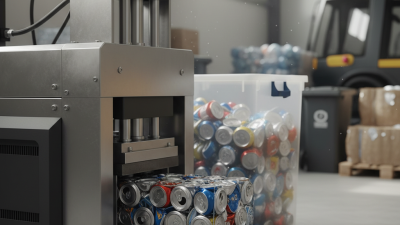
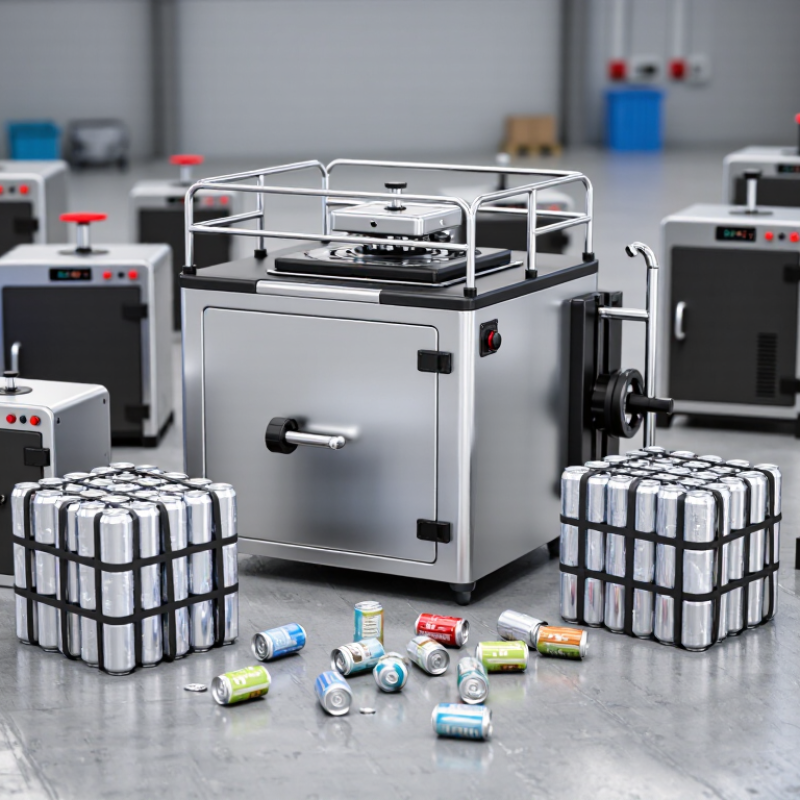
An aluminum can compactor reduces empty cans into denser blocks or flattened pieces. It uses mechanical pressure from a lever, pneumatic cylinder, or hydraulic ram. The chamber holds the can, while the pressing plate moves downward. This action removes most air between cans and lowers storage volume. However, compaction does not increase the aluminum’s material value by itself. Sorting and cleanliness still matter.
The International Aluminium Institute reports that recycling aluminum requires about 95% less energy than producing primary aluminum. A compactor can support this system by reducing collection volume and transport frequency. In a busy cafeteria, hundreds of cans may fill several bags each day. After pressing, the same material may fit into one stronger container. Results vary, though. Thin cans may spring back, and wet containers can create handling problems. This is one area where equipment claims need careful checking.
Tips: Select a chamber that matches daily can volume. Keep cans free from food residue when possible. Check the ram, guards, and emergency stop regularly. The U.S. EPA’s Sustainable Materials Management guidance also supports measuring material weight, contamination, and transport activity. Buyers should record these figures before and after installation. A smaller machine may be better for a low-volume site. Bigger is not always better.
Key Factors for Comparing Aluminum Can Compactors Worldwide
Top 10 Aluminum Can Compactors for Global Buyers?
Comparing aluminum can compactors requires more than checking advertised capacity.
Start with verified throughput in kilograms per hour, chamber volume, compaction force, and bale density. A machine handling 300 kilograms hourly may perform differently with crushed cans, wet cans, or mixed packaging. Ask for test conditions. Otherwise, the number means little.
Energy use also matters.
The International Aluminium Institute reports that recycling aluminum requires about
95% less energy
than producing primary aluminum. Efficient compaction can reduce storage space, transport frequency, and handling labor. Compare motor power, duty cycle, standby consumption, and average energy per compacted kilogram. A lower-powered machine is not automatically cheaper if it overheats during peak shifts.
It happens.
Global buyers should examine voltage compatibility, guarding, emergency stops, noise levels, and maintenance access.
Safety documentation must match the destination market, while electrical certification should be independently verified. Request service intervals, spare-parts availability, warranty terms, and remote-support response times. UNEP’s Global Resources Outlook 2024 emphasizes resource efficiency across production systems, but compactors still need practical measurement.
Record bale density, cycle time, rejected loads, and operator waiting time for at least one working week.
One overlooked issue remains:
a compact, dense bale may increase transport efficiency, yet it can become difficult to move without suitable pallets or lifting equipment.
Top 10 Aluminum Can Compactors for Global Buyers
Top 10 Aluminum Can Compactors for Global Buyers
The best aluminum can compactor depends on volume, space, power supply, and operator safety. Global buyers should compare crushing force, chamber size, cycle time, and maintenance access. A compact vertical unit may suit a café with one 240-liter collection bin. A horizontal machine fits larger recycling stations with steady daily input.
The International Aluminium Institute reports that nearly 75% of aluminum ever produced remains in use. This supports long-term demand for efficient recovery equipment. European Aluminium reported a 76% beverage-can recycling rate in Europe in 2021. However, loose cans still occupy valuable storage space before collection. A controlled trial with 1,000 cans can reveal the real compaction ratio, noise level, and cycle speed.
Safety details matter. Look for guarded chambers, emergency stops, interlocked doors, and clear operating instructions. Electrical ratings must match the destination country. Hydraulic models often deliver strong compression, while electric screw systems may simplify routine servicing. Rated force alone can mislead buyers. Can thickness, moisture, and loading habits change performance. I would request a witnessed test using local cans before purchasing. The U.S. Environmental Protection Agency recorded a 45.2% aluminum-can recycling rate in its 2018 Facts and Figures report. Better compaction cannot solve poor collection systems, but it can reduce transport volume and handling time. Some product comparisons still overlook spare-part availability. That omission can become expensive.
Top 10 Aluminum Can Compactors for Global Buyers
| Rank |
Compactor Type |
Recommended Application |
Drive System |
Rated Force |
Input Opening |
Typical Cycle |
Approx. Throughput |
Power Supply |
Bale or Output Size |
Estimated Machine Weight |
Best Buyer Priority |
| 1 |
Automatic horizontal can baler |
Large recycling centers and material recovery facilities |
Hydraulic |
800–1,200 kN |
1,000 × 600 mm |
45–75 seconds |
1,500–3,000 kg/h |
380–415 V, three-phase |
1,100 × 750 × 800 mm bale |
3,500–6,000 kg |
Maximum throughput |
| 2 |
Semi-automatic vertical can baler |
Medium recycling businesses and transfer stations |
Hydraulic |
300–600 kN |
900 × 500 mm |
35–60 seconds |
500–1,200 kg/h |
380–415 V, three-phase |
1,100 × 700 × 700 mm bale |
1,200–2,500 kg |
Balanced capacity and cost |
| 3 |
Medium-duty vertical can compactor |
Supermarkets, hotels, and beverage distributors |
Hydraulic |
150–300 kN |
700 × 450 mm |
25–45 seconds |
250–700 kg/h |
220–240 V or 380–415 V |
800 × 600 × 600 mm bale |
650–1,200 kg |
Space efficiency |
| 4 |
Pneumatic can compactor |
Workshops, canning lines, and light industrial sites |
Compressed air |
30–80 kN |
300 × 250 mm |
8–20 seconds |
100–300 kg/h |
6–8 bar compressed air |
Loose compacted charge |
80–250 kg |
Low electrical demand |
| 5 |
Automatic can crusher with conveyor feed |
High-volume beverage packaging operations |
Electric-hydraulic |
100–250 kN |
600 × 400 mm |
6–15 seconds |
400–1,000 kg/h |
380–415 V, three-phase |
Flattened cans, 50–150 mm |
700–1,500 kg |
Continuous feeding |
| 6 |
Manual-feed hydraulic can crusher |
Small recyclers, workshops, and retail backrooms |
Hydraulic |
50–150 kN |
400 × 300 mm |
15–30 seconds |
80–250 kg/h |
220–240 V or 380–415 V |
Flattened cans, 40–120 mm |
250–700 kg |
Simple operation |
| 7 |
Under-counter can compactor |
Restaurants, bars, offices, and hospitality venues |
Electromechanical |
10–30 kN |
250 × 200 mm |
5–12 seconds |
50–150 kg/h |
220–240 V or 110–120 V |
Flattened cans, 30–80 mm |
60–180 kg |
Small footprint |
| 8 |
Mobile can crusher with collection bin |
Events, campuses, warehouses, and temporary sites |
Electric-hydraulic |
20–60 kN |
300 × 250 mm |
8–18 seconds |
80–220 kg/h |
220–240 V or 110–120 V |
60–120 L collection bin |
100–300 kg |
Mobility |
| 9 |
Multi-can vertical crusher |
Community recycling points and small collection depots |
Pneumatic or hydraulic |
25–75 kN |
450 × 350 mm |
10–25 seconds |
100–300 kg/h |
6–8 bar air or 220–240 V |
Compacted loose cans |
120–350 kg |
Multiple-can loading |
| 10 |
Compact manual lever crusher |
Low-volume users, schools, and small offices |
Manual mechanical |
1–5 kN |
150 × 120 mm |
3–8 seconds |
20–80 kg/h |
No electricity required |
Flattened individual cans |
5–25 kg |
Lowest purchase cost |
Note: Specifications are representative market ranges for aluminum-can compactors and crushers. Actual capacity, cycle time, dimensions, power requirements, and safety features vary according to the machine configuration, can size, material condition, and local electrical standards. Buyers should confirm final technical details before ordering.
How to Match Compactor Types With Different Recycling Needs
Top 10 Aluminum Can Compactors for Global Buyers: Matching Compactor Types With Different Recycling Needs
Global buyers should match a compactor to material flow, available space, and operator habits. The right machine is not always the largest one. The U.S. Environmental Protection Agency’s Facts and Figures 2018 report recorded a 45.2% recycling rate for aluminum beverage cans. The International Aluminium Institute reports that recycling aluminum can use about 95% less energy than producing primary aluminum. These figures make efficient collection and densification commercially important.
For small hotels, offices, and retail sites, a vertical compactor usually fits narrow storage areas. It suits steady, moderate volumes and simpler loading routines. High-volume sorting facilities may need a horizontal compactor with automatic feeding and continuous operation. A briquetting system can be more suitable when clean, dry cans require dense, transport-ready blocks. Mixed or wet material needs stronger corrosion protection and easier cleaning access. It is less forgiving.
Buyers should check throughput, chamber dimensions, power supply, noise levels, and bale density. Ask suppliers for test results using your actual can sizes and contamination levels. Safety interlocks and guarded loading zones deserve equal attention. An operator may value quick unloading more than maximum compression. Real installations rarely behave perfectly. A lower-capacity machine can sometimes outperform a larger unit when maintenance access is poor. EPA data provides useful benchmarks, but local waste composition still decides the practical choice.
Top 10 Aluminum Can Compactors for Global Buyers
How to Match Compactor Types With Different Recycling Needs
The chart compares generic compactor profiles by indicative aluminum-can throughput and typical volume reduction.
Higher-throughput systems are better suited to distribution centers and recycling facilities, while compact manual
and pneumatic units are more practical for restaurants, offices, schools, and small retail sites. Values are
planning benchmarks for equipment-class comparison rather than specifications for a particular brand or company.