How to Choose a Home Waste Compactor for Global Buyers
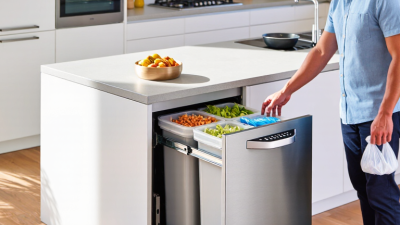
Choosing a Home Waste Compactor requires more than comparing motor power, bin size, and price. It requires understanding household habits, local collection systems, noise limits, and available space. A narrow kitchen may need a compact under-counter model, while a busy family may value a larger chamber and odor-control features. Small details matter.
The World Bank’s What a Waste 2.0 report estimated that the world generated 2.01 billion tonnes of municipal solid waste in 2016. It projects this figure could reach 3.40 billion tonnes by 2050 without stronger prevention and recovery systems. The U.S. Environmental Protection Agency reported 292.4 million tons of municipal solid waste in 2018, or about 4.9 pounds per person daily. These figures show why household compaction can improve storage efficiency. However, it does not reduce waste at its source. That distinction is often overlooked.
Annie Leonard, a widely recognized waste-management advocate and former Greenpeace USA executive director, stated, “There is no such thing as away.” Her warning is important for global buyers. A Home Waste Compactor should support responsible sorting, not replace recycling or safe disposal practices. Buyers should check energy consumption, compression ratio, washable surfaces, warranty coverage, and service availability. Regional voltage compatibility also deserves attention. It sounds basic, but mistakes happen.
The right model depends on real use. Not marketing claims alone. A reliable buying decision balances convenience, hygiene, durability, and environmental responsibility.ikwembu
Define Your Household Waste Volume and Disposal Needs
How to Choose a Home Waste Compactor for Global Buyers
Define Your Household Waste Volume and Disposal Needs
A reliable choice starts with measurement, not appearance. For seven days, record every household waste bag your family produces. Note the number of people, cooking habits, deliveries, and cleaning routines. A home with two residents may create more waste than a family of four during renovation or holidays.
Measure each bag before disposal. Record its approximate weight and volume, including loose packaging and food containers. Keep wet food waste separate from dry materials when local collection rules require it. This detail matters. Moist waste can increase odors, sticking, and cleaning work inside the compactor.
I counted bags but ignored how tightly they were filled. That mistake could lead to choosing a unit that is too small. A better method is to compare weekly volume with the compactor’s practical capacity, not its advertised maximum. Leave room for uneven loading and avoid operating the unit at full capacity every time.
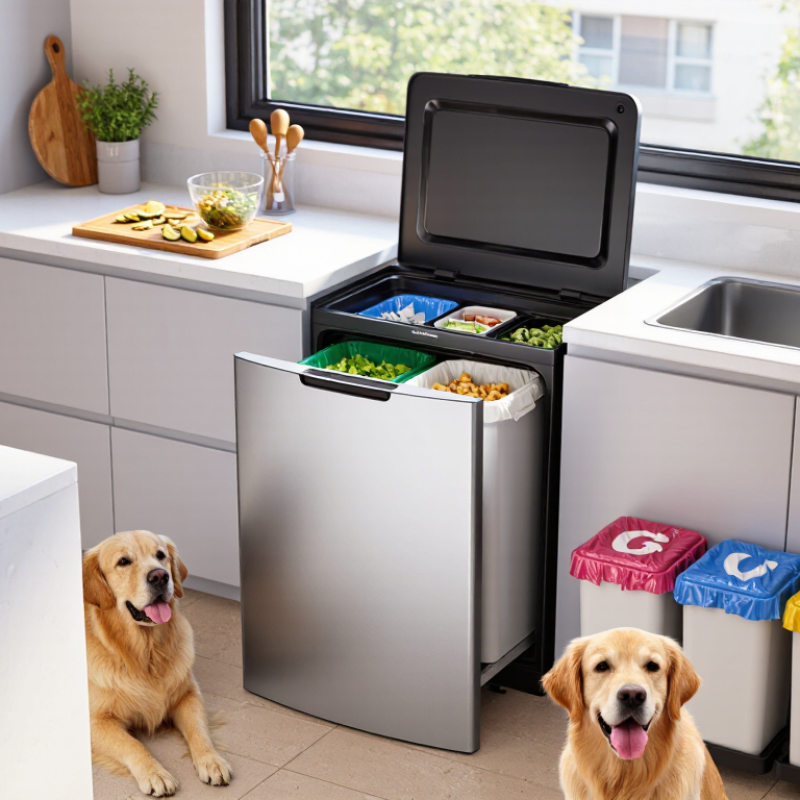
Check where the machine will stand. Measure the available width, depth, and door clearance. A compact kitchen model may suit light daily waste, while a larger household needs more frequent compression or greater storage capacity. Consider noise near bedrooms, access to electrical power, and the time required for cleaning.
Do not place batteries, chemicals, pressurized containers, or other restricted materials inside the compactor. Disposal requirements differ by country and municipality. Confirm local collection guidance before buying, especially for food waste, recyclable packaging, and sanitary products. A practical choice should match real household behavior, not an ideal routine.
Compare Compactor Types, Sizes, and Installation Methods
How to Choose a Home Waste Compactor for Global Buyers
A home waste compactor should match waste volume, room layout, and local collection habits. The World Bank’s What a Waste 2.0 report estimates global waste could reach 3.40 billion tonnes annually by 2050. Space efficiency matters.
Vertical compactors suit kitchens with limited floor area. They usually compress bags inside a narrow cabinet. Horizontal units need more clearance but can accept larger loads. A 15–20 litre chamber may suit one or two residents. Larger households may need 30–50 litres, especially where collections occur weekly. Do not size by chamber volume alone. Wet waste can become heavy quickly.
Consider three installation methods: freestanding, under-counter, and built-in. Freestanding models simplify replacement and ventilation checks. Under-counter units require accurate cabinet measurements, door clearance, and a nearby power outlet. Built-in systems look cleaner, but installation errors can trap heat or obstruct servicing. Measure twice.
The U.S. Environmental Protection Agency reported 292.4 million tons of municipal solid waste generated in 2018. Food waste represented about 24 percent of that total. This supports choosing corrosion-resistant internal parts when damp waste is common. However, compacting food scraps can create odors if cleaning is irregular. That is the weak point many buyers overlook. A smaller unit emptied often may perform better than a larger, neglected one. Check noise ratings, safety interlocks, bag availability, and service access before purchase.
How to Choose a Home Waste Compactor for Global Buyers - Compare Compactor Types, Sizes, and Installation Methods
| Compactor Type | Typical Capacity | Typical External Size (W × H × D) |
Installation Method | Typical Electrical Requirements | Compaction Performance | Best Use Case | Key Advantages | Important Limitations |
|---|---|---|---|---|---|---|---|---|
| Freestanding Portable home compactor |
Approximately 30–50 L usable container volume | About 380–460 × 800–950 × 500–650 mm | Place on a level floor near a suitable electrical outlet; no cabinet modification normally required | Usually a dedicated household circuit; voltage and frequency must match the destination country | Commonly reduces the volume of suitable household waste by about 3:1 to 5:1, depending on material | Utility rooms, garages, kitchens with available floor space, and rental properties |
|
|
| Under-Counter Built-in kitchen compactor |
Approximately 30–45 L usable container volume | About 380–460 × 820–880 × 550–650 mm | Installed below a standard-height countertop; cabinet opening, ventilation clearance, and anchoring may be required | Often designed for a fixed supply connection or dedicated outlet; confirm local wiring rules before installation | Typically 3:1 to 5:1 volume reduction for compressible dry household waste | Kitchen renovations, permanent residences, and space-efficient layouts |
|
|
| Drawer-Style Integrated drawer compactor |
Approximately 20–40 L usable container volume | About 300–450 × 700–900 × 550–650 mm | Mounted inside or beneath cabinetry; requires compatible drawer dimensions, structural support, and service access | Country-specific household voltage; a protected and correctly grounded supply is required | Usually provides moderate compaction for packaging, cans, and general dry waste | Compact kitchens, accessible loading designs, and projects prioritizing cabinet integration |
|
|
| Heavy-Duty Residential High-force household compactor |
Approximately 40–60 L usable container volume | About 400–500 × 850–1,000 × 600–700 mm | Freestanding or reinforced built-in installation; verify floor strength, clearances, and anchoring requirements | May require a higher-rated dedicated circuit than compact household units | Often reaches approximately 4:1 to 6:1 reduction for suitable dry waste, although results vary by material | Large households, holiday homes, properties with limited collection frequency, and high packaging volumes |
|
|
| Low-Profile Compact-space compactor |
Approximately 20–35 L usable container volume | About 300–400 × 650–800 × 500–600 mm | Freestanding or installed in a shortened cabinet opening, subject to the manufacturer’s clearance requirements | Usually suited to standard residential electrical systems in the target market | Generally about 2:1 to 4:1 volume reduction for compressible household waste | Small apartments, compact kitchens, boats, studios, and secondary residences |
|
|
Evaluate Power, Noise, Safety, and Odor-Control Features
When choosing a home waste compactor, check power beyond the motor label. A 500-watt unit may perform poorly with wet, dense waste. Compare compaction force, cycle time, and duty rating instead. Global buyers must also match voltage and frequency requirements. An electrician should verify compatibility before installation. My first buying mistake was trusting wattage alone.
Noise deserves practical testing. The World Health Organization’s 2018 Environmental Noise Guidelines link prolonged noise exposure with sleep disturbance and other health risks. Ask for measured decibel values, not vague claims like “quiet.” Stand beside the machine during its full cycle. A kitchen can tolerate a brief hum, but repeated metal impacts become irritating quickly. Small detail, big difference.
Safety and odor control require equal attention. Look for lid interlocks, overload protection, stable feet, and accessible emergency stopping features. IEC 60335-1 provides a useful safety reference for household electrical appliances. Odor control should combine a sealed chamber, replaceable filter, and easy-clean surfaces. The U.S. EPA’s 2023 Wasted Food Research reports that food waste contributes about 58% of landfill methane emissions. A compactor cannot prevent decomposition. Wet scraps still need timely removal, especially in warm climates. Test cleanup access personally; product photos often hide narrow corners.
Check Capacity, Durability, Maintenance, and Operating Costs
When choosing a home waste compactor, start with daily waste volume, not the largest advertised capacity. A small household may manage with 10 to 15 liters, while a busy kitchen needs more room. Measure the cabinet or utility area carefully. Door clearance matters too. I once underestimated side space and made installation unnecessarily difficult. Check whether the container accepts common bag sizes in your market. A precise fit reduces leaks and wasted bags.
Durability depends on materials, hinge strength, motor protection, and resistance to moisture. Look for clear specifications, test information, and a useful warranty from an established supplier. Stainless or coated surfaces can simplify cleaning, but surface quality varies. Ask how often filters, seals, and moving parts need inspection. The strongest unit is not always the best choice. It should open easily, resist odors, and allow safe access for routine cleaning. Keep cleaning simple.
Compare the purchase price with electricity use, replacement bags, filters, service visits, and shipping. A low-cost unit may become expensive if parts are difficult to source overseas. Request voltage, frequency, plug, noise, and standby data before ordering. Confirm compliance with applicable local electrical requirements. Estimate monthly costs using actual household usage, not showroom claims. My own estimates are never exact; food moisture and waste habits change them quickly. Leave room for unexpected maintenance.
Match Global Electrical, Space, and Compliance Requirements
Choosing a home waste compactor for global buyers starts with electricity, not appearance. Check the voltage, frequency, plug shape, and circuit capacity required in your destination. A unit designed for 120 volts may fail on a 230-volt supply without proper compatibility. Frequency matters too. Ask the supplier for test reports, wiring diagrams, and clear installation instructions. Do not rely on a marketplace photograph. I have seen buyers overlook regional plugs and pay for avoidable electrical changes.
Space requirements deserve equal attention. Measure the cabinet opening, floor depth, door swing, and ventilation area before ordering. Leave enough room to remove the container without twisting your wrist. A compact machine can still become inconvenient in a narrow kitchen. Check its noise level and operating clearance, especially in apartments. Small details matter.
Compliance can vary between countries, regions, and even building types. Look for verifiable electrical safety, electromagnetic compatibility, and material documentation. Confirm whether local authorities require specific certification marks or importer records. Keep invoices, manuals, and inspection documents together. This helps with installation and future service. My own checklist is useful, but it is not perfect; local guidance should take priority. A supplier that answers technical questions clearly is usually more reliable than one offering only attractive specifications.
Related Posts
-
What Is the Best Home Compactor from China?
-

Setting the Benchmark for In Home Trash Compactors in Global Manufacturing Standards
-
How to Choose Industrial Waste Compactors?
-
Navigating Waste Management: Your Ultimate Guide to Waste Compactors for Efficient Solutions
-
China Best Aluminum Can Compactor Manufacturer for Buyers
-
2026 Best Automatic Trash Compactor Reviews and Buying Guide?