INDUSTRIES2023-04-26T19:33:38+00:00

China Top 10 Recycling Machinery Manufacturers?

China’s recycling equipment market serves manufacturers, waste processors, and material recovery facilities across many industries. For buyers comparing China’s top 10 recycling machinery manufacturers, a company name alone is not enough. The right supplier depends on the material, required throughput, available floor space, and the quality of the finished output. Plastic film, rigid containers, metal scrap, and paper each place different demands on a production line.

This guide introduces ten manufacturers and highlights what to examine before requesting a quotation. It considers equipment range, engineering support, customization, operating capacity, and spare-part availability. Details matter. A shredder that handles thick plastic may perform poorly with wet or tangled feedstock. A washing line may look impressive in a brochure, yet its water use and maintenance needs deserve close attention. Ask for comparable test results, clear technical specifications, and references for similar installations. Where possible, review a running machine or sample output.

No single ranking fits every buyer. That is worth remembering. Company capabilities, product models, and service coverage can change, while published figures may not reflect actual operating conditions. Treat this overview as a starting point, not a substitute for due diligence. Careful comparison can help identify a Recycling Machinery partner suited to your materials, budget, and long-term production goals. Even then, some uncertainty remains. Good purchasing decisions leave room for it.
China Top 10 Recycling Machinery Manufacturers?

Overview of China's Recycling Machinery Industry

China’s recycling machinery industry supports a broad recovery network, from neighborhood collection yards to large sorting plants. Equipment commonly includes shredders, balers, plastic washing lines, granulators, and optical sorters. Each handles a different material stream. In practice, a line may need to separate wet film, crush rigid plastics, and remove metal fragments before processing. Small changes in feedstock can affect output quality and machine wear.

The China Association of Circular Economy’s 2023 China Renewable Resources Recycling Industry Development Report estimated that China recovered about 385 million tonnes across ten major renewable-resource categories in 2022, with a value of roughly RMB 1.31 trillion. This figure describes recovered materials, not machinery sales. The National Development and Reform Commission’s 2021 circular-economy plan set a 2025 target of 4 billion tonnes in annual utilization of bulk solid waste. That ambition creates demand for more sorting and processing capacity. Scale is not enough. Plants also need dependable maintenance, trained operators, and designs suited to local material quality. These needs vary by region, and the gap between planned capacity and stable operation deserves closer attention.

Criteria for Selecting Leading Recycling Machinery Manufacturers

Choosing a leading recycling machinery manufacturer takes more than comparing quoted prices. Start with the material your plant actually handles: rigid plastics, film, paper, or mixed feedstock. Ask manufacturers to test a representative sample, including its moisture and contamination levels. A machine that performs well with clean material may struggle with inconsistent loads. Test it.

Compare capacity claims with the full process, not one machine’s peak output. Request details on power use, sorting accuracy, wear-part life, and the time needed for routine cleaning. Ask for reference installations with similar materials and operating hours. If possible, speak directly with plant operators and inspect the equipment while it is running. A polished brochure is not proof.

Service matters after delivery. Check technician availability, spare-part lead times, training, warranty terms, and the clarity of the maintenance manual. Verify technical certificates and performance data independently rather than relying on broad claims. Suppliers should explain limits as clearly as strengths. Still, even a thorough factory test cannot predict every problem in daily operation; allow room for adjustments, and record agreed performance measures before purchase.

Profiles of Ten Notable Chinese Recycling Machinery Manufacturers

China’s recycling machinery sector is diverse, so a useful profile looks beyond sales claims. It considers materials, line design, maintenance, and verified operating data. One manufacturer profile centers on plastic washing lines, with tanks, friction washers, and dryers. Another focuses on shredders and granulators for controlled size reduction. A third builds film densifiers for lightweight, difficult-to-feed material. A fourth specializes in rigid-plastic sorting and washing. A fifth supplies pelletizing lines, where temperature control and stable feeding matter.

Other profiles serve different stages. A sixth designs paper pulpers and screening equipment for recovered fiber. A seventh makes metal-sorting systems that separate mixed scrap by material. An eighth focuses on tire-processing machinery, including cutters and crumb-rubber mills. A ninth develops construction-waste equipment for sorting and crushing mixed materials. A tenth provides integrated lines that combine several processing steps. These descriptions are capability profiles, not a ranked list of named companies. Details can vary between projects. Buyers should check sample testing, component specifications, installation support, and references from comparable operations. A polished brochure is not enough. Even a capable machine may need adjustment when feedstock quality changes. That detail is easy to overlook.

Key Recycling Equipment Types and Technologies

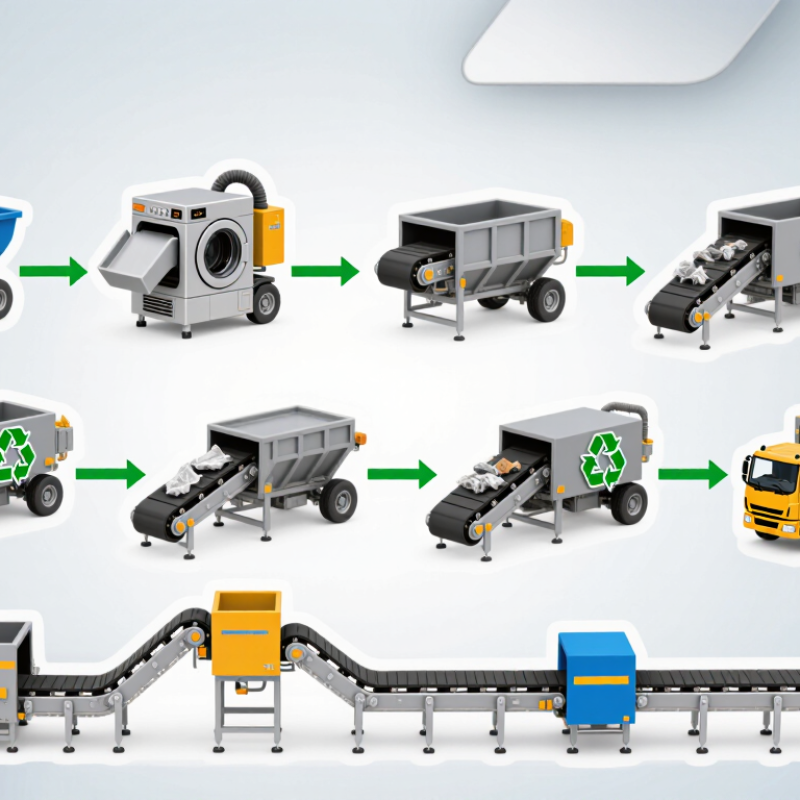
A recycling line is a sequence of machines matched to its feedstock, contamination, and target output. For bulky mixed waste, a low-speed shredder opens material; granulators then create a more consistent size for screening. Trommel or vibrating screens separate pieces by size. Magnets remove ferrous metals, while eddy-current separators recover non-ferrous metals. Near-infrared optical sorters can identify many polymer types, though dark, wet, or dirty items can reduce accuracy. Small details matter. Plastics lines may also use friction washers, float-sink tanks, dryers, and pelletizers. Bale presses compact sorted materials for transport.

The scale is substantial. OECD’s Global Plastics Outlook (2022) estimates that 353 million tonnes of plastic waste were generated in 2019, and only 9% was ultimately recycled. The Global E-waste Monitor 2024 reports 62 million tonnes of e-waste generated in 2022, with 22.3% documented as formally collected and recycled. These figures underline the need for equipment suited to different material streams, not just higher processing speeds. A sensor may misread labels or residues, and poorly matched screens can send recoverable pieces into rejects. An advanced line can still lose valuable material.

How to Compare Manufacturers, Products, and After-Sales Support

Comparing China’s recycling machinery manufacturers requires more than reading rated capacity. Ask each supplier to process your actual material, then measure tonnes per hour, output size, contamination, and energy use. Global Plastics Outlook (OECD, 2022) estimates that 353 million tonnes of plastic waste were generated worldwide in 2019, while only 9% was ultimately recycled. That gap makes dependable sorting and processing performance important. Request test conditions, not just headline figures. A machine tested on clean, uniform feedstock may behave differently with damp, mixed material. Small details matter.

Compare the complete line, including conveyors, shredders, separators, and controls. Check wear-part prices, replacement intervals, installation scope, and operator training. Ask for references from facilities handling similar materials and production volumes. After-sales support deserves equal scrutiny: clarify remote response times, local technician availability, spare-parts stock, and warranty exclusions before ordering. The World Bank’s What a Waste 2.0 report projected municipal solid waste could rise from 2.01 billion tonnes in 2016 to 3.40 billion tonnes by 2050. Growth does not guarantee a good investment. Paper specifications can look reassuring; real operating records are harder to replace. Ask for them.

China Top 10 Recycling Machinery Manufacturers? - How to Compare Manufacturers, Products, and After-Sales Support An anonymous, category-based comparison guide for evaluating recycling-equipment suppliers in China
Supplier Profile Typical Equipment Common Materials and Outputs Key Product Comparison Points After-Sales Support to Verify Best-Fit Applications
1. Plastic Washing Line Specialist Sorting, crushing, friction washing, rinsing, dewatering, and drying equipment Rigid plastics and selected film streams; produces washed flakes for downstream processing Line layout; contamination removal stages; water circulation and treatment; throughput test conditions; final flake cleanliness and moisture measurement Request installation plans, operating manuals, commissioning scope, wear-part lists, and a written warranty covering the complete line Recyclers handling post-consumer or post-industrial plastic that needs cleaning before reuse
2. Plastic Granulator and Shredder Specialist Single-shaft or multi-shaft shredders, granulators, and size-reduction systems Plastic scrap, packaging, production rejects, and other materials selected for the machine configuration; produces reduced-size flakes or pieces Rotor and blade design; screen size; feed opening; motor and drive configuration; protection against overload; blade material and replacement procedure Check spare-blade availability, maintenance training, troubleshooting support, and whether the quoted capacity is based on the buyer’s actual material Facilities that need to reduce bulky or irregular plastic feed before washing or further processing
3. Plastic Pelletizing Line Specialist Extruders, melt filtration, pelletizers, and auxiliary feeding or cooling equipment Prepared thermoplastic flakes, regrind, or selected production scrap; produces plastic pellets Material compatibility; screw and barrel configuration; filtration method; pelletizing type; controls; melt quality; and documented output testing Verify process setup assistance, filter and screw supply, operator training, remote diagnostics, and the response process for production issues Plastic processors turning suitable recycled feedstock into pellets for downstream manufacturing
4. PET Bottle Recycling Line Specialist Bottle sorting, label and cap separation, crushing, washing, rinsing, and flake drying systems Post-consumer PET bottles; produces cleaned PET flakes, with caps and labels separated into other material streams Feedstock assumptions; label and cap separation; washing stages; water use and treatment; flake quality targets; and sampling method for acceptance testing Ask for commissioning criteria, process documentation, training, recommended consumables, and support for balancing the full line Operations processing collected PET bottles into flakes for further recycling
5. Film and Flexible-Plastic Recycling Specialist Film shredders, compactors or agglomerators, washing equipment, dewatering systems, and pelletizing lines Selected flexible plastics such as film and bags; the suitable process depends on dirt, moisture, printing, and polymer mix Feeding stability; wrapping or bridging risk; moisture removal; contamination handling; material-specific trials; and the effect of feed variation on output Request a material trial using representative feedstock, written operating limits, setup support, and confirmation of which wear parts are stocked Plants processing flexible plastic streams that can be difficult to feed and clean consistently
6. Tire Recycling Equipment Specialist Tire shredders, steel-wire separation equipment, granulators, and screening systems End-of-life tires; produces rubber chips or granules, with steel and textile fractions separated by the configured process Allowed tire size and feed preparation; steel removal; screen specifications; blade life assumptions; dust control; and product-size distribution Verify installation and safety training, blade maintenance guidance, replacement-part lead times, and the scope of commissioning support Operators converting end-of-life tires into separated rubber and other material fractions
7. Metal Shredding and Separation Specialist Metal shredders, shears, conveyors, magnetic separators, and optional eddy-current separation equipment Selected ferrous and non-ferrous scrap streams; output depends on feed preparation and separation configuration Accepted feed dimensions; machine protection; shredder wear parts; separator arrangement; dust and noise controls; and downstream sorting performance Ask for a site-specific layout, commissioning responsibilities, electrical documentation, service access requirements, and spare-part recommendations Scrap processors seeking size reduction and separation of metal fractions
8. Paper and Cardboard Baling Equipment Specialist Vertical or horizontal balers, conveyors, and bale-handling equipment Paper, cardboard, and other materials approved for the selected baler; produces compacted bales for storage or transport Bale dimensions and density; loading method; cycle operation; chamber size; safety interlocks; and compatibility with the material and site workflow Confirm operator and safety training, hydraulic-system maintenance guidance, warranty terms, and availability of seals and other service parts Warehouses, recycling centers, and processors that need to compact paper-based recyclables
9. E-Waste Size-Reduction and Separation Specialist Selective dismantling tools, shredders, conveyors, and material-separation systems Specified electronic-waste fractions; recovery routes vary by equipment design, feed preparation, and applicable environmental controls Feed acceptance limits; separation stages; dust and noise controls; access for maintenance; and documented testing of the intended material stream Request a process and safety review, written feedstock exclusions, commissioning records, operator training, and a clear service escalation route Facilities processing defined electronic-waste streams that require controlled size reduction and separation
10. Municipal and Commercial Waste Sorting Specialist Conveyors, screens, bag openers, sorting stations, and selected mechanical separation equipment Mixed municipal or commercial waste; recovered fractions depend on the incoming waste composition and line design Feed characterization; line balance; sorting access; dust and odor controls; material recovery targets; and capacity assumptions tied to actual waste samples Check whether the supplier provides layout engineering, installation supervision, operator training, performance testing, and ongoing technical support Projects that need to sort mixed waste into defined recyclable or residual fractions
How to use this table: These are equipment-specialization profiles, not named companies, audited supplier records, or a verified ranking of China’s top manufacturers. Product suitability and performance depend on feedstock, configuration, operating conditions, and testing. Before purchasing, request a written technical proposal, a material-specific capacity test, warranty terms, spare-parts details, installation scope, and references for comparable projects.
Go to Top