INDUSTRIES2023-04-26T19:33:38+00:00

Why Choose a CNC Box for Precision Manufacturing?

Why Choose a CNC Box for Precision Manufacturing?

A CNC box gives precision manufacturing a controlled, repeatable working environment. It can protect sensitive components, organize fixtures, and support consistent machining results. Grand View Research estimates that the global CNC machine market reached approximately USD 83.9 billion in 2023. The firm also projects strong growth through 2030. That growth reflects rising demand for accuracy, automation, and shorter production cycles.

The details matter. A well-designed CNC box can reduce contamination from chips, coolant, and airborne dust. It can also improve operator safety and simplify inspection access. Deloitte’s 2024 Smart Manufacturing and Operations Survey reports that 92% of manufacturing leaders view smart manufacturing as important for competitiveness within three years. A CNC box fits this shift by supporting cleaner, more measurable production processes. Mike Lynch of CNC Concepts, a recognized CNC training specialist, has emphasized, “CNC is a process, not a machine.” That warning remains useful. The enclosure alone cannot correct a poor datum, weak tooling, or an inaccurate measurement routine.

Precision still needs discipline.

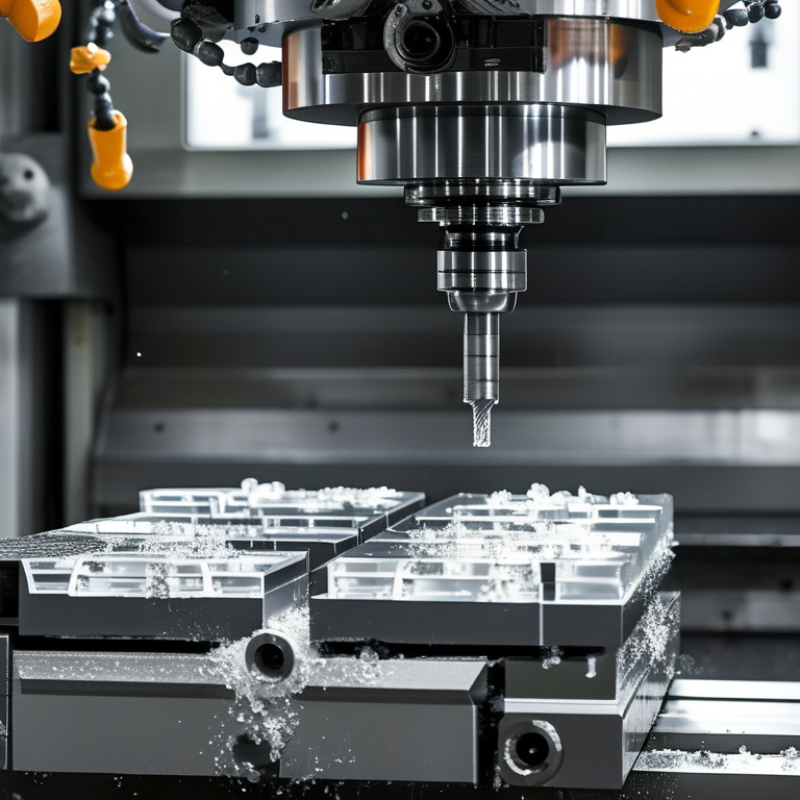
In practical use, operators may inspect a machined aluminum box after every batch. They may check corner alignment, wall thickness, and surface finish under bright task lighting. These small actions expose problems before they become expensive rework. However, specifications vary by material, spindle load, thermal expansion, and machine design. A CNC box is not a universal solution. It requires careful layout, reliable calibration, and honest process review. When those conditions are managed, it becomes more than protective hardware. It becomes a physical foundation for repeatable manufacturing.

Why Choose a CNC Box for Precision Manufacturing?

What Is a CNC Box in Precision Manufacturing?

Why Choose a CNC Box for Precision Manufacturing?

What Is a CNC Box in Precision Manufacturing?

A CNC box is the machine’s protected control enclosure. It usually contains the controller, servo drives, PLC, power supplies, cooling fans, wiring, and safety components. These parts coordinate cutting, drilling, milling, or turning operations with repeatable motion. The enclosure also separates sensitive electronics from metal chips, coolant mist, vibration, and accidental contact.

The term is not completely standardized. Some manufacturers use “CNC box” for the control cabinet, while others mean the full machine enclosure. That difference matters when specifying dimensions, cooling, ingress protection, and maintenance access. In practical workshops, a well-designed box keeps cable paths short and labeled. It also makes fault tracing faster, especially when a drive alarm appears during a night shift.

According to Grand View Research, the global CNC machine market was valued at approximately 83.2 billion dollars in 2023. The report projects continued growth through 2030, supported by automation and tighter production requirements. A CNC box supports that trend by organizing control hardware and reducing environmental interference.

However, it cannot correct poor calibration, worn tooling, or unstable workholding. That assumption is common. It needs challenging. NIST manufacturing guidance also emphasizes measurement, traceability, and process control, not enclosure design alone. For precision work, technicians should inspect ventilation filters, grounding, connector seals, and thermal conditions regularly. A clean box helps. It is not magic.

How CNC Boxes Are Designed and Machined

A CNC box begins as more than a hollow enclosure. Designers define its walls, mounting points, cable paths, and access features in a 3D CAD model. Material choice follows heat, load, corrosion, and finishing requirements. Aluminum supports light structures and heat transfer. Steel offers stiffness but adds weight. Wall thickness must allow cutting access without weakening corners. Small radii matter. Sharp internal corners are rarely practical with rotating tools. A designer who ignores that limit may create an attractive, costly model.

Machining starts after the model becomes manufacturable drawings. These drawings specify datums, tolerances, threads, surface finish, and inspection points. The machinist selects cutters, workholding, spindle speeds, and cutting paths. A deep pocket may require several tools, while thin walls need gentle passes to prevent vibration. Coolant and chip removal also affect accuracy. On the machine, the box is often repositioned carefully between operations. Each setup can introduce error. That risk deserves attention.

After machining, technicians check critical dimensions with calibrated gauges or a coordinate measuring machine. They inspect flatness, hole location, thread quality, and burrs around openings. I have seen a box pass its main dimensions yet fail assembly because a cable path was too tight. That is a useful reminder: precision is not only numerical. Trial fitting reveals practical flaws. Sometimes, the drawing needs revision. A slightly larger clearance can improve service access without sacrificing protection. Documentation records the material batch, measurements, and any approved deviation, supporting repeatable production.

Key Materials Used for CNC Box Production

A CNC box is only as precise as its material allows. The enclosure must resist cutting forces, heat, vibration, and repeated fastening. Material choice affects dimensional stability, surface finish, weight, and service life.

Aluminum is widely selected for lightweight CNC boxes. The International Aluminium Institute reported 70.6 million tonnes of global primary aluminum production in 2023. Grades such as 6061 offer reliable machinability, corrosion resistance, and moderate strength. For higher loads, 7075 aluminum performs better, but it costs more and can be less forgiving during finishing. Thin aluminum walls may also distort. That detail is easy to overlook.

Stainless steel suits boxes exposed to moisture, chemicals, or frequent cleaning. World Stainless reported 58.4 million tonnes of stainless crude steel production in 2023. Grades 304 and 316 are common choices, although stainless steel demands slower cutting and sharper tooling. Engineering plastics create another option. PlasticsEurope’s Plastics—The Fast Facts 2024 reported 413.8 million tonnes of global plastics production in 2023. POM supports low-friction components, while PEEK handles demanding heat and chemical conditions. ABS reduces cost, but its thermal stability is weaker. Material data sheets help, yet they do not replace prototype testing. Real assemblies often reveal unexpected warping, thread wear, or heat buildup. Performance is never perfectly predictable.

Why Choose a CNC Box for Precision Manufacturing? - Key Materials Used for CNC Box Production
Material Material Category Key Properties Why It Is Suitable for CNC Boxes Typical CNC Box Applications Surface Finish Options Important Production Considerations
Aluminum 6061 Aluminum Alloy Lightweight, corrosion resistant, good machinability, and moderate structural strength. Provides a strong enclosure with low mass and can be machined efficiently for precise openings, mounting holes, and internal cavities. Electronic housings, control boxes, instrumentation enclosures, and lightweight machine covers. Bead blasting Anodizing Powder coating Thin walls may deform from clamping forces. Anodizing can slightly affect final dimensions, especially in small bores and threaded features.
Aluminum 7075 High-Strength Aluminum Alloy Higher strength-to-weight ratio than common general-purpose aluminum alloys, with good machinability. Useful when a CNC box must remain lightweight while resisting higher mechanical loads and vibration. Aerospace-style equipment housings, robotic components, structural instrument cases, and high-load covers. Anodizing Bead blasting Chemical conversion coating It generally has lower corrosion resistance than 6061, so protective finishing may be needed for demanding environments.
Stainless Steel 304 Austenitic Stainless Steel Excellent corrosion resistance, good toughness, and strong resistance to many industrial environments. Supports durable precision boxes where cleanliness, moisture resistance, and long service life are important. Food-processing equipment, laboratory enclosures, medical equipment housings, and outdoor control boxes. Brushed finish Passivation Electropolishing Work hardening can occur during machining. Sharp, properly maintained tools and suitable cutting conditions help maintain accuracy.
Stainless Steel 316 Molybdenum-Bearing Stainless Steel Very good corrosion resistance, particularly against chlorides and marine-related exposure. Offers reliable protection for precision CNC boxes used in humid, saline, chemical, or washdown conditions. Marine electronics, chemical-processing equipment, outdoor instrumentation, and hygienic enclosures. Passivation Electropolishing Brushed finish It is more difficult to machine than aluminum and may require careful heat management to limit distortion and work hardening.
Mild Steel A36 Carbon Steel Good weldability, high availability, and useful structural strength at a relatively low material cost. Suitable for robust CNC boxes and cabinets where weight is less important than rigidity and impact resistance. Industrial machine guards, electrical cabinets, brackets, protective housings, and workshop equipment. Powder coating Paint Zinc plating Unprotected steel can rust. Corrosion protection and proper storage are important after machining.
Brass C360 Copper-Zinc Alloy Excellent machinability, good electrical conductivity, and good resistance to atmospheric corrosion. Allows clean production of small precision features, threaded holes, fittings, and conductive components. Electrical terminals, sensor housings, valve components, connectors, and decorative precision boxes. Polishing Brushing Nickel plating Brass is denser than aluminum. Chips should be managed carefully, and the selected alloy should match any applicable lead-restriction requirements.
Copper C110 High-Conductivity Copper Very high electrical and thermal conductivity with good ductility. Ideal when a CNC box or internal component must transfer heat or carry electrical current efficiently. Heat spreaders, busbar enclosures, power-electronics housings, and thermal management components. Polishing Nickel plating Tin plating Copper is soft and can produce burrs or a smeared surface if tools are dull. Clamping and chip evacuation require careful control.
POM (Acetal) Engineering Thermoplastic Low friction, low moisture absorption, good dimensional stability, and easy machinability. Provides a lightweight, electrically insulating box for low-load applications requiring smooth movement or non-marring contact. Insulating covers, sensor mounts, gear housings, prototype enclosures, and small mechanical assemblies. Machined finish Polishing Thermal expansion is higher than metals, so operating temperature and fit clearances must be considered during design.
PEEK High-Performance Thermoplastic High temperature capability, chemical resistance, wear resistance, and excellent electrical insulation. Suitable for demanding CNC boxes that need low weight, chemical resistance, and stable performance at elevated temperatures. Medical components, chemical equipment, aerospace-style housings, and high-temperature electrical insulation parts. Machined finish Fine polishing Material cost is high, and machining parameters must be controlled to avoid heat buildup, burrs, and dimensional variation.
ABS General-Purpose Thermoplastic Lightweight, impact resistant, electrically insulating, and easy to machine for prototypes and low-load parts. Offers a practical option for economical CNC box prototypes and non-structural indoor enclosures. Prototype electronics cases, instrument covers, display housings, and educational equipment enclosures. Machined finish Painting ABS has lower temperature and chemical resistance than engineering plastics such as PEEK. It is best suited to moderate service conditions.
Material selection should be based on load, corrosion exposure, operating temperature, electrical requirements, wall thickness, tolerances, finishing process, and total production volume.

How CNC Boxes Improve Precision and Consistency

A CNC box is not automatically precise. Its accuracy depends on design, tooling, setup, and inspection. In practical machining work, small errors often appear at corners, mounting holes, and lid joints. These areas must align without forcing the parts together. A stable machine follows the programmed path with controlled movements. Small differences matter. They can affect sealing, assembly, and long-term reliability.

Precision begins before cutting starts. Digital drawings define wall thickness, hole locations, and acceptable tolerances. Rigid fixturing keeps the material from shifting during milling. A probing cycle can check the workpiece position before machining critical features.

After cutting, operators may measure surfaces with calipers, micrometers, or coordinate equipment. These checks create useful records instead of relying only on visual judgment.

Consistency is where CNC boxes become especially valuable. The same program can produce repeated enclosures with similar dimensions and clean internal spaces. Uniform walls help electronic components sit securely inside the box. Repeatable holes also reduce adjustment time during assembly. Still, perfect output is not guaranteed. Tool wear, heat, vibration, and material movement can change results. An experienced machinist watches these details and corrects them early. That lesson is easy to miss. A small inspection gap today may become a costly fit problem tomorrow.

Factors to Consider When Choosing a CNC Box

Why Choose a CNC Box for Precision Manufacturing?

Factors to Consider When Choosing a CNC Box

Choosing a CNC box starts with the part, not the catalog. Define dimensions, wall thickness, tolerances, and expected production volume. Aluminum offers low weight and useful thermal conductivity. Stainless steel suits harsher environments. Plastic can reduce cost, but it may deform near heat sources.

I have seen small enclosure gaps expose wiring to coolant mist. That mistake is expensive.

Thermal control deserves careful attention. A box beside a spindle can experience vibration, heat, chips, and fluid exposure. Check the required IP rating, sealing method, ventilation, and cable-entry design.

ISO 230-2 emphasizes machine-tool positioning accuracy and repeatability, so enclosure movement should not disturb alignment. Measure mounting surfaces after machining, not only before it. This detail is often missed.

Service access also affects long-term precision. Leave room for connectors, inspection tools, and safe component replacement. The 2024 International Federation of Robotics World Robotics report recorded 541,302 industrial robot installations worldwide in 2023. That scale shows why machine integration and reliable enclosures matter.

However, automation data does not replace practical testing. Confirm material compatibility, fastener strength, grounding, and thermal expansion with real production samples. A perfect checklist does not exist. My own preference is to prototype one box, inspect it after repeated cycles, and revise the design before committing to a large batch.

Article Source:

Go to Top