Why Choose a PVC Mixer for Efficient PVC Production?
PVC production demands more than a large vessel and a powerful motor. It requires consistent blending, controlled heat, and dependable discharge. Grand View Research valued the global polyvinyl chloride market at approximately USD 42.9 billion in 2022. Its forecast also indicates continued growth through 2030. This expansion increases pressure on manufacturers to improve output without sacrificing quality. A properly specified Pvc Mixer can support that balance by distributing stabilizers, plasticizers, pigments, and fillers more evenly.
Consistency matters on the factory floor. During mixing, operators watch torque, temperature, residence time, and powder movement through inspection windows. A well-designed mixer can reduce dead zones and limit material buildup around the shaft. That detail matters when one batch feeds extrusion, calendaring, or injection molding. PlasticsEurope’s Plastics—The Fast Facts 2024 report highlights Europe’s substantial plastics production and processing base. Such scale makes energy use, material efficiency, and reliable equipment increasingly important.
Still, no mixer suits every formulation. A high-speed hot mixer may benefit rigid PVC compounds, while a cooler, gentler system may protect sensitive additives. The wrong blade geometry can create uneven heating. That mistake is expensive. Buyers should compare torque capacity, temperature control, cleaning access, dust management, and automation support. Industry guidance often focuses on efficiency, yet maintenance access deserves equal attention. A mixer that performs well but takes hours to clean may weaken real productivity. Careful trials, supplier documentation, and measured batch data provide stronger evidence than marketing claims. That is why choosing a Pvc Mixer should begin with the formulation, production target, and operator’s daily reality.
What Is a PVC Mixer and How Does It Work?
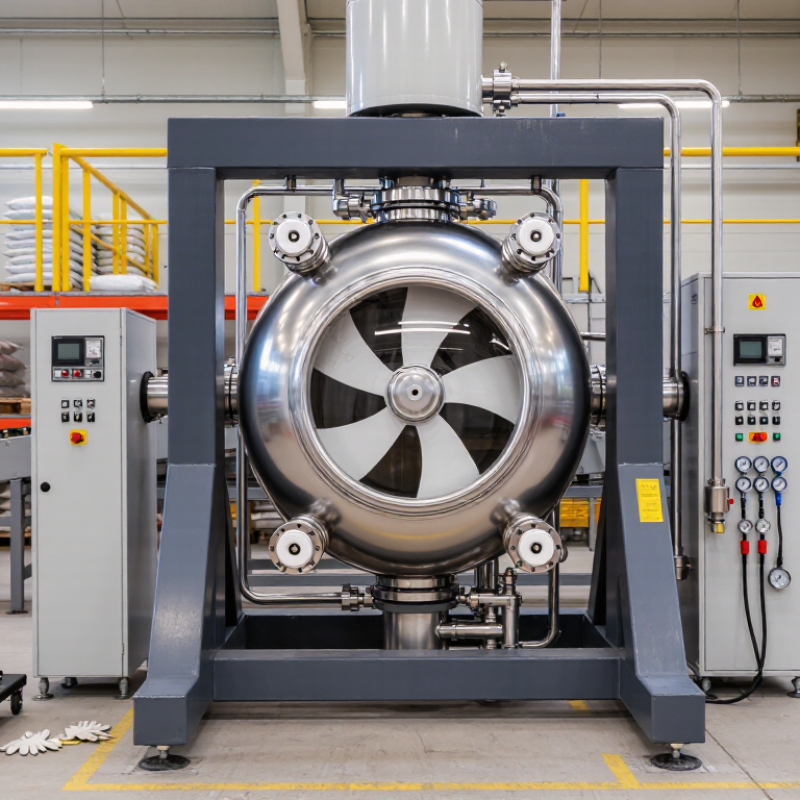
A PVC mixer is a processing machine that blends PVC resin with stabilizers, lubricants, pigments, and fillers. It prepares a uniform dry blend before extrusion, calendaring, or injection molding. Consistent mixing affects color, surface quality, strength, and processing stability.
Inside the mixer, rotating blades move the powder through a heated chamber. Friction raises the material temperature and helps additives spread across each resin particle. A hot mixer often operates around a controlled temperature range, while a cooling mixer lowers the blend temperature quickly. This prevents premature fusion and protects heat-sensitive additives. The operator should monitor temperature, speed, mixing time, and batch weight together. One setting cannot suit every formulation.
A practical batch may begin with resin, followed by stabilizers and processing aids. Pigments and fillers need careful feeding to avoid dust clouds and uneven color. Small changes matter. Moisture, worn blades, or overloaded chambers can reduce dispersion. In production, checking sample flow, color, and bulk density can reveal problems early. The process is not always perfect; excessive speed may create heat faster than expected. Periodic maintenance, calibrated sensors, and recorded batch data make troubleshooting more reliable. A mixer should support repeatable results, not merely fast rotation.
How PVC Mixing Supports Consistent Material Preparation
Why Choose a PVC Mixer for Efficient PVC Production?
Consistent material preparation begins with controlled PVC mixing. Resin, stabilizers, lubricants, pigments, and fillers must distribute evenly before forming or extrusion. A suitable PVC mixer helps create a stable blend with fewer hot spots, dry pockets, and color variations.
This control matters at industrial scale. PlasticsEurope reported global plastics production at 400.3 million tonnes in 2022. Such volume increases pressure on processors to reduce rejected batches and maintain repeatable quality. In daily production, operators often judge mixing by temperature curves, torque changes, powder flow, and sample appearance. These details reveal problems earlier than finished-product inspection. However, no mixer removes every variable. Moisture, particle size, loading order, and cleaning practices still influence the result. That is where experience matters.
Tips: Set a repeatable loading sequence. Monitor discharge temperature closely. Compare samples from different parts of the batch. Keep records, even when results look acceptable. Small differences can become large defects later.
A well-selected PVC mixer supports smoother preparation and more predictable downstream processing. It can also improve labor efficiency by reducing manual corrections. Yet speed should not replace control. The best performance comes from matching mixer design, batch size, heating method, and formulation behavior. This decision is sometimes underestimated.
Which Features Improve PVC Mixer Performance?
A PVC mixer supports efficient production by combining consistent blending with controlled heat and shear. Its performance depends on more than motor power. Paddle geometry, chamber design, and material contact surfaces must match the formulation. Uneven mixing can leave dry pockets near the wall or create overheated lumps.
A reliable mixer should provide strong torque at low speed. This helps disperse resin, stabilizers, pigments, and processing aids without sudden load changes. Jacketed heating and cooling improve temperature control during each cycle. Accurate sensors are essential because PVC can degrade when exposed to excessive heat. Sealed bearings and smooth internal surfaces also reduce contamination and simplify cleaning. Automated controls improve repeatability, but operators still need to check real material behavior. No mixer is perfect.
Tips:
Check torque trends during production, not only final product quality. Inspect wall buildup after several batches. Test the temperature sensor regularly. A small calibration error can affect color, fusion, and output. Choose replaceable wear parts when possible. This may cost more initially, but it can reduce downtime later. Safety interlocks and guarded access should also be verified before operation. Reliable performance comes from equipment design, maintenance discipline, and careful process observation.
What Maintenance Practices Extend PVC Mixer Service Life?
A PVC mixer can run for years, but only when maintenance follows its actual workload. In daily production, operators should inspect blades, shafts, seals, and discharge gates before each shift. Look for powder buildup, unusual vibration, hot bearings, or a rising motor current. These signs often appear before a breakdown. The U.S. Department of Energy’s Operations & Maintenance Best Practices Guide reports that effective maintenance can reduce energy use by 5–20%. That matters because DOE industrial guidance estimates motor systems consume about 70% of industrial electricity.
Lubricate bearings according to load, temperature, and lubricant specifications, not guesswork. Excess grease can create heat. Too little grease accelerates wear. Check gearbox oil for metal particles or a burnt smell during scheduled inspections. Clean the mixing chamber carefully, especially around corners where PVC powder can harden. Inspect electrical connections after vibration-heavy production periods. A loose terminal may cause heat and unstable mixing. ISO 14224 supports consistent failure and maintenance records, helping teams identify repeated problems. Still, records are not magic. I have seen teams complete checklists while ignoring a small oil leak.
Tips: Keep a simple trend log for vibration, motor current, bearing temperature, and batch time. Photograph worn parts before replacement. Set inspection intervals after reviewing real operating data. Keep it practical. Small losses accumulate. Overlooking one seal today may create contamination, downtime, and expensive shaft repairs later. Calibration should also be verified periodically, because inaccurate temperature or load readings can hide developing faults.