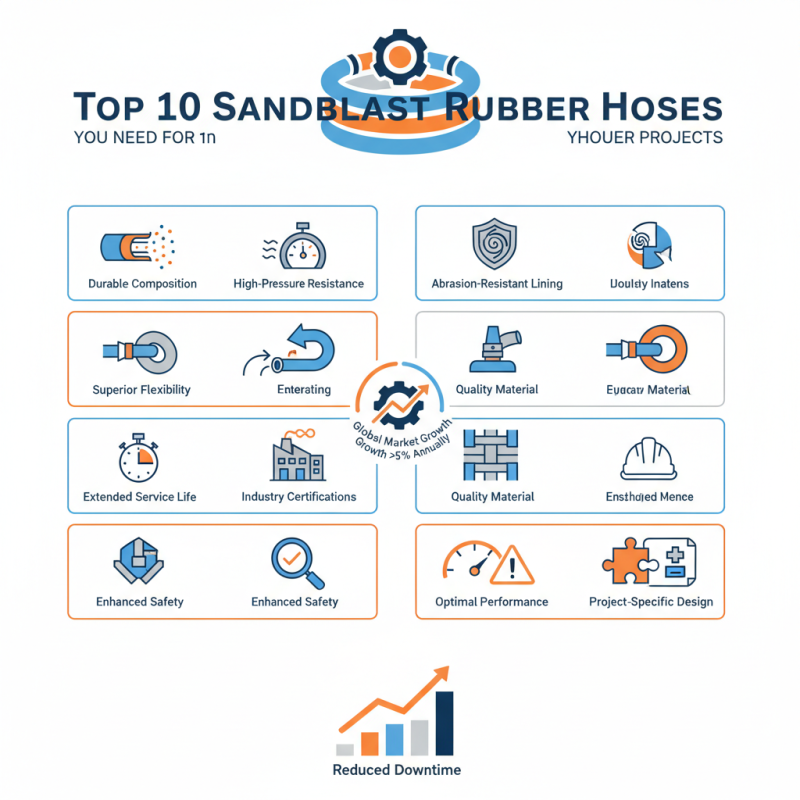
Top 10 Sandblast Rubber Hoses You Need for Your Projects?
In various industries, the demand for robust and reliable equipment is crucial. Sandblast rubber hoses are essential for abrasive blasting tasks. According to industry reports, the global market for high-quality hoses is projected to grow by over 5% annually. This growth highlights the increasing need for durable hoses that can withstand high pressure and severe wear.
Sandblast rubber hoses are specifically designed to handle intense environments. They are often exposed to heavy abrasives, making their resilience critical. The composition of these hoses ensures minimal wear, offering longevity that many products cannot match. However, not all manufacturers adhere to strict quality standards. Some hoses fail under industrial pressure, leading to costly downtime.
Choosing the right sandblast rubber hose can be daunting. Factors like material quality and flexibility play significant roles in performance. Consumers must pay close attention to specifications and reviews. Ideally, you should seek hoses that meet industry certifications. A poor choice can lead to safety hazards and inefficiencies. Each project deserves optimal performance, and the right hose contributes greatly to success.
Top Features to Consider in Sandblast Rubber Hoses for Durability
When selecting sandblast rubber hoses, durability is crucial. The material should resist abrasion to withstand the harsh environment. A longer lifespan is always better. Look for hoses that have reinforced layers. These layers provide extra support and can handle the pressure during operations.
Flexibility is also essential. A hose that bends easily helps in maneuvering around tight spots. However, too much flexibility might lead to kinks. Balance is key. Pay attention to the weight of the hose. Lighter hoses are easier to handle, but they may not always be sturdy. It's worth considering your project requirements.
Another factor is the temperature range. Ensure the hose can withstand hot conditions without degrading. Some hoses crack under pressure, leading to leaks. Regular inspections can prevent downtime. Remember to account for connections. The fit between the hose and the nozzle matters. A poor connection could lead to inefficient blasting, wasting time and materials. Always strive for the right combination of features to meet specific project demands.
Understanding Different Types of Sandblast Rubber Hoses and Their Applications
When working on sandblasting projects, selecting the right rubber hose is vital. Different types of sandblast rubber hoses serve specific applications. A standard option delivers excellent durability for general blasting tasks. However, it may not withstand extreme conditions as well. For tougher jobs, consider hoses designed for high pressure. These provide additional strength but may be less flexible.
Another key type is the abrasion-resistant hose. This design extends the life of the hose significantly. Yet, it could feel stiffer, which limits maneuverability. Therefore, it’s essential to weigh these factors against your specific needs. For example, if you plan on executing long hours of blasting, comfort and flexibility might be priorities.
It's also important to think about the hose's inner diameter. A smaller diameter might lead to lower production rates. Conversely, larger diameters can increase bulk and decrease control. Finding the right balance is crucial for optimal performance. In some cases, experimenting with different hoses may reveal surprising results. Ultimately, your choice should align with the demands of your projects, even if it means adjusting your expectations.
Top 10 Sandblast Rubber Hoses You Need for Your Projects
Key Industry Standards for Sandblast Rubber Hoses: SAE and ISO Compliance
When choosing sandblast rubber hoses, compliance with industry standards is crucial. Two main standards to consider are SAE and ISO. These standards ensure safety and performance. They define the material requirements and testing methods. Hoses must withstand high pressure and abrasion.
SAE standards focus on operational performance. They outline the specifications for hoses used in various applications. ISO compliance complements this by emphasizing consistency and quality across products. Using hoses that meet these standards enhances project outcomes. There’s also a risk in ignoring these compliance benchmarks. Misuse can lead to hose failure and safety hazards.
It's essential to examine the specifications carefully. Not all hoses visually meet standards. Some may appear robust yet fail under pressure. Regular inspections and quality checks are vital. Be mindful of hose aging and wear, which can compromise safety. A small oversight could result in significant project delays or dangers.
Comparative Analysis of Leading Brands in Sandblast Rubber Hoses Market
When selecting sandblast rubber hoses, it’s essential to analyze key features across competing brands. Durability is often a top consideration. Hoses should withstand extreme pressure and abrasive materials. Consider the hose’s tensile strength and resistance to wear. Some hoses may look robust but can fail under stress.
Tip: Always check the burst pressure ratings. This can give insights into the hose’s real performance under intense conditions. Compare these specifications carefully before making a purchase.
Flexibility is another critical factor. A hose that is too stiff can lead to operational challenges. It may kink or obstruct workflow, which wastes time. Some users find themselves frustrated with their choices due to poor flexibility. They often overlook this aspect.
Tip: Test the hoses in-store if possible. See how they handle bends and twists. This can help avoid future disappointments during your projects. The right choice can save you from unexpected downtime and improve your productivity.
Top 10 Sandblast Rubber Hoses You Need for Your Projects
| No | Hose Diameter (inches) | Working Pressure (psi) | Length (feet) | Temperature Range (°F) | Weight (lbs) |
| 1 | 1 | 150 | 50 | -20 to 150 | 8 |
| 2 | 1.5 | 200 | 100 | -20 to 180 | 12 |
| 3 | 2 | 250 | 75 | -30 to 160 | 15 |
| 4 | 2.5 | 300 | 80 | -20 to 200 | 20 |
| 5 | 3 | 350 | 90 | -10 to 220 | 25 |
| 6 | 3.5 | 400 | 100 | -20 to 240 | 30 |
| 7 | 4 | 450 | 120 | -10 to 250 | 35 |
| 8 | 4.5 | 500 | 130 | -20 to 260 | 40 |
| 9 | 5 | 550 | 140 | -10 to 270 | 45 |
| 10 | 5.5 | 600 | 150 | -20 to 280 | 50 |
Maintenance Tips for Prolonging the Life of Your Sandblast Rubber Hoses
Maintaining sandblast rubber hoses is essential for their longevity and performance. These hoses can handle high pressure and abrasive materials, but wear and tear is inevitable. Regular maintenance can make a significant difference in their lifespan.
Check hoses frequently for signs of wear. Look for cracks, cuts, or fraying. If you notice small breaks, address them immediately. Ignoring such issues leads to bigger problems later. Clean the hoses after each use. Abrasive materials can wear down the rubber if left inside. Rinse with water and let them dry completely to prevent damage.
Store hoses properly when not in use. Coiling them neatly reduces kinks and wraps. Ensure they are in a cool, dry place. Avoid exposing them to direct sunlight for extended periods. This can degrade the rubber and shorten their lifespan. If you follow these simple maintenance tips, your sandblast rubber hoses will serve you well in your projects. Simple awareness can lead to effective care.