
What Are the Top Rotary Sensor Manufacturers in China?
Rotary Sensors are becoming more important as factories add automated machines, compact drives, and precise motion control. Their job sounds simple: detect angle, speed, or position. Yet a sensor mounted beside a motor must withstand vibration, heat, electrical noise, and years of repeated movement. Small differences in resolution, sealing, or signal output can affect an entire production line.
Market reports help explain the demand, but their figures need careful interpretation. MarketsandMarkets’ position-sensor market report estimated a value of USD 5.6 billion in 2023 and forecast USD 8.1 billion by 2028. This category includes more than rotary devices, so it should not be treated as a direct measure of rotary-sensor sales. Still, it signals a growing market for position measurement. For buyers, the harder question is practical: which Chinese manufacturers can deliver stable performance, clear specifications, and dependable support? A polished catalog is not proof. Check encoder type, accuracy, environmental rating, test documentation, and lead-time commitments. Ask how products perform under real operating conditions. Details matter.
This guide examines leading rotary sensor manufacturers in China and the factors that distinguish them. It compares product capabilities, applications, and evidence buyers can verify, rather than relying only on broad claims. One limitation deserves attention: public company data and product ranges can change quickly. Treat the shortlist as a starting point, then confirm current specifications directly with each supplier.
What Rotary Sensors Are and How They Work
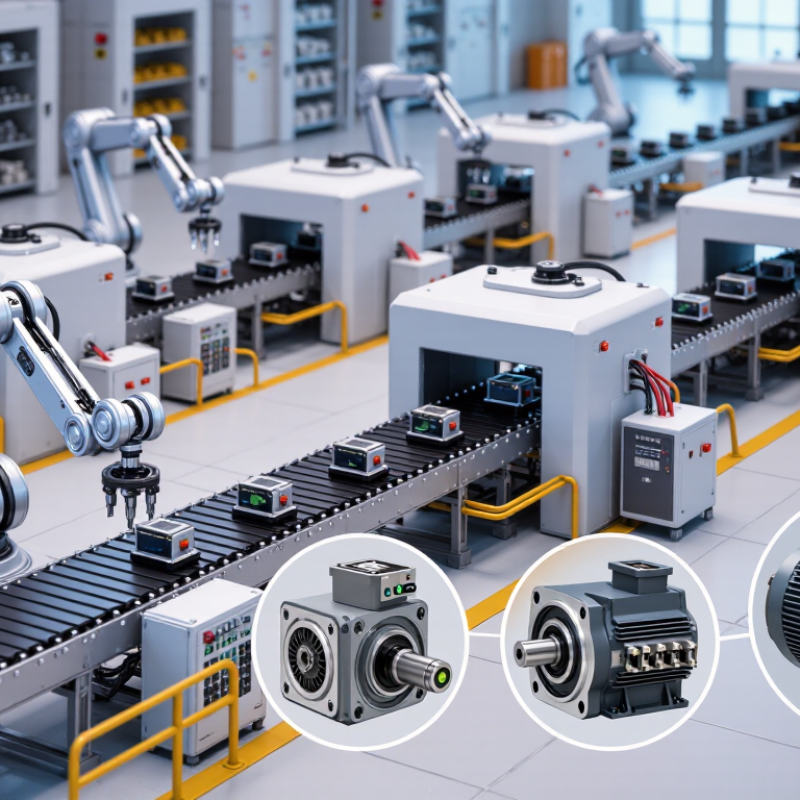
A rotary sensor measures the angle, position, or rotational speed of a moving shaft. In a motor, for example, it can report whether the shaft has turned 30 degrees or completed several revolutions. The sensor converts this motion into an electrical signal that a controller can read. Some designs use a resistive element and a sliding contact; others detect changes in light, magnetic fields, or inductance without touching the shaft. No contact means less mechanical wear.
The output may be an analog voltage, a pulse train, or a digital position value. A controller interprets that signal to adjust speed, align parts, or stop movement at a chosen angle. Resolution matters: a coarse sensor may be adequate for a simple speed check, while precise positioning needs finer measurement. Mounting matters too. A loose coupling can create readings that look plausible but drift under vibration. That can be frustrating. Temperature, dust, and electrical noise may also affect performance, so testing in the actual operating setup is sensible. The principle is straightforward, but selecting and installing a sensor still takes care.
| Sensor Type | How It Works | Typical Output | Common Characteristics | Typical Applications | Key Selection Considerations |
|---|---|---|---|---|---|
| Absolute magnetic encoder | A magnet attached to the rotating shaft changes the magnetic field measured by Hall-effect or magnetoresistive elements. The electronics calculate the shaft’s angular position. | Digital angle data or a coded position signal; single-turn or multi-turn formats are available. | Non-contact sensing; retains a unique position value through a power interruption when designed with the appropriate position-memory system. Resolution and accuracy vary by model. | Robotics, machine tools, valve actuators, and industrial automation equipment. | Check accuracy, resolution, communication protocol, shaft arrangement, magnetic-field tolerance, and required turn count. |
| Incremental optical encoder | A light source and photodetector read a marked rotating disk. The sensor produces pulses as the disk turns. | Quadrature A/B pulse signals; an optional index pulse can indicate a reference position. | Can provide high pulse counts per revolution. Position is generally measured relative to a reference, so the system may need homing after startup. | Motor speed feedback, conveyors, packaging machinery, and positioning systems. | Compare pulses per revolution, maximum speed, output circuit, alignment requirements, and resistance to dust or oil. |
| Potentiometric rotary sensor | A wiper moves across a resistive track as the shaft rotates, changing the electrical resistance and output voltage. | Analog voltage or resistance proportional to angular position. | Simple interface and direct position measurement; contact between the wiper and track causes wear over time. | Control levers, vehicle and equipment controls, and cost-sensitive position feedback. | Review electrical angle, linearity, operating life, mechanical travel, and environmental sealing. |
| Resolver | An excitation signal in the rotor couples to stator windings. The resulting sine and cosine signals are used to determine shaft angle. | Analog sine and cosine signals, typically interpreted by a resolver-to-digital converter. | Designed for demanding environments and high temperatures; requires excitation and signal-processing electronics. | Electric drives, traction systems, aerospace equipment, and heavy-duty machinery. | Check electrical accuracy, excitation requirements, temperature range, speed capability, and converter compatibility. |
| Inductive rotary encoder | Coils generate and detect changes in an electromagnetic field as a patterned target rotates, allowing the electronics to calculate position. | Digital position data or conditioned analog signals, depending on the design. | Non-contact operation; certain designs are less sensitive than optical systems to dust, oil, or condensation. | Factory automation, motor feedback, and equipment operating in contaminated environments. | Assess accuracy, target geometry, installation gap, operating speed, and resistance to electromagnetic interference. |
| Manufacturer evaluation criteria | Compare suppliers by documented design, production, calibration, and quality-control capabilities rather than by sensor type alone. | Datasheets, test reports, drawings, samples, and inspection records. | Capabilities and specifications differ by supplier and product; a stated range should be verified against the exact model. | Supplier qualification for industrial equipment projects and volume production. | Confirm traceable test results, applicable certifications, customization support, production consistency, lead time, and after-sales service. |
Specifications are technology-level descriptions, not guaranteed values for a particular product. Verify operating limits and performance against the manufacturer’s datasheet and test documentation.