INDUSTRIES2023-04-26T19:33:38+00:00

Top Paint Booth Manufacturer in China for Global Buyers

Global buyers evaluating a Paint Booth Manufacturer in China face a practical question: can a booth deliver consistent finishes across different products, climates, and production schedules? The scale is significant. OICA’s 2023 production statistics recorded approximately 93.5 million motor vehicles worldwide, while the China Association of Automobile Manufacturers reported about 30.16 million vehicles produced in China that year. These figures show the breadth of manufacturing activity, but they do not directly measure paint-booth demand. That distinction matters.

A reliable comparison should look beyond price and catalogue photos. Buyers need to examine airflow design, filtration stages, temperature control, booth dimensions, and the availability of replacement filters and technical support. A test panel under steady lighting can reveal dust marks or uneven coating that a polished brochure may not show. Small details matter.

Manufacturing conditions vary. A booth designed for a high-volume automotive line may not suit a furniture workshop or a repair facility with limited floor space. Energy use, installation requirements, maintenance access, and operator training also affect long-term value. Published production figures cannot answer these questions; project-specific specifications and documented testing are needed. Even then, real-world performance can differ. Buyers should verify performance claims, request references for comparable installations, and clarify service arrangements before ordering. This guide explores how global purchasers can assess Chinese suppliers with care, using industry data as context—not as a substitute for technical evaluation. One point deserves reflection: a lower purchase price can look attractive, yet downtime and inconsistent finishes may cost more over time.
Top Paint Booth Manufacturer in China for Global Buyers

Paint Booths: Types, Core Components, and Industrial Applications

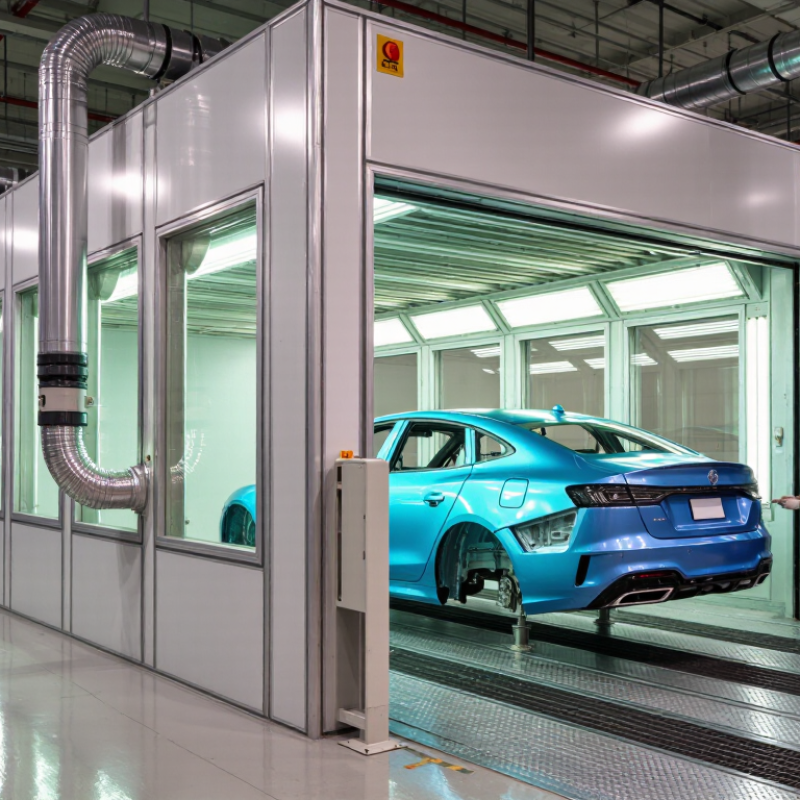
Paint booths control overspray, airflow, and curing conditions across automotive refinishing, furniture production, and industrial coating lines. Common designs include crossdraft, downdraft, and semi-downdraft booths. Crossdraft systems move air horizontally, while downdraft models pull it through floor-level exhausts. The World Paint and Coatings Industry Association reported global coatings sales of about US$202 billion in 2023, reflecting the scale of finishing work that depends on controlled application environments.

A booth’s performance relies on matched components: intake filters, exhaust filters, fans, ducting, lighting, and temperature controls. Some systems also include heated curing sections. In practice, filter loading can reduce airflow, and poor maintenance may leave uneven finishes or visible dust nibs. Booth selection should consider workpiece size, coating process, daily throughput, and available floor space—not just the quoted airflow.

Tips: Check airflow at the working zone, not only at the fan. Keep a simple record of filter changes and pressure readings; small changes can reveal trouble early. A booth that looks clean may still have uneven airflow.

Paint Booth Airflow: Core Components and Process Sequence

Typical airflow passes from the air intake and supply filters through the spray area, then through exhaust filters before discharge. Booth layouts vary: crossdraft, downdraft, and other designs use different airflow directions. The chart shows process order only, not measured performance.

China’s Paint Booth Manufacturing Landscape

China’s paint booth manufacturing landscape includes large industrial facilities and smaller specialist workshops. Many suppliers build downdraft, semi-downdraft, and side-draft booths for different production needs. Their capabilities can vary. One factory may focus on sheet-metal fabrication, while another offers broader design, ventilation, and installation support. Buyers should examine the complete system, not just the booth dimensions. Airflow design, filter access, lighting, controls, and after-sales support all affect daily operation.

Tips: Request layout drawings and airflow specifications. Ask how filters are replaced. Check what commissioning support is included.

A detailed review can reveal gaps early. For example, a booth may fit the available floor space but leave too little room for vehicle doors or routine maintenance. Request clear information on fan capacity, air distribution, heating options, and electrical requirements. Compare these details against the intended workload and site conditions. Factory photos are useful, but they do not replace a written specification or a live technical discussion. Some documentation may be incomplete or translated awkwardly; ask follow-up questions rather than assuming. A reliable supplier should explain design choices plainly and identify what is not included in the quoted scope.

Production Standards, Technologies, and Customization Options

For global buyers, a paint booth’s production standards matter as much as its quoted capacity. Ask for documented checks on panel fit, door seals, filtration, electrical safety, and airflow performance. A booth should be tested as an assembled system, not judged by component specifications alone. Request inspection records and a clear commissioning checklist. Small leaks matter.

Useful technology includes variable-speed fans, differential-pressure gauges, and evenly spaced LED lighting. These features help operators monitor airflow, filter loading, and surface defects. Controls should be straightforward to use, with alarms that identify a problem rather than merely flash a warning. Ask how temperature and humidity are measured, and where sensors are placed. Poor sensor placement can make readings misleading. That detail is easy to miss.

Customization should follow the workpiece, workflow, and available building space. Buyers can specify internal dimensions, door configuration, conveyor access, heating options, and dry or wet filtration. A wider booth may simplify loading, but it can also increase the volume of conditioned air. Consider maintenance access, replacement-filter availability, and installation requirements before approving a layout. Share drawings and expected daily throughput early; late changes can affect ducting and control settings. No design fits every facility.

Export Compliance, Logistics, and Support for Global Buyers

For global buyers, a paint booth is not ready to ship just because it has passed a factory inspection. Export planning should begin with the destination market’s requirements for electrical components, ventilation, fire protection, and emissions documentation. These vary by project and location. Ask for equipment specifications, packing details, and test records before production is complete. Small gaps can delay customs clearance or installation. The World Bank’s Logistics Performance Index 2023 highlights the importance of reliable customs and shipment tracking across international supply chains. Paperwork matters.

Shipping also deserves early attention. UNCTAD’s Review of Maritime Transport 2024 reports that more than 80% of world trade by volume moves by sea, making cargo protection and schedule planning critical. A booth’s panels, filters, and control cabinets need clear packing labels and moisture-conscious protection. Confirm container dimensions, lifting points, insurance, and the responsibilities of each party before dispatch. It is easy to assume every port handles oversized cargo in the same way; that assumption can prove costly. Reliable suppliers provide shipment updates and accessible technical support, while buyers should verify local installation needs with qualified professionals. Export documents should match the actual equipment and destination requirements.

Top Paint Booth Manufacturer in China for Global Buyers — Export Compliance, Logistics, and Support for Global Buyers

Buyer Consideration What to Verify Relevant Documents or Information Why It Matters
Destination-market requirements Confirm the applicable machinery, electrical, fire-safety, and workplace requirements for the installation country. Requirements depend on the booth design, intended use, and local rules. Applicable standards list; risk assessment; equipment specifications; conformity documents where required Regulatory responsibilities differ by market and product configuration. A buyer should verify requirements with the relevant authorities or a qualified conformity professional.
Electrical compatibility Check supply voltage, frequency, phase, control voltage, motor ratings, wiring, and available fault protection before production. Electrical drawings; motor and component schedules; connection requirements; installation instructions Matching the equipment to the site’s electrical supply helps prevent commissioning delays and avoidable modifications.
Hazardous-area and fire-safety review Assess whether flammable vapours, combustible materials, or site-specific conditions trigger additional hazardous-area or fire-protection requirements. Process description; ventilation and airflow data; equipment-area classification information; safety-system details Paint application can involve flammable substances. Applicable protections depend on the materials, process, and local regulations.
Export documentation Agree on the exact product description, quantities, package details, country of origin, and consignee information before dispatch. Commercial invoice; packing list; transport document; certificate of origin when requested or applicable Accurate, consistent documents support customs processing. Required documents vary by destination and shipment arrangement.
Customs classification and duties Confirm the tariff classification with a customs broker or the destination country’s customs authority; do not assume one code applies everywhere. Product specifications; proposed HS classification for review; country-of-origin details Classification can affect duties, import controls, and documentation. The importer is responsible for confirming local customs treatment.
Wood packaging If solid-wood packaging is used for international shipments, check whether it must meet the destination’s implementation of ISPM 15. Packaging declaration; treatment or marking details where applicable ISPM 15 establishes measures for international movement of wood packaging material. Exemptions and enforcement details depend on the destination.
Shipping terms and insurance Specify the agreed Incoterms® rule, named place or port, shipment responsibility, and insurance arrangements in the sales contract. Sales contract; freight quotation; cargo-insurance terms; shipment schedule Incoterms® 2020 allocates certain delivery tasks, costs, and risks between seller and buyer. It does not replace the full sales contract.
Crating and transport planning Review packed dimensions, gross weight, lifting points, container or oversized-cargo needs, and unloading access at the destination. Packing dimensions and weights; loading plan; lifting instructions; handling marks Early planning helps match the shipment to available transport, site access, and lifting equipment.
Installation and commissioning Clarify site preparation, foundations, utilities, exhaust routing, assembly scope, and who is responsible for local permits and inspections. Layout drawings; foundation and utility requirements; installation checklist; commissioning procedure Defined site responsibilities reduce delays and help ensure the system is installed and tested for its intended application.
After-sales support and spare parts Agree on response channels, support hours, warranty scope, troubleshooting process, and availability of recommended spare parts. Warranty terms; parts list; maintenance schedule; remote-support and service arrangements Clear support arrangements help buyers plan maintenance and address operational issues throughout the equipment lifecycle.
Buyer note: Compliance, customs, packaging, and installation requirements vary by destination and project. Confirm current obligations with the relevant authorities, importer, customs broker, and qualified local professionals before ordering or shipping.

Evaluating Suppliers, Costs, Installation, and Maintenance

A reliable paint booth supplier should explain how its design fits your products, workshop, and production volume. Ask for drawings showing booth dimensions, airflow direction, filter access, and required floor space. Request reference installations with similar workpieces, not just attractive photos. Specific evidence matters.

Compare the full operating cost, not only the purchase price. Include freight, foundation work, electrical connections, replacement filters, and expected energy use. A lower quote may exclude ducting or commissioning. That can change the budget quickly. Ask suppliers to list exclusions and warranty conditions in writing, then confirm which parts are stocked locally.

Installation quality affects safety, finish consistency, and downtime. Before delivery, check ceiling height, door clearance, and utility capacity with the supplier’s technician. During commissioning, record airflow readings and test lighting at the actual work surface. Keep maintenance instructions practical: filter-change intervals, cleaning steps, and inspection points should be clear. Real workshops are dusty, and schedules slip. A plan that looks perfect on paper may need adjustment after the first month.

Go to Top