
INDUSTRIES2023-04-26T19:33:38+00:00

Top 10 Types of Electric Bike Scooters for Global Buyers

Choosing among Electric Bike Scooters can feel simple until the specifications become confusing. A compact folding model may fit beneath an office desk, while a cargo design may carry groceries through rain and uneven streets. Fat-tire scooters offer stability on sand and gravel, but they can feel heavy on crowded sidewalks. The right choice depends on distance, terrain, rider comfort, storage space, and local safety requirements.

Horace Dediu, a respected micromobility analyst and founder of Micromobility Industries, has said, “Micromobility is the future of mobility.” His observation helps explain why buyers now compare more than speed and battery range. They examine motor performance, charging time, braking systems, frame strength, tire width, lighting, and after-sales support. These details matter when a daily commute includes steep roads, loose stones, or a sudden afternoon shower.

This guide explores ten major types for global buyers, including commuter, folding, cargo, fat-tire, mountain, road, moped-style, seated, tricycle, and long-range models. Each category solves a different transportation problem. None is perfect. A fast scooter may sacrifice portability, while a lightweight frame may reduce carrying capacity. That trade-off is easy to miss in polished product photos. Real experience matters more: test the riding position, inspect the controls, and confirm replacement-part access before purchasing. Specifications can look impressive. Daily comfort decides more. Buyers should also review local rules, certified safety features, and responsible riding practices, because requirements differ between countries and cities.
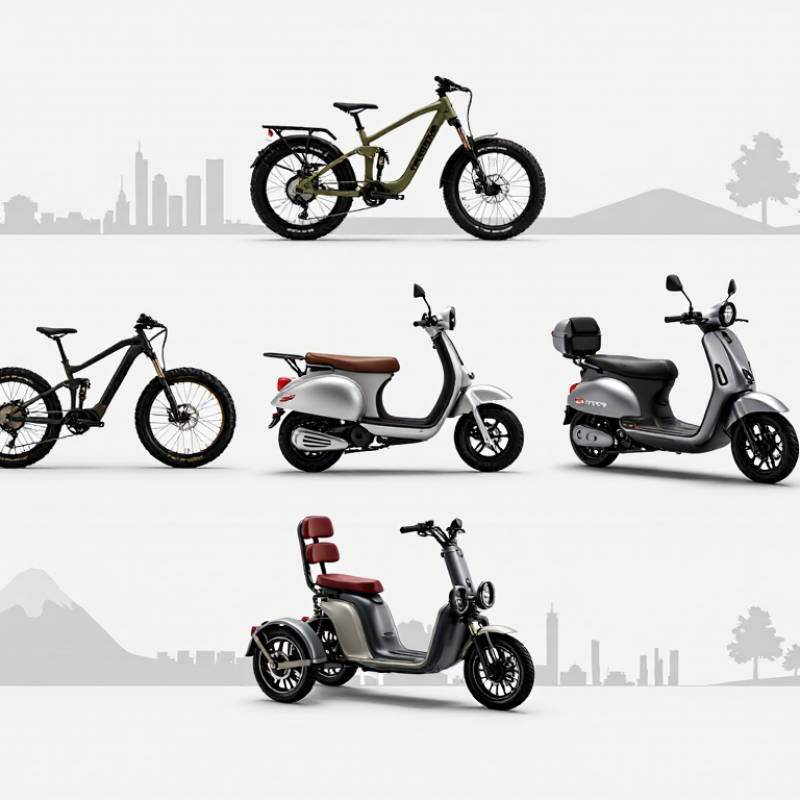
Top 10 Types of Electric Bike Scooters for Global Buyers

How the 10 Types Are Classified by Motor, Battery, Wheels, and Use

Top 10 Types of Electric Bike Scooters for Global Buyers

How the 10 Types Are Classified by Motor, Battery, Wheels, and Use

Electric bike scooters are easier to compare when four practical details guide the choice: motor, battery, wheels, and intended use. City step-through models usually use compact hub motors, small batteries, and 16 to 20-inch wheels. Folding commuter models share similar motors but use lighter frames and smaller wheels. Fat-tire scooters use wider wheels for sand, snow, and uneven paths. Mountain models often use mid-drive motors, stronger brakes, and larger batteries for climbing. Cargo models need high torque, reinforced frames, and extended battery capacity.

Moped-style scooters focus on comfort, with broad seats, rear hub motors, and 20-inch wheels. Seated scooters are often shorter and easier to handle in crowded streets. Long-range touring models carry larger batteries, sometimes with a second battery mount. Lightweight portable models trade range for easy lifting. Utility tricycles add two rear wheels for balance and carrying groceries. Wheel size changes stability, while motor placement affects hill performance and handling.

Tips: Check battery watt-hours, not only advertised range. Real-world distance drops with hills, cold weather, heavy loads, and frequent stops. Test the brake feel and folding joints before purchase. I have found that a comfortable scooter often beats a faster one after several weeks. This is easy to underestimate. Confirm charger safety, battery certification, weight limits, and local riding requirements before ordering. A perfect category does not exist; daily roads reveal compromises quickly.

Pedal-Assist and Throttle Models Under EU 250 W and 25 km/h Rules

Top 10 Types of Electric Bike Scooters for Global Buyers

Pedal-assist electric bicycles can fit EU EPAC rules when their motor is rated at no more than 250 W. Assistance must stop before the bicycle exceeds 25 km/h. This applies to city, folding, cargo, trekking, mountain, fat-tire, step-through, compact, utility, and commuter designs. Each type serves a different daily purpose.

A city model suits short trips on paved streets. A folding model fits trains and small apartments. Cargo bicycles need stable frames and reliable brakes under heavier loads. Mountain models require stronger wheels, but their off-road ability does not change the EU power limit. Fat tires improve grip on loose ground, not legal classification. Check the continuous rated power, not only the peak figure.

Throttle controls need careful attention. A throttle that moves the bicycle without pedaling may not qualify as an EU EPAC. Rules can differ for approved vehicle categories and local registration systems. Confirm the exact configuration with an authorized local authority before buying. A throttle may look convenient. It can also create confusion at inspection points. Test the assist cutoff on a quiet road, observe the display, and check the technical documents. Specifications are sometimes incomplete, and buyers should question unclear wording.

City, Folding, Cargo, Fat-Tire, and Off-Road Scooter Categories

City models suit paved commutes, with upright seating and lights for dim streets. A step-through frame makes frequent stops easier, while a compact city model can fit a narrow apartment hallway. Small wheels feel lively. Folding commuters simplify train transfers, but their hinges and latches deserve careful inspection. A compact folder saves space, though its smaller wheels may feel unsettled on broken pavement.

Cargo designs divide into long-tail models, which carry bags or a child behind the rider, and front-loaders, which place a box ahead of the handlebars. Check the rated load and braking performance with weight aboard; an empty test ride tells only part of the story. Fat-tire commuters add grip on loose paths, while fat-tire trail models trade some pavement efficiency for softer handling. Full-suspension off-road scooters are intended for rough tracks, not merely bumpy city roads. Tire width alone does not guarantee control. Compare battery capacity, service access, and frame fit, too. I may be giving specifications too much weight: a heavy model can be awkward to lift up three flights of stairs. Before buying, measure storage space and consider the route’s steepest hill.

Top 10 Types of Electric Bike Scooters for Global Buyers

A practical comparison of common electric bicycle and scooter-style categories, including typical design features, use cases, and trade-offs.

Type Typical Design Common Wheel and Tire Setup Typical Battery / Range Profile Best Suited For Main Trade-Off
City Commuter E-Bike Upright or moderately forward-riding position; usually equipped with lights, mudguards, and a rear rack. Generally 26–29-inch wheels with medium-width tires. Often fitted with a roughly 400–600 Wh battery; range depends on assist level, terrain, load, and weather. Daily urban trips, paved roads, and routine errands. Less capable than specialist models on deep sand, rough trails, or very steep terrain.
Folding E-Bike Hinged frame and compact folded profile; commonly uses smaller wheels for easier storage and transport. Often 16–20-inch wheels, with tire width varying by model. Typically uses a compact-to-medium battery; real-world range varies widely with rider and route conditions. Apartment storage, public-transport connections, and short-to-medium commutes. Small wheels can feel less stable over potholes, and folding frames may be heavier than they look.
Electric Cargo Bike Extended frame or front-loading design with a reinforced rack, box, or passenger area. Commonly 20–26-inch wheels; some designs use a smaller front wheel for a low cargo platform. Often uses a larger battery, sometimes with an optional second battery, to support heavier loads. Family transport, deliveries, groceries, and replacing some short car trips. Longer and heavier than standard e-bikes; storage and handling require more space.
Fat-Tire E-Bike Wide tires and a sturdy frame, often with a relaxed riding position. Typically 3.8–5-inch-wide tires on 20–26-inch wheels. Battery size varies; wide tires and low-pressure riding can increase rolling resistance on pavement. Sand, snow, loose gravel, and riders who value extra tire cushioning. Wide tires add weight and may feel less efficient on smooth roads.
Off-Road / Electric Mountain Bike Mountain-bike geometry with stronger brakes, trail-oriented components, and often front or full suspension. Usually 27.5- or 29-inch wheels with knobby tires; wheel sizes vary by frame design. Battery capacity and range depend heavily on elevation, trail surface, assist mode, and rider input. Forest paths, technical trails, climbs, and unpaved routes. Trail-focused tires and suspension can be less efficient for everyday paved commuting.
Step-Through E-Bike Low or open frame section makes mounting and dismounting easier; may have a comfort-focused cockpit. Commonly 24–28-inch wheels with city or hybrid tires. Usually available with commuter-style battery options; capacity differs by model. Frequent stops, riders who prefer easy access, and relaxed neighborhood trips. Frame shape and component choice affect stiffness and carrying capacity; specifications vary substantially.
Long-Range Touring E-Bike Comfort-oriented frame with touring accessories such as racks, lights, and mounting points for bags. Generally 27.5–29-inch wheels with durable touring or hybrid tires. Often designed around a higher-capacity battery; some models support a compatible auxiliary battery. Long commutes, recreational rides, and multi-day trips with luggage. Extra battery capacity and touring equipment can increase weight and purchase cost.
Electric Moped-Style Bike Step-through or compact frame with a bench-style seat and scooter-inspired appearance. Often 16–20-inch wheels with wider tires than a conventional city bike. Commonly uses a relatively large removable or frame-mounted battery; range varies by power setting and load. Short urban journeys and riders who prefer a moped-like seating position. May be heavy and bulky; local rules can classify some models differently from pedal-assist bicycles.
Compact Urban E-Bike Short wheelbase and compact frame, sometimes with small wheels and a rear rack or front basket. Often 16–24-inch wheels with practical, puncture-resistant tires. Typically prioritizes compact packaging over maximum battery capacity. Dense city travel, limited storage, and short trips with frequent stops. Smaller frames and wheels may be less comfortable for taller riders or rough surfaces.
Utility / Delivery E-Bike Work-oriented frame with reinforced racks or modular cargo mounts for regular commercial use. Usually 20–26-inch wheels selected for load stability and durability. May use a high-capacity battery or dual-battery configuration where supported. Courier work, local service businesses, and frequent transport of equipment or goods. High payload capacity can require careful attention to brakes, tires, maintenance, and total vehicle weight.

Buyer note: Battery capacity, riding range, payload limits, motor output, and legal classification differ by model and market. Check local regulations and the manufacturer’s specifications before purchase.

Battery, Range, and Safety Standards: UL 2272 and IP Protection Ratings

Top 10 Types of Electric Bike Scooters for Global Buyers

Battery, Range, and Safety Standards: UL 2272 and IP Protection Ratings

Electric bike scooters now include commuter, folding, seated, cargo, three-wheel, off-road, long-range, lightweight, performance, and utility models. Each type creates different battery and safety demands. The International Energy Agency reported that electric two- and three-wheelers remained a major part of global electric mobility sales in 2023. Buyers should compare battery capacity, measured in watt-hours, rather than trusting advertised distance alone. Wind, rider weight, hills, temperature, and tire pressure can reduce real-world range.

UL 2272 evaluates electrical systems in personal e-mobility devices, including battery, wiring, and charging protection. It does not automatically confirm every scooter feature or local road approval. Check the certification record, product documentation, and charger compatibility. The U.S. Consumer Product Safety Commission has repeatedly linked micromobility incidents with battery failures and unsafe charging practices. Charge on a clear, dry surface. Never ignore swelling, unusual heat, or chemical odors.

IP ratings follow IEC 60529. The first digit addresses solid particles, while the second addresses water exposure. An IP54 rating offers limited dust protection and resistance to water splashes. It is not permission to ride through deep puddles. Higher ratings help, but seals age and connectors can remain vulnerable. I would treat range figures as laboratory estimates, not promises. That small doubt matters when the final kilometers are uphill.

Global Market Context: Electric 2- and 3-Wheelers Exceeded 50% of Sales in 2023

Top 10 Types of Electric Bike Scooters for Global Buyers

Global Market Context: Electric 2- and 3-Wheelers Exceeded 50% of Sales in 2023

Industry tracking shows that electric two- and three-wheelers exceeded 50% of global sales in 2023. This shift reflects practical demand, not only environmental interest. Riders want lower daily costs, easier parking, and quieter streets. Popular categories include commuter scooters, folding scooters, seated scooters, moped-style models, cargo bikes, off-road scooters, delivery trikes, passenger trikes, utility trikes, and compact urban three-wheelers.

Each type fits a different daily scene. A commuter scooter may suit a train connection and a short office trip. A folding model can fit beside a desk, but its smaller wheels may feel unstable on broken pavement. Cargo bikes handle groceries and tools, while delivery trikes offer better load balance. Three-wheelers can provide extra stability, especially when stopping with heavy cargo. They are not automatically safer.

Buyers should check battery capacity, brake design, tire width, lighting, weather protection, and service access. Real range often falls below laboratory figures in cold weather, steep areas, or heavy traffic. A 500-watt motor may feel adequate on flat roads but struggle with a loaded hill. Weight matters too. A model that weighs 35 kilograms is difficult to carry upstairs. That detail is easy to overlook. Local speed limits, equipment rules, and charging standards also require careful verification before purchase. Classification remains imperfect, because one vehicle can serve both as a bicycle and a small utility transporter.

Top 10 Types of Electric Bike Scooters for Global Buyers

The chart compares representative nominal motor-power levels commonly used across major electric two- and three-wheeler categories. In 2023, electric two- and three-wheelers accounted for more than half of global sales in this vehicle segment, according to the International Energy Agency’s Global EV Outlook 2024. The values shown are category benchmarks rather than company or brand data.

Source context: International Energy Agency, Global EV Outlook 2024; category benchmarks reflect commonly marketed configurations and regulatory classifications.

Go to Top