
Top China Radiation Resistant Stepper Motor Suppliers?
China’s Radiation Resistant Stepper Motor suppliers serve demanding applications in satellites, nuclear facilities, medical equipment, and high-altitude systems. Their products must withstand radiation while maintaining accurate positioning, stable torque, and predictable service life. A motor may look robust on a factory floor, yet fail after prolonged exposure to total ionizing dose, displacement damage, or temperature cycling.
NASA’s Nuclear and Space Radiation Effects Program identifies these effects as separate reliability concerns, not one simple test category. ESA’s ECSS-E-ST-10-04 environmental standard also emphasizes mission-specific qualification, including radiation exposure, vacuum, vibration, and thermal conditions. These references matter when comparing Chinese manufacturers. Brochures are useful, but test curves, material records, winding data, and traceable laboratory reports matter more.
Kenneth A. LaBel, a NASA radiation-effects specialist, has stressed that “radiation effects are application specific.” That warning fits the Radiation Resistant Stepper Motor market closely. A motor qualified for low-Earth orbit may not suit a reactor inspection robot. Shielding thickness changes. Duty cycles change. So does the expected dose.
The strongest suppliers explain these differences clearly. They provide torque retention data, insulation ratings, connector specifications, and testing conditions. Some claims remain difficult to verify. That is the uncomfortable part. Buyers should request independent evidence, not rely on impressive wording. This guide examines leading China-based suppliers through technical capability, quality systems, customization experience, and documented radiation testing. Reliability begins with measurable evidence.
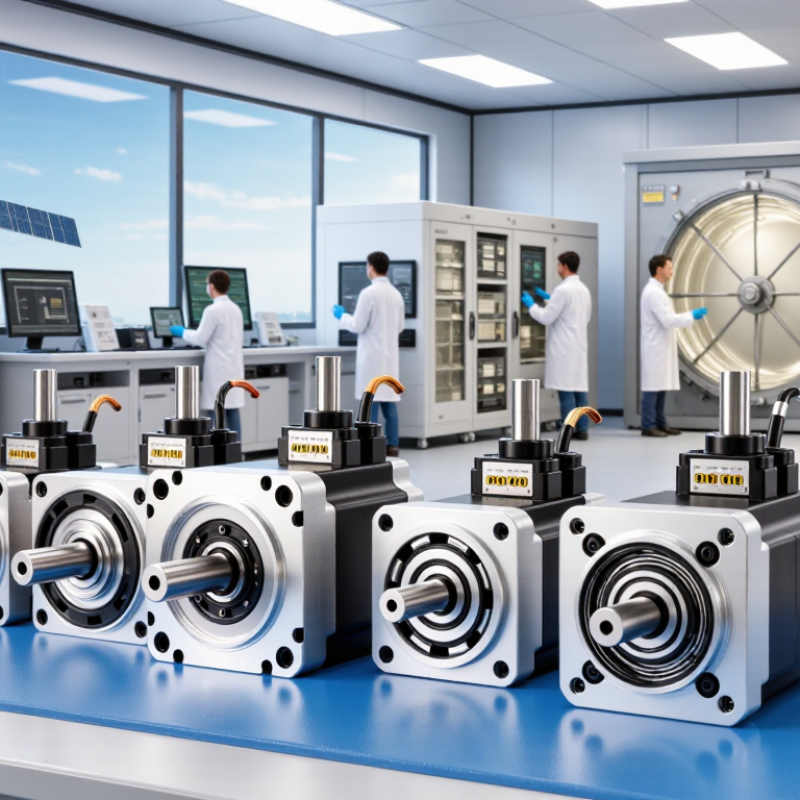
What Are Radiation-Resistant Stepper Motors?
Radiation-resistant stepper motors are electromechanical actuators designed to keep producing controlled rotation after exposure to ionizing radiation. Their windings, insulation, magnets, bearings, and position sensors must tolerate different failure mechanisms. NASA EEE-INST-002 separates these risks into total ionizing dose, displacement damage, and single-event effects. That distinction matters.
A motor can survive a high dose yet fail earlier through insulation leakage or sensor errors. NASA’s NEPP technical reports commonly evaluate dose in krad(Si), while mission testing adds application-specific margin. There is no universal radiation rating. A motor rated at 100 krad(Si) may still perform poorly in vacuum, thermal cycling, or magnetic interference. ESA environmental reports also show that trapped-belt and solar-event exposure can vary greatly with orbit and mission duration.
In practical supplier reviews, ask for radiation test curves, dose rate, temperature, vacuum conditions, and post-test torque data. Request winding resistance before and after exposure. Check whether the step angle remains stable under load. It should.
Magnet selection also matters, because some materials lose strength after irradiation or heating. Ceramic bearings can reduce lubrication concerns, but they may increase vibration. That trade-off is easy to miss.
A credible Chinese supplier should provide traceable test records, component-level screening, and a clear failure definition. I would not call any motor radiation-proof. “Radiation-resistant” is more accurate, and more honest. NASA EEE-INST-002 and ESA ECSS-Q-ST-60 series remain useful references when comparing qualification evidence.
Key Features of China’s Radiation-Resistant Stepper Motors
China’s radiation-resistant stepper motor suppliers typically focus on material selection, insulation stability, and predictable torque under radiation exposure. These motors often use radiation-tolerant wire coatings, ceramic insulation, and carefully selected magnetic materials. The design must also control outgassing in vacuum chambers or sealed equipment.
A practical supplier should provide dose testing, temperature data, torque curves, and winding resistance records. Look for test conditions that match the intended mission, not generic laboratory claims. Bearings and lubricants deserve equal attention. Standard grease may harden, evaporate, or lose performance after prolonged exposure. Dry lubricants or specially qualified lubricants can reduce this risk.
Small details matter.
In engineering evaluations, I check holding torque after thermal cycling, connector performance, and step accuracy at low speed. A shielding layer may protect the motor, but it can increase size and heat resistance. That trade-off is easy to underestimate. A motor may survive radiation exposure yet fail because heat cannot escape. Suppliers should discuss derating, installation orientation, cable materials, and replacement intervals openly. Some test results also represent limited dose rates, so they should not be treated as lifetime guarantees. Clear documentation, traceable testing, and responsive technical support help buyers compare Chinese suppliers with greater confidence.
How to Evaluate Chinese Stepper Motor Suppliers
Evaluating Chinese radiation-resistant stepper motor suppliers requires more than comparing catalog prices. Ask for test evidence, not confident promises. Request radiation-dose data, temperature limits, torque curves, insulation ratings, and vacuum compatibility. The supplier should explain the test method clearly. Check whether tests used the same winding, bearings, and driver configuration as your project.
Experience matters during technical discussions. Ask engineers how the motor behaves after repeated radiation exposure, not only immediately afterward. Review sample inspection records, material certificates, and production traceability. A reliable factory can identify the batch, operator, and inspection equipment behind each motor. Visit the facility when possible. Look for controlled assembly areas, calibrated instruments, winding records, and practical quality checks.
Use an independent laboratory for critical radiation testing. Factory reports are useful, but they should not be your only evidence. Order prototypes and measure holding torque, vibration, temperature rise, and missed-step performance under realistic loads. Test cable insulation and connector sealing separately. Small differences can become serious in confined equipment. Also examine engineering support, replacement policies, communication speed, and change-control procedures. A low price may hide weak documentation or unstable materials. I have found that supplier comparisons can still be imperfect, especially when testing conditions differ. That uncertainty should be recorded, not ignored. Begin with a clear specification sheet and challenge every unexplained number.
How to Evaluate Chinese Radiation-Resistant Stepper Motor Suppliers
This screening model uses practical evaluation dimensions for radiation-resistant stepper motors. The suggested weighting emphasizes documented radiation qualification, insulation and material selection, environmental capability, customization, test records, and quality-system controls. It is a supplier-audit framework, not a ranking of any company or brand.
Leading Supplier Types and Manufacturing Capabilities
China’s radiation-resistant stepper motor suppliers usually fall into three groups: specialist motor manufacturers, aerospace subsystem integrators, and precision automation factories. Each group serves different procurement needs. Specialist manufacturers typically provide custom windings, vacuum-compatible bearings, ceramic insulation, and sealed housings. Their advantage is motor-level expertise. Integrators add drive electronics, encoders, gearboxes, and environmental qualification. Precision factories may offer lower pricing, but their radiation data can be limited.
According to the 2024 Space Foundation report, the global space economy reached approximately 570 billion US dollars in 2023. This growth increases demand for compact actuators in satellites, instruments, and robotic mechanisms. Suppliers with radiation-focused capabilities should show total-dose and single-event test records, not only temperature curves. ESA’s Space Environment Report 2024 also highlights changing solar activity and radiation exposure risks across orbital conditions. Material selection matters. Stainless-steel shells, low-outgassing lubricants, and screened magnet insulation can prevent failures near sensitive electronics.
Manufacturing depth separates credible suppliers from simple assemblers. Look for in-house winding, rotor balancing, vacuum bakeout, X-ray inspection, and lot-level traceability. Testing decides. A reliable supplier should explain test fluence, dose rate, shielding assumptions, and failure criteria. Some suppliers publish impressive figures without showing test fixtures or sample sizes. That is a weakness. Buyers should request vibration, thermal-vacuum, life-cycle, and radiation reports together. A motor that survives radiation may still lose step accuracy after repeated thermal cycling. The industry remains uneven, and public qualification evidence is often incomplete.
| Supplier Type | Typical Product Focus | Radiation-Resistance Approach | Manufacturing Capabilities | Typical Customization | Best-Fit Applications |
|---|---|---|---|---|---|
| Specialized Motion-Control Manufacturer | Radiation-tolerant stepper motors, hybrid stepper motors, and compact actuators | Low-outgassing materials Inorganic insulation options Radiation-screened components | Precision stator winding, rotor balancing, vacuum-compatible assembly, controlled cleaning, and traceable production documentation | Winding configuration, shaft geometry, connector style, lead length, mounting pattern, holding torque, and operating temperature range | Vacuum instruments, radiation-processing equipment, laboratory automation, and specialized positioning systems |
| Industrial Stepper-Motor Factory | Two-phase and three-phase hybrid stepper motors in standard frame sizes | Selected insulation systems Metallic construction Reduced polymer content | Automated coil winding, CNC machining, rotor assembly, end-of-line electrical testing, and batch production | Frame size, rated current, phase resistance, inductance, shaft extension, bearing arrangement, and cable termination | Industrial equipment requiring improved resistance to heat, vacuum, or ionizing-radiation exposure |
| Precision Actuator Integrator | Stepper-motor assemblies combined with lead screws, gearboxes, encoders, or linear mechanisms | Shielded construction Radiation-tolerant feedback options Material compatibility review | Motor-to-mechanism integration, alignment, backlash control, travel testing, and application-specific qualification | Stroke length, reduction ratio, positioning resolution, connector placement, limit sensing, and mounting interfaces | Remote handling, inspection systems, nuclear laboratories, and confined-space mechanisms |
| Vacuum and Space-Environment Motion Supplier | Stepper motors designed for vacuum, thermal cycling, and contamination-sensitive environments | Low vapor pressure materials Vacuum-rated lubrication Thermal-cycle design | Vacuum bakeout support, clean assembly, thermal-vacuum testing, precision balancing, and contamination control | Vacuum level, allowable temperature range, lubricant selection, cable insulation, connector type, and torque-speed profile | Space payloads, vacuum chambers, semiconductor equipment, and high-energy physics instrumentation |
| Custom Electromechanical Engineering Firm | Application-specific motor designs for unusual radiation, temperature, or geometry requirements | Requirement-based material selection Component derating Qualification testing | Electromagnetic design, finite-element analysis, prototype machining, design verification, and engineering change control | Custom magnetic circuit, torque margin, thermal path, housing material, mounting envelope, winding voltage, and control interface | Research equipment, nuclear inspection tools, high-energy facilities, and specialized robotics |
Applications and Selection Criteria for Space Environments
Top China Radiation Resistant Stepper Motor Suppliers?
Applications and Selection Criteria for Space Environments
Selecting a radiation-resistant stepper motor for space starts with the mission profile. Orbit duration, radiation dose, vacuum level, and temperature cycling all matter. A motor for a short low-Earth-orbit experiment may need less protection than one for deep-space equipment. Typical applications include antenna positioning, optical shutters, valve actuation, solar-array mechanisms, and instrument focusing. Vacuum changes lubrication behavior. Thermal swings can also alter torque and winding resistance.
When evaluating suppliers in China, request measurable evidence rather than broad claims. Ask for total ionizing dose data, thermal-vacuum results, vibration testing, and insulation resistance records. Confirm the test conditions and failure limits. Check whether the motor uses low-outgassing materials, radiation-tolerant insulation, and space-compatible lubricants. Detent torque, step accuracy, holding torque, rotor inertia, and drive-current stability should match the mechanism. Electrical interfaces deserve equal attention. Radiation can damage nearby driver electronics, even when the motor itself remains functional.
Traceability is essential. Reliable suppliers should provide material records, inspection reports, serial-number control, and repeatable production data. Previous space experience helps, but it is not proof of suitability for every orbit. A sample that performs well may hide batch variation. That risk is easy to underestimate. I would also review winding geometry, bearing preload, connector design, and demagnetization margins with the supplier’s engineers. No datasheet can replace mission-specific qualification. Sometimes, the safest choice is a less powerful motor with greater thermal and radiation margin.