INDUSTRIES2023-04-26T19:33:38+00:00

Top Aluminium Die Casting Auto Parts Manufacturers in China

China is a major centre for automotive production and component sourcing. The China Association of Automobile Manufacturers reported 31.28 million vehicles produced and 31.44 million sold in 2024. Meanwhile, the International Energy Agency’s Global EV Outlook 2024 estimated that electric car sales reached nearly 14 million worldwide in 2023, about 18% of total car sales. These figures show the scale and changing needs of the market. They do not, by themselves, prove that any supplier is the right fit.

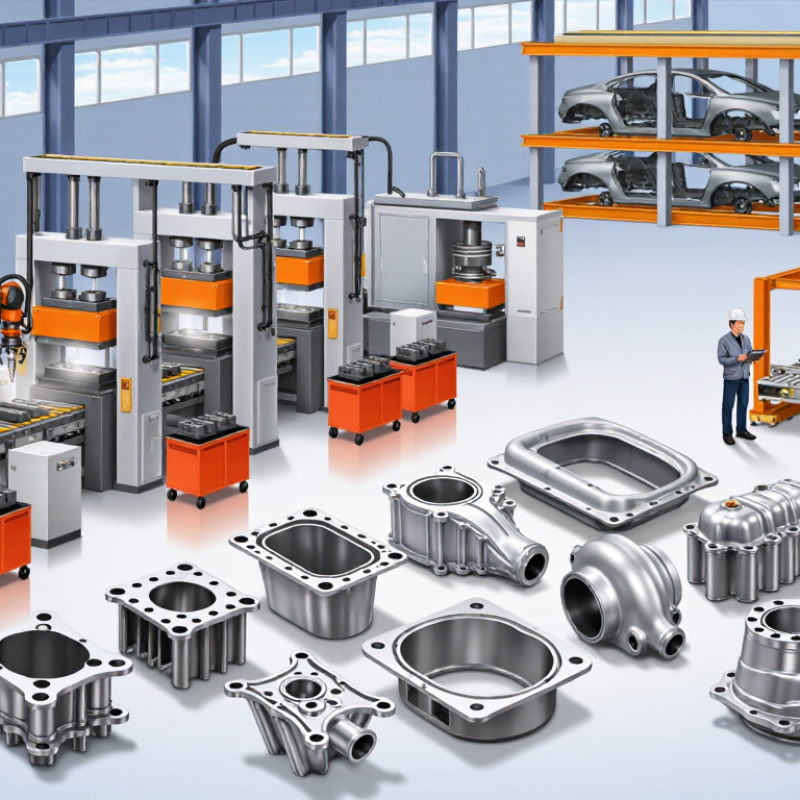
Aluminium Die Casting Auto Parts can include motor housings, transmission cases, brackets, and structural components. Their value depends on more than low weight. Buyers also need consistent dimensions, sound material quality, dependable tooling, and clear inspection records. Small details matter: a thin wall, a cooling channel, or a machining allowance can affect both performance and cost. This guide examines leading manufacturers in China through practical criteria, including production capability, engineering support, quality controls, and export experience. A polished website is not enough. Factory capacity and customer requirements may differ, and public information can be incomplete. That deserves a closer look. No ranking can replace an audit, sample testing, or a direct review of technical specifications. Still, a carefully compared shortlist can help buyers ask better questions before requesting a quotation.
Top Aluminium Die Casting Auto Parts Manufacturers in China

Aluminium Die Casting in China's Automotive Supply Chain

Aluminium die casting supports China’s automotive supply chain by producing lightweight housings, brackets, and structural components at scale. These parts can reduce vehicle mass while combining several features in one casting. For manufacturers, consistent dimensions matter as much as output volume. A transmission housing with uneven wall thickness may require extra machining or create assembly problems. Small details add up.

China’s supply network connects casting plants with alloy suppliers, toolmakers, machining shops, and vehicle assembly facilities. Shorter distances can help teams coordinate tooling changes and production schedules. Still, proximity alone does not guarantee reliable delivery. Buyers should review process controls, inspection records, and the supplier’s ability to trace material batches. X-ray inspection can reveal internal porosity in critical castings, while coordinate measuring equipment checks dimensions against drawings. These checks take time. They are worth discussing before production begins.

Supplier evaluation should also consider tooling ownership, maintenance plans, and capacity for engineering changes. A well-designed die can improve repeatability, but dies wear and need planned repair. Trial runs are useful for checking fill patterns, cooling behavior, and machining allowances before orders grow. The process is not flawless; early samples can look sound, yet behave differently after production speeds increase. Clear technical communication helps, though drawings sometimes leave practical questions unresolved. Teams should agree on acceptance criteria and review actual samples together.

Key Processes Used to Produce Automotive Die-Cast Parts

Automotive die-cast parts begin with alloy selection and careful melt control. In high-pressure die casting, molten aluminium is forced into a closed steel die, filling narrow ribs and mounting points before solidifying. Vacuum-assisted casting can reduce trapped gas, which matters when a housing must pass leak testing. The U.S. Department of Energy’s Vehicle Technologies Office reports that a 10% reduction in vehicle weight can improve fuel economy by about 6–8%. That helps explain the appeal of lightweight cast components, though part design and vehicle conditions affect actual results.

After casting, operators trim gates and flash, then check critical dimensions and surfaces. X-ray inspection can reveal internal porosity; pressure or leak tests assess sealed housings. CNC machining then finishes precise interfaces, such as bearing seats and bolt holes. Heat treatment is not automatic: some high-pressure castings can blister during heating if gas remains trapped. Process choice should match the part’s strength, geometry, and production volume. Small defects matter.

Tips: Review inspection records alongside samples, and ask how porosity and dimensional variation are monitored. A polished sample alone tells little. Even capable factories can produce inconsistent results when die temperature, injection speed, or melt cleanliness drifts between production runs.

Leading Manufacturers and Their Production Capabilities

China’s aluminium die casting manufacturers vary widely in scale and specialization. Some operate multiple high-pressure casting cells, while smaller plants focus on selected components. Production capability depends on more than machine count. Buyers should check clamping force, shot capacity, alloy control, and whether equipment suits the part’s size and wall thickness.

Ask how the factory manages tooling, trimming, and machining after casting. A component may need CNC drilling, thread tapping, or leak testing before assembly. Tool maintenance also affects output: worn dies can cause flash, porosity, or dimensional drift. Capacity figures need context. A stated monthly volume may assume stable demand, simple geometry, and limited changeovers. Numbers need context.

For automotive programs, review sample-run procedures and measurement records. A capable supplier can explain how it checks critical dimensions and tracks production batches. Surface finishing may be handled in-house or by a qualified partner, so confirm the process and handoff points. Request evidence of repeatability across multiple production runs, not just a polished first sample. Not every factory will offer the same level of traceability. That gap is easy to miss.

Common Automotive Applications of Aluminium Die Castings

Common Automotive Applications of Aluminium Die Castings

Aluminium die castings appear in many automotive systems where low mass, repeatable dimensions, and complex shapes matter. Transmission housings are a common example. Their ribs support stiffness, while cast channels can help package oil passages and mounting points. Electric vehicles also use cast aluminium motor and inverter housings. These parts protect sensitive components and can transfer heat toward cooling surfaces. Brackets, pump bodies, and steering-system housings are other practical applications. Small details matter: a boss around a bolt hole can reduce local stress, but poor placement may add weight without improving strength.

Tips: Match the casting design to its job. Check wall thickness, draft, and rib transitions early. Ask how porosity will be monitored, especially near pressure-containing features. A smooth-looking surface is not proof of internal quality.

Large structural castings can combine several parts and reduce assembly steps. Yet integration brings trade-offs: repairs and inspection may become more difficult, and one casting defect can affect a larger assembly. Designers should review load paths, heat exposure, vibration, and machining needs together. Die casting is useful, not automatic insurance against failure. Real operating conditions still deserve attention.

Top Aluminium Die Casting Auto Parts Manufacturers in China - Common Automotive Applications of Aluminium Die Castings

Vehicle system Common die-cast components Primary function Why aluminium die casting is used Typical design considerations
Powertrain Transmission and gearbox housings; clutch housings Enclose and support gears, bearings, and related components Enables complex shapes, integrated features, and lower component mass than many iron alternatives Wall thickness, bearing alignment, sealing surfaces, and porosity control
Engine accessories Oil pump housings; timing covers; accessory brackets Support or protect engine-related mechanisms and attachments Supports high-volume production of detailed, relatively lightweight components Operating temperature, dimensional stability, machined interfaces, and fluid sealing
Electric drive Electric motor housings; end shields; drive-unit covers Enclose the motor and help manage structural and thermal requirements Aluminium’s thermal conductivity and casting flexibility can support compact housings and integrated features Concentricity, cooling features, vibration resistance, and sealing
Power electronics Inverter and motor-controller housings; electronic control-unit enclosures Protect electronic assemblies and provide mounting and heat-transfer surfaces Complex housings can incorporate ribs, mounting points, and heat-dissipation features Thermal paths, electromagnetic compatibility requirements, ingress protection, and leak testing
Battery systems Battery-pack covers, trays, and selected structural or cooling components Enclose, support, or help thermally manage battery modules Can combine structural features and mounting details while reducing mass Crash performance, sealing, corrosion protection, joining, and battery thermal-management design
Chassis and steering Steering gear housings; selected suspension and mounting components House mechanisms or provide attachment points within vehicle systems Allows near-net-shape production of parts with ribs and integrated mounting features Load paths, fatigue performance, impact requirements, and verification of critical dimensions
Braking and stability control ABS and electronic stability-control hydraulic unit housings House hydraulic passages, valves, and control-system interfaces Supports compact, multi-feature housings with machined fluid connections Pressure integrity, passage cleanliness, machining accuracy, and leak testing
Heating, ventilation, and air conditioning Compressor housings; selected HVAC motor and actuator housings Enclose and support components used in cabin climate-control systems Offers design flexibility for compact housings and integrated mounting details Pressure or refrigerant compatibility where applicable, sealing, noise, and vibration

Note: Component selection depends on the vehicle design, required mechanical properties, operating conditions, and the specified casting process. Critical pressure-bearing or safety-related parts require application-specific validation.

How to Evaluate Quality, Certifications, and Supplier Fit

A reliable aluminium die casting supplier should explain how each part is controlled, not just display impressive equipment. Ask for the alloy specification, process-flow chart, and inspection plan. For a steering bracket or transmission housing, request evidence of dimensional checks at critical features, such as bearing bores and mounting faces. Review sample records alongside the actual part. Paper is not proof.

Certifications can help, but their scope matters. Check that the certificate is current and covers the correct factory and manufacturing activities. An automotive quality certification may indicate structured controls, yet it does not guarantee low porosity or consistent machining. Ask how the supplier monitors melt temperature, die condition, and process changes. A clear answer should include records, responsible roles, and a response when results fall outside limits. That detail matters.

Supplier fit is equally practical. Compare tooling ownership, annual capacity, lead times, and experience with similar part geometry. Ask who reviews draft angles, wall thickness, and machining allowance before tooling begins. For export programs, clarify packaging, traceability, and approval-document requirements early. A polished audit score can still hide slow engineering support; test response quality with a real drawing question. No checklist catches every production surprise. I would leave room for a pilot run, because the first review may miss something.

Go to Top