Top 10 X Ray Protection Aprons for Global Buyers
Choosing a protective garment is a practical decision, not a label-reading exercise. A well-made x ray protection apron should fit the wearer, suit the imaging workflow, and allow comfortable movement during repeated procedures. A heavy apron that stays on the hook offers little practical protection. Fit matters.
Global buyers also compare more than price. They examine garment coverage, closure design, material options, size ranges, cleaning instructions, and inspection support. A useful evaluation checks seams and fasteners, asks how defects are reported, and confirms that product claims are supported by current documentation. Details count.
This guide reviews ten options for varied clinical settings, from busy imaging departments to mobile services. It highlights trade-offs rather than treating one model as best for everyone. A lighter design may improve comfort, while a different cut may provide more coverage. The right choice depends on the task, wearer, and local safety procedures.
Expert insight can help, but a quotation should be traceable. No source article or verifiable expert statement was provided for this draft, so assigning a quote to a named specialist would risk misleading readers. That matters. Buyers should confirm technical specifications with manufacturers and qualified radiation-safety professionals before purchase. A polished brochure is not independent evidence. Use documented product information, careful fitting, and routine condition checks to make a more reliable comparison.
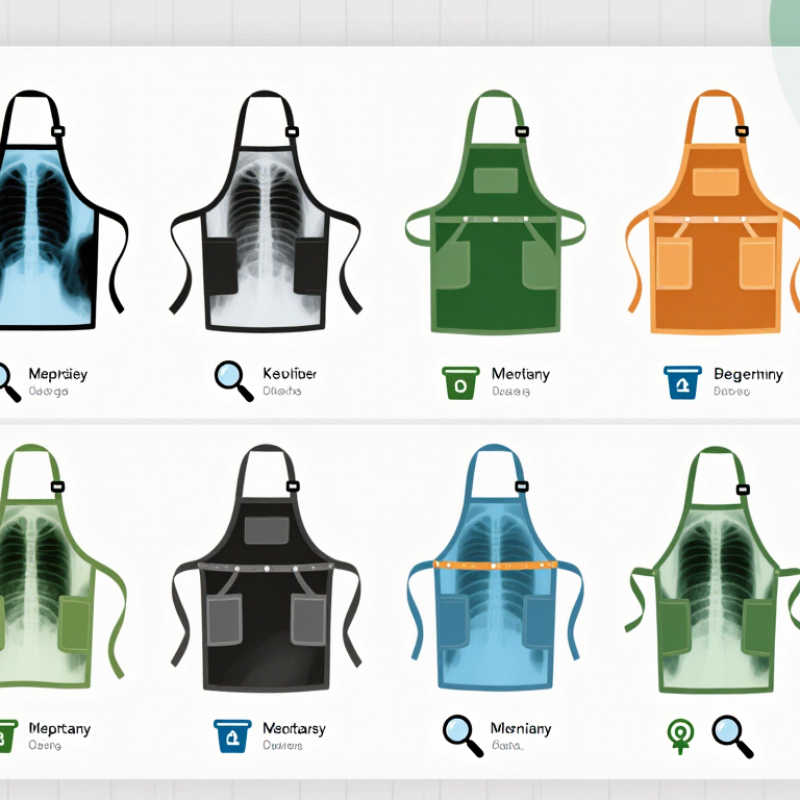
How X-Ray Protection Aprons Reduce Occupational Radiation Exposure
During fluoroscopy, an apron helps reduce occupational exposure by absorbing scattered X-rays before they reach the wearer’s torso. Scatter is produced when the primary beam interacts with the patient, so staff standing close to the table may face greater exposure. Protection depends on the apron’s tested lead equivalence, beam energy, angle, fit, and condition. A loose side closure or cracked panel can leave protection uneven. Fit matters.
The International Commission on Radiological Protection’s Publication 103 recommends an occupational effective-dose limit of 20 mSv per year, averaged over five years, with no single year exceeding 50 mSv. This is a radiation-protection benchmark, not a guarantee that an apron alone will keep exposure below it. ICRP Publication 139 also emphasizes workplace protection and appropriate dose monitoring in interventional settings. In practice, staff should combine an apron with distance, ceiling-suspended shielding, and personal dosimeters. A dosimeter worn outside the apron near the collar can help assess head and neck exposure; local monitoring procedures may also require one beneath the apron. One gap deserves attention: protective clothing can feel reassuring, yet its condition and fit are easy to overlook during a busy shift. Regular inspection and clear storage routines help catch wear before it becomes a hidden weakness.
Which Safety Standards and Shielding Specifications Buyers Should Check
Top 10 X Ray Protection Aprons for Global Buyers
Which Safety Standards and Shielding Specifications Buyers Should Check
A useful comparison starts with the test method, not the product label. IEC 61331-1:2014 describes methods for measuring attenuation, while IEC 61331-3:2014 covers protective clothing and related devices. ASTM F2547 also provides a test method for measuring protection from X-ray garments. Ask suppliers for test reports that identify beam quality, including kVp, and lead-equivalent thickness. Common options include 0.25, 0.35, and 0.5 mm Pb, but equivalent values are meaningful only alongside the testing conditions. The label can mislead.
NCRP Report No. 160 estimated that medical exposure contributed about 3.0 mSv of the 6.2 mSv average annual per-person exposure in the United States in 2006. That figure is historical, not a current apron-performance benchmark. It does underline why buyers should verify shielding claims rather than rely on appearance. Check whether coverage suits the procedure, and compare garment weight, overlap, seams, and fit. A stiff apron may protect on paper yet be uncomfortable during a long shift. This comparison is not perfect.
Tips: Request the full test report, not only a certificate. Confirm the stated lead equivalence and kVp range match the intended use. Inspect seams and closures, too. Small details matter.
How the Top 10 Aprons Compare in Design, Materials, and Intended Use
A useful comparison of ten X-ray protection aprons starts with how they are built. Traditional lead-based models are often chosen for familiar handling and broad availability, while lead-free composite designs may reduce weight. Neither material is automatically the best choice. Actual weight depends on apron size, protective specification, and how much coverage the design provides.
Design changes the working feel. A front-only apron can suit procedures where staff face the radiation source, while wraparound styles add coverage when movement or positioning changes. Vest-and-skirt sets spread weight across the shoulders and hips; lightweight single-piece aprons are simpler to put on. Some models include thyroid collars, overlapping panels, or adjustable closures.
Small details matter. A stiff shoulder seam can become uncomfortable during a long session.
Intended use should guide the shortlist: mobile imaging, operating rooms, and fixed departments may call for different coverage and mobility. Check fit while standing and bending, and confirm that the apron’s labeling matches facility requirements. This comparison has a limitation: published weight figures may use different sizes, so direct rankings can mislead. Inspect seams, closures, and surface condition according to the facility’s routine. A lighter apron may feel easier, but only if its coverage and fit remain appropriate.
How Fit, Coverage, and Mobility Shape Apron Selection
For global buyers, apron fit is not a size label; it is how protection sits during real work. A front apron that pulls at the neck can become tiring during a long fluoroscopy list. A loose hem may catch on a chair or restrict a quick turn. Check shoulder width, torso length, closure adjustment, and overlap while standing and seated. Small details matter.
Coverage must suit the procedure and the wearer’s position. The U.S. Food and Drug Administration’s fluoroscopy guidance identifies 0.25 mm lead equivalence as a commonly used minimum for protective apparel. That figure does not replace a review of the apron’s stated attenuation or local radiation-safety advice. Confirm that the front, sides, and lower torso remain covered when the wearer reaches, leans, or sits. A mannequin check helps, but real movement is the better test.
Mobility is easy to underestimate. Try lifting both arms, walking, and bending before approving a sample; the fabric should not tug sharply or shift open. Two-piece designs can distribute weight across the body, though extra closures may slow changing. A lighter apron may feel easier, but comfort alone cannot verify protection. In practice, size charts can still mislead. Recheck fit across different body shapes and work settings, and record what feels restrictive.
How to Evaluate Suppliers, Maintenance Needs, and Lifecycle Costs
For global buyers, a low unit price can hide weak quality records, slow repairs, or inconsistent shielding. Ask suppliers for independent test certificates, lead-equivalence values, garment size ranges, warranty terms, and batch traceability. IEC 61331-3:2014 specifies testing protective clothing at tube potentials including 50, 70, and 90 kV; request the actual test results, not just a catalogue claim. Check stitching, closures, overlap, and weight samples before approving a large order. A vest that hangs poorly may leave gaps when staff bend over a patient.
Plan maintenance before delivery. The IAEA’s SSG-46 guidance calls for regular checks of protective garments; buyers should document visual inspections and arrange imaging checks under a qualified local quality-control program. That interval is not universal. Record each apron’s ID, inspection date, defects, and repair or retirement decision. Store garments flat or on suitable hangers, away from sharp edges and heavy objects. Small cracks matter. Compare lifecycle cost per year of service, including inspection, storage, shipping, downtime, and disposal—not purchase price alone. A simple spreadsheet helps, though predicted service life is never exact; actual wear depends on workload, handling, and storage. Request replacement parts and repair turnaround estimates in writing, then compare them across suppliers.