
INDUSTRIES2023-04-26T19:33:38+00:00

Top 10 Hot Dip Galvanized Steel Coil Manufacturers

Selecting from the Top 10 Hot Dip Galvanized Steel Coil Manufacturers requires more than comparing prices. Hot Dip Galvanized Steel Coil serves roofing, automotive panels, HVAC components, and structural products. Its reliability depends on steel grade, zinc coating mass, surface finish, dimensional control, and testing discipline. A bright surface alone proves little.

This guide examines manufacturers through practical and verifiable criteria. These include production capacity, galvanizing technology, coil thickness ranges, coating options, inspection procedures, and export experience. Technical data sheets, mill certificates, and third-party inspection records can reveal more than promotional language. Details matter. Buyers should check coating values in g/m², width tolerances, coil weight limits, edge conditions, and packaging quality. Moisture-resistant wrapping and strong steel straps can prevent damage during long-distance transport.

Customer experience also deserves attention. Consistent delivery, responsive communication, and clear claims procedures often indicate a mature supplier. However, no list can represent every market equally. Rankings may change as equipment, certifications, and service performance develop. Some public information remains incomplete, so readers should verify current factory capabilities directly. That is not a weakness in the research; it is a necessary caution.

The selected manufacturers are presented as useful starting points, not automatic purchasing decisions. Their suitability depends on application requirements, regional standards, project volume, and total delivered cost. A careful buyer will request recent samples, confirm inspection methods, and compare performance after fabrication. Small details can decide the outcome.
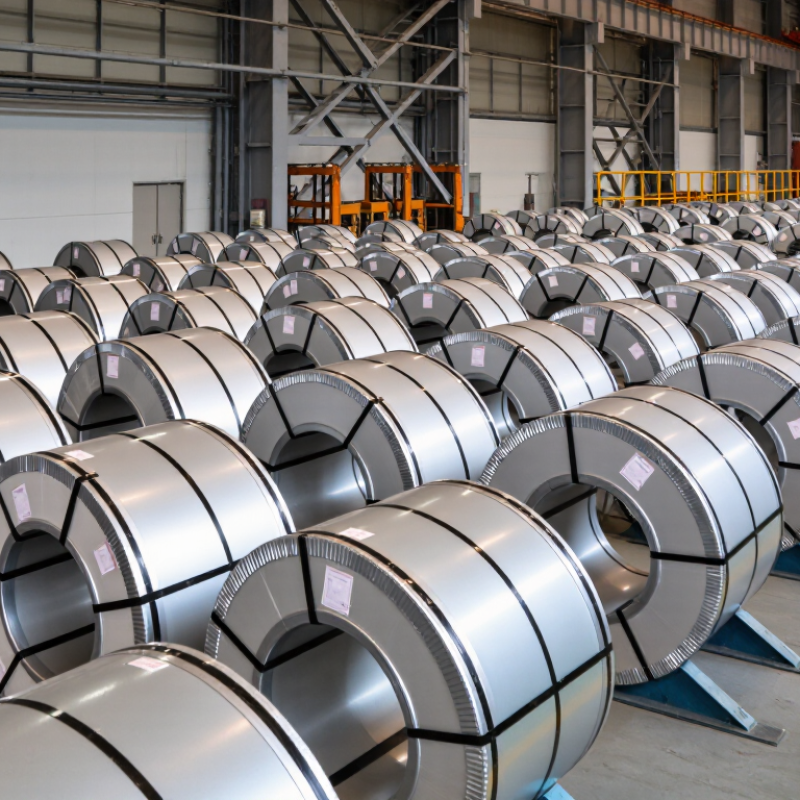
Top 10 Hot Dip Galvanized Steel Coil Manufacturers

Market Scope and Selection Criteria for Galvanized Steel Coil Manufacturers

Selecting the top ten hot dip galvanized steel coil manufacturers requires a clear market scope. Consider construction, automotive, appliance, and fabrication demand. Regional supply, export capacity, and production scale also affect suitability. A reliable review should compare coating grades, coil thickness, width tolerance, surface finish, and monthly capacity. Factory audits, test certificates, and batch traceability provide stronger evidence than advertising claims. Real purchasing experience matters here.

Tips: Request a recent mill test certificate and a coated sample. Check zinc coating consistency across the coil edges and center. Confirm packaging details, storage guidance, minimum order quantity, and delivery terms before comparing prices.

Selection criteria should reflect the buyer’s actual working conditions. Outdoor roofing may require stronger corrosion resistance and dependable coating adhesion. Roll forming needs stable dimensions and controlled surface quality. Ask how defects are recorded and resolved. A responsive technical team can prevent costly production pauses. Price deserves attention, but the lowest offer may conceal uneven coating or uncertain lead times. No scoring model is perfect. Recheck the evidence. Include warranty practice, inspection access, payment security, and communication speed in the final assessment. A manufacturer that documents changes clearly is usually easier to manage when specifications shift.

Hot-Dip Galvanizing Process and Key Coil Quality Factors

Hot-dip galvanizing starts with cleaning, pickling, and fluxing the steel strip. The prepared strip enters molten zinc, usually near 450°C, where coating thickness depends on bath chemistry and line speed. Air knives remove excess zinc, while cooling stabilizes the surface. Skin passing and tension leveling then improve flatness.

A reliable coil requires more than a bright appearance. Coating mass, adhesion, yield strength, tensile strength, elongation, and dimensional tolerance should be verified against EN 10346 or ASTM A653 requirements. Coating mass is commonly checked in g/m², using both laboratory tests and production-line measurements. Surface defects matter too. Bare spots, zinc drips, edge cracks, and trapped flux can cause failure during forming.

The NACE IMPACT study estimated global corrosion costs at about 3.4% of worldwide GDP. That figure shows why coating consistency deserves careful control. The World Steel Association reported approximately 1.89 billion tonnes of crude steel production in 2023, highlighting the scale of modern steel supply chains. Yet large output does not guarantee stable quality. Coil buyers should review bath records, coating test results, coil identification, weld locations, and packaging protection. Traceability is practical evidence. A small inspection gap can become a large problem during stamping. Suppliers should also explain corrective actions, not only provide certificates. That conversation is sometimes uncomfortable, but useful.

Profiles of the Top 10 Hot-Dip Galvanized Steel Coil Manufacturers

Profiles of the Top 10 Hot-Dip Galvanized Steel Coil Manufacturers

The leading ten manufacturers differ more by process control than by furnace size. Integrated producers combine blast furnaces, rolling mills, and continuous galvanizing lines. Automotive-focused mills emphasize tight coating weights and surface quality. Construction suppliers usually prioritize wider coils, steady availability, and competitive pricing. High-strength specialists serve lightweight vehicle and engineering applications. Smaller regional producers often win through short lead times and flexible order volumes.

World Steel Association reported global crude steel production at about 1.89 billion tonnes in 2023. That scale supports a large galvanized coil supply chain, but capacity alone proves little. International Zinc Association data shows that zinc coatings remain central to corrosion protection, especially in infrastructure and transport. The strongest manufacturers therefore monitor bath chemistry, strip temperature, line speed, and coating uniformity continuously. Their laboratories also test adhesion, tensile strength, edge quality, and salt-spray performance.

The ten profiles also include export-oriented mills, automated facilities, low-carbon producers, service-center-linked suppliers, and manufacturers focused on pre-painted feedstock. ISO-based quality systems improve traceability, yet certificates cannot replace real production records. A buyer should request coil inspection reports, coating-mass results, dimensional tolerances, and delivery history. Rankings can mislead. Energy costs, local regulations, and raw-material access change performance quickly, so one manufacturer may lead this year and struggle next year. That part deserves more honest attention.

Top 10 Hot Dip Galvanized Steel Coil Manufacturers - Profiles of the Top 10 Hot-Dip Galvanized Steel Coil Manufacturers

Profile Primary Operating Region Common Product Standards Typical Thickness Range Typical Coil Width Typical Zinc Coating Range Surface Finish Steel Grades Commonly Offered Typical Applications
Manufacturer Profile 01 East Asia ASTM A653/A653M, EN 10346, JIS G3302 0.25–3.20 mm 700–1,880 mm 60–350 g/m² total both sides Regular spangle, minimized spangle, skin-passed Commercial quality, forming quality, structural grades Roofing, wall cladding, HVAC components, general fabrication
Manufacturer Profile 02 Western Europe EN 10346, EN 10143, ASTM A653/A653M 0.40–2.50 mm 800–1,850 mm 70–275 g/m² total both sides Zero-spangle, smooth, skin-passed Drawing quality, deep-drawing quality, structural grades Automotive parts, appliances, construction profiles
Manufacturer Profile 03 North America ASTM A653/A653M, CSA G40.21, ASTM A924/A924M 0.30–3.40 mm 750–1,930 mm 90–550 g/m² total both sides Regular spangle, minimized spangle, dry or chemically treated Commercial, lock-forming, structural and high-strength grades Metal buildings, decking, garage doors, transportation equipment
Manufacturer Profile 04 South Asia IS 277, ASTM A653/A653M, EN 10346 0.25–2.60 mm 700–1,600 mm 80–350 g/m² total both sides Regular spangle, minimized spangle, chromate-free options Commercial quality, drawing quality, structural grades Roofing sheets, purlins, electrical cabinets, solar mounting systems
Manufacturer Profile 05 Southeast Asia JIS G3302, ASTM A653/A653M, EN 10346 0.30–2.30 mm 700–1,600 mm 60–275 g/m² total both sides Regular spangle, zero-spangle, passivated Commercial, forming and structural grades Residential roofing, light-gauge framing, appliances and ductwork
Manufacturer Profile 06 East Asia JIS G3302, EN 10346, ASTM A653/A653M 0.20–2.00 mm 600–1,550 mm 50–275 g/m² total both sides Zero-spangle, smooth, oiled or passivated Deep-drawing, extra-deep-drawing and high-strength grades Automotive panels, household appliances, precision roll forming
Manufacturer Profile 07 Middle East EN 10346, ASTM A653/A653M, ISO 3575 0.30–3.00 mm 750–1,800 mm 70–350 g/m² total both sides Regular spangle, minimized spangle, passivated Commercial, forming and structural grades Construction products, ventilation systems, agricultural buildings
Manufacturer Profile 08 Latin America ASTM A653/A653M, ABNT NBR 7008, EN 10346 0.30–3.00 mm 700–1,850 mm 60–350 g/m² total both sides Regular spangle, minimized spangle, skin-passed Commercial, structural and high-strength low-alloy grades Roofing, agricultural equipment, automotive components and fencing
Manufacturer Profile 09 Central and Eastern Europe EN 10346, EN 10143, ISO 3575 0.35–2.50 mm 800–1,850 mm 70–275 g/m² total both sides Zero-spangle, smooth, skin-passed and oiled Drawing quality, structural grades and micro-alloyed grades Automotive structures, appliances, cable trays and building systems
Manufacturer Profile 10 Oceania and Pacific Supply Markets AS 1397, ASTM A653/A653M, EN 10346 0.30–2.50 mm 700–1,800 mm 100–350 g/m² total both sides Regular spangle, minimized spangle, passivated Commercial, structural and high-strength grades Roofing, walling, rainwater goods, structural framing and fencing

Comparison of Products, Production Capacity, Standards, and Global Reach

Top 10 Hot Dip Galvanized Steel Coil Manufacturers

Comparing the top ten hot dip galvanized steel coil manufacturers requires more than checking annual output. A high-capacity mill may produce millions of tonnes, yet struggle with small, customized orders. Buyers should examine coating ranges, coil widths, yield strength, surface quality, and delivery consistency. These details matter on a construction site.

Production capacity shows scale, not complete reliability. I have found that practical performance depends on stable zinc control, furnace temperature, and inspection routines. Look for compliance with recognized standards such as ASTM, EN, JIS, or equivalent national specifications. Certification should match the actual product, not only the company profile. Ask for recent mill test certificates, coating-weight results, and dimensional records.

Global reach also needs careful review. Manufacturers with nearby service centers can reduce transit damage and shorten replenishment times. Export experience should include secure packaging, port handling, documentation, and climate-aware storage guidance. A strong supplier may offer technical support across several regions. Still, global coverage can hide uneven service quality. This deserves honest checking. Request references from comparable markets, not only large public projects. One limitation in many rankings is incomplete data on rejected coils, complaint resolution, and smaller-batch flexibility. Those omissions can change the final order. Reliability is proven through repeat deliveries, transparent evidence, and responsive communication.

How to Select the Right Galvanized Steel Coil Manufacturer

How to Select the Right Galvanized Steel Coil Manufacturer

Choosing a galvanized steel coil manufacturer requires more than comparing prices. In 2023, global crude steel production reached about 1.89 billion tonnes, according to World Steel Association data. This scale creates wide differences in quality control, coating consistency, and delivery discipline. Ask for mill certificates, coating-mass test results, tensile data, and batch traceability. A serious supplier should explain whether the coil meets ASTM A653, EN 10346, or another required standard.

Inspect the details that affect real performance. Confirm the zinc coating designation, steel grade, coil width tolerance, surface finish, and edge condition. Request recent laboratory reports, not sample documents prepared years ago. The International Zinc Association notes that zinc protection depends strongly on coating thickness and exposure conditions. Therefore, a thin coating may fail quickly in coastal or industrial environments. Check the manufacturer’s corrosion-testing method and production records. Small details matter.

Price still matters. It should not lead. The World Steel Association reports that steel production contributes roughly 7–9% of global carbon dioxide emissions. Ask how the manufacturer measures energy use, recycled content, and process emissions. I would also review packaging, loading photos, and claims history. A checklist can miss practical problems. One supplier may provide excellent test results but unreliable shipment timing. Speak with recent customers when possible, and compare evidence rather than promises.

How to Select the Right Galvanized Steel Coil Manufacturer

Coating mass is a key purchasing specification because it affects corrosion resistance, service life, weldability, and material cost. The chart shows common ASTM A653 coating designations and their approximate total zinc coating mass on both sides, converted to grams per square metre. Buyers should also verify substrate grade, dimensional tolerances, surface finish, coil weight, certification, lead time, and quality consistency.

Go to Top