10 Best Epoxy Resin Transformer Manufacturers Worldwide
Choosing among the 10 Best Epoxy Resin Transformer Manufacturers Worldwide requires more than comparing prices or catalog images. An Epoxy Resin Transformer must withstand heat, humidity, vibration, and demanding electrical loads. Its quality depends on resin formulation, winding technology, curing control, insulation design, and final testing.
Transformer specialist Dr. J. H. Harlow offers a practical reminder: “A transformer’s life is decided by heat, insulation, and maintenance discipline.” This principle guides our evaluation. We examine manufacturers through technical experience, product consistency, testing capability, certifications, customization support, and after-sales service. Strong suppliers should demonstrate reliable partial-discharge control, accurate temperature performance, and compliance with relevant IEC or equivalent standards.
Details matter. A clean casting surface can indicate controlled production, but appearance alone proves little. Factory test reports, load data, installation references, and failure-response procedures provide stronger evidence. Some manufacturers publish impressive efficiency figures while explaining little about long-term moisture resistance. That gap deserves attention.
This list is useful, but not absolute. Regional service, shipping conditions, grid voltage, and project budgets can change the best choice. A supplier trusted in Europe may not suit a remote industrial site in Southeast Asia. Buyers should verify current certifications and request project-specific documentation before signing contracts. Reliability is built slowly. It can also be judged imperfectly. Our comparison therefore balances measurable performance with practical field experience, while acknowledging that no ranking can replace an independent technical assessment.
What Is an Epoxy Resin Transformer?
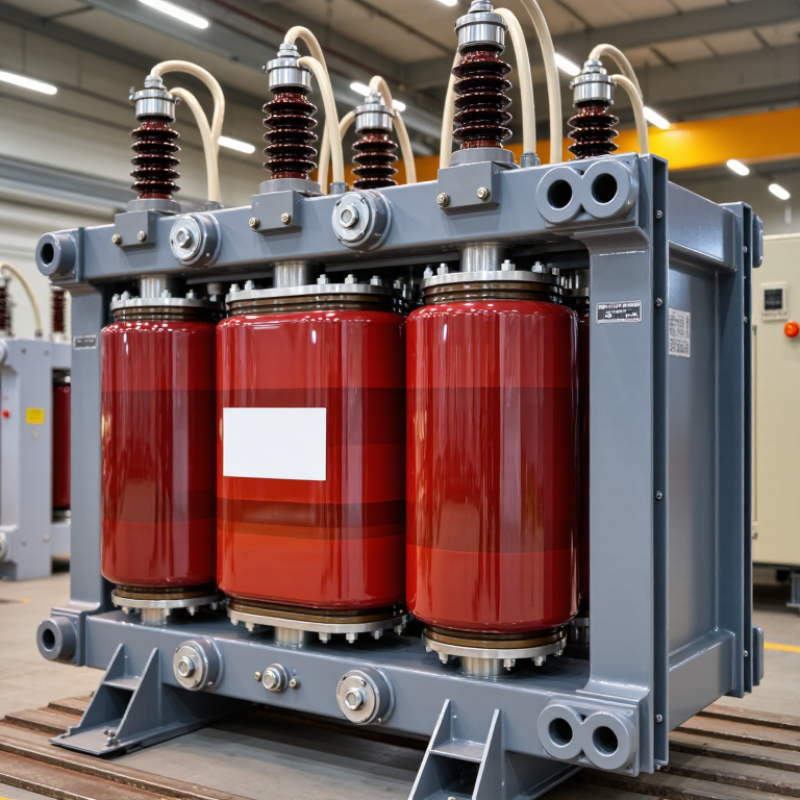
An epoxy resin transformer is a dry-type transformer with windings sealed in solid epoxy resin. The resin provides electrical insulation and protects the coils from moisture, dust, and mechanical stress. Unlike oil-filled units, it contains no liquid insulation system. This makes it suitable for indoor substations, commercial buildings, factories, tunnels, and areas where fire safety matters.
During operation, the windings still produce heat. Airflow, correct spacing, and proper ventilation are essential. A well-designed unit may operate quietly, but noise can increase when the core, mounting surface, or load conditions are unsuitable. Engineers usually check rated power, voltage ratio, insulation level, temperature rise, short-circuit strength, and partial discharge results. These details reveal more than appearance alone. The transformer is not maintenance-free. Dust accumulation, loose connections, blocked vents, and unusual vibration still require attention. One overlooked vent can shorten service life.
Tips: Confirm the actual load before selecting capacity. Leave enough clearance around cooling openings. Inspect terminals after installation and record temperature readings during heavy operation. Ask for routine test reports, material information, and installation guidance from qualified suppliers. In my experience, specifications can look complete while omitting site temperature or harmonic loads. That omission deserves a second review.
How to Evaluate Epoxy Resin Transformer Manufacturers
Choosing among the 10 best epoxy resin transformer manufacturers requires more than comparing prices. Examine the manufacturer’s engineering experience, production controls, and testing records. Ask which epoxy system is used and how it handles heat, moisture, and mechanical stress. Look beyond brochures.
Request routine and type-test reports for each proposed transformer design. These should cover temperature rise, insulation performance, short-circuit strength, and partial discharge. The test methods should match recognized international standards, such as IEC 60076-11. Ask for calibration records, not just stamped certificates. Small details often reveal process discipline.
Visit the factory when possible. Observe resin casting, coil preparation, curing temperatures, and contamination controls. Ask how operators trace materials from delivery to final inspection. A reliable manufacturer should explain its quality system clearly and provide documented corrective actions. Ask for references from installations with similar voltage, load, and environmental conditions. Field service response also matters, especially during commissioning.
A polished website is not proof of technical depth. In one evaluation, the quoted efficiency looked attractive, but the warranty excluded several operating conditions. That gap mattered. I would also question unusually short delivery promises. They may reflect strong capacity, or rushed testing. Compare drawings, acceptance criteria, spare-parts support, and warranty language line by line. The best choice is usually the supplier that answers difficult questions with measured evidence, not confident slogans.
Profiles of the 10 Leading Global Manufacturers
The ten leading epoxy resin transformer manufacturers represent different strengths, markets, and engineering traditions. A German manufacturer is known for precise vacuum casting and strict thermal testing. A Japanese producer emphasizes compact designs for rail systems and urban substations. A South Korean specialist focuses on automated production and consistent resin curing. An Italian manufacturer develops medium-voltage units for demanding industrial sites. A Swiss supplier highlights acoustic control and efficient cooling. A Chinese manufacturer offers broad capacity, short delivery cycles, and customized voltage ratings. An Indian producer serves fast-growing infrastructure projects with practical outdoor solutions. A North American company prioritizes grid resilience, field service, and documented maintenance. A Turkish manufacturer combines regional sourcing with flexible enclosure designs. A Nordic producer concentrates on low-noise operation and cold-climate performance.
Tips: Ask for routine test reports, partial-discharge data, and resin process records. Check winding materials, temperature-rise limits, and enclosure protection. Factory visits can reveal more than polished brochures. Inspect casting surfaces for voids, cracks, or uneven finishes. I would also compare service response times, not only purchase prices. A low initial quote may hide costly installation changes.
Experienced buyers should review compliance with IEC 60076 requirements and local grid rules. They should confirm altitude, humidity, pollution level, and fire-safety conditions before ordering. Site measurements matter. A transformer that performs well in a clean factory may struggle beside dust-heavy equipment. Manufacturers with ISO-based quality systems often provide stronger traceability, but certification alone proves little. Ask how rejected units are handled. That detail can expose weaknesses. Personally, I would request references from similar projects and examine five-year maintenance records. No selection is perfect. Oversized units waste space, while undersized units age too quickly.
10 Best Epoxy Resin Transformer Manufacturers Worldwide - Profiles of the 10 Leading Global Manufacturers
| Profile | Primary Manufacturing Region | Main Product Focus | Typical Voltage Range | Common Transformer Ratings | Epoxy Resin Technology | Applicable Standards | Typical Applications | Quality and Testing Capabilities |
|---|---|---|---|---|---|---|---|---|
| Profile 01 | Western Europe | Cast-resin distribution and dry-type power transformers | Up to approximately 36 kV | Approximately 100 kVA to 25 MVA | Vacuum pressure casting with flame-retardant epoxy systems | IEC 60076, IEC 60076-11, IEC 60270 | Commercial buildings, industrial plants, renewable-energy substations | Routine, type, temperature-rise, partial-discharge and acoustic-noise tests |
| Profile 02 | East Asia | Medium-voltage cast-resin transformers and compact substations | 3.3 kV to 35 kV class | Approximately 50 kVA to 20 MVA | Encapsulated windings using glass-fiber-reinforced epoxy resin | IEC 60076-11, IEEE C57.12.01, IEC 60296 where applicable | Data centers, metro systems, factories and utility distribution | Impulse, dielectric withstand, ratio, winding-resistance and partial-discharge testing |
| Profile 03 | North America | Dry-type transformers for commercial and industrial power systems | 600 V to 35 kV class | Approximately 75 kVA to 15 MVA | Cast-coil insulation designed for low flammability and low maintenance | IEEE C57.12.01, IEEE C57.96, NEMA and applicable CSA requirements | Hospitals, universities, manufacturing facilities and infrastructure projects | UL or CSA-related evaluation, thermal testing, insulation tests and load-loss verification |
| Profile 04 | Southern Europe | Cast-resin transformers for renewable-energy and grid projects | Up to approximately 40.5 kV | Approximately 100 kVA to 30 MVA | Thermal-shock-resistant epoxy encapsulation for variable-load duty | IEC 60076 series, IEC 60076-11 and EcoDesign requirements where applicable | Solar farms, wind farms, battery storage and distribution substations | Load-cycle testing, partial-discharge measurement, environmental checks and efficiency testing |
| Profile 05 | Central Europe | High-efficiency dry-type transformers and special-purpose units | Up to approximately 36 kV | Approximately 160 kVA to 25 MVA | Resin-rich or vacuum-cast insulation with optimized thermal performance | IEC 60076-11, IEC 60076-12 and relevant national installation codes | Railway power, marine facilities, industrial drives and public infrastructure | Loss measurement, temperature-rise, impulse, electromagnetic compatibility and vibration testing |
| Profile 06 | South Asia | Distribution transformers and project-specific dry-type transformers | Up to approximately 33 kV | Approximately 100 kVA to 12.5 MVA | Flame-retardant epoxy cast coils for indoor and harsh-site installations | IEC 60076, IS 11171 and IEEE requirements according to destination market | Industrial parks, commercial complexes, utilities and transport networks | Routine production tests, insulation resistance, dielectric tests and no-load/load-loss tests |
| Profile 07 | Southeast Asia | Compact cast-resin transformers for urban and industrial applications | 6.6 kV to 24 kV class | Approximately 100 kVA to 10 MVA | Moisture-resistant epoxy systems suitable for humid operating environments | IEC 60076-11, IEC 60270 and local utility specifications | High-rise buildings, semiconductor facilities, ports and industrial estates | Humidity checks, partial-discharge tests, dielectric withstand and dimensional inspection |
| Profile 08 | Middle East | Dry-type transformers for high-temperature and dusty environments | Up to approximately 36 kV | Approximately 250 kVA to 20 MVA | High-temperature-rated epoxy insulation with reinforced mechanical protection | IEC 60076-11, IEC 60529 and project-specific utility standards | Oil and gas facilities, airports, desalination plants and utility substations | Temperature-rise, enclosure protection, dielectric, partial-discharge and heat-cycle tests |
| Profile 09 | Latin America | Medium-voltage distribution and industrial dry-type transformers | Up to approximately 34.5 kV | Approximately 75 kVA to 15 MVA | Encapsulated epoxy windings for reduced fire and fluid-leakage risk | IEC 60076-11, IEEE C57.12.01 and applicable national standards | Mining, pulp and paper, food processing, utilities and commercial facilities | Routine, induced-voltage, applied-voltage, ratio and load-loss testing |
| Profile 10 | Oceania and Export Markets | Specialized dry-type transformers and renewable-energy units | Up to approximately 33 kV | Approximately 100 kVA to 20 MVA | Low-maintenance cast-resin insulation for indoor, coastal and remote installations | IEC 60076-11, AS/NZS 60076 and destination-market requirements | Mining operations, wind and solar projects, ports and remote networks | Salt-mist or environmental testing where specified, dielectric, thermal and partial-discharge tests |
Note: The profiles are presented without company or brand names. Voltage, rating and testing ranges are representative product categories commonly offered in the global epoxy resin transformer market; final specifications depend on the project design, utility requirements and destination standards.
Applications and Technologies of Epoxy Resin Transformers
Epoxy resin transformers serve facilities where fire safety, compact installation, and low maintenance matter. Their cast-resin insulation contains no liquid oil, reducing leakage risks in hospitals, commercial towers, tunnels, and indoor substations. In coastal plants, sealed windings also resist salt-laden moisture better than exposed insulation systems.
Modern manufacturing often uses vacuum pressure casting to remove air pockets from the resin. Mineral fillers improve thermal stability and reduce cracking during repeated load changes. Copper or aluminum windings may include temperature sensors, allowing operators to monitor hot spots before insulation damage develops. Partial discharge testing is essential. Small defects can become expensive failures.
Field inspections show that installation conditions matter as much as factory quality. Dust on cooling ducts can raise winding temperature within hours. Poor ventilation causes trouble. Engineers should verify rated capacity, impedance, sound limits, enclosure protection, and short-circuit strength against the actual site. Epoxy transformers tolerate overloads only within defined thermal limits. They are not maintenance-free.
A practical selection process compares test records, factory traceability, resin formulation, and service support. International transformer standards provide a useful baseline, but local climate and grid conditions still require engineering judgment. One overlooked issue is repairability: damaged cast insulation cannot be treated like replaceable oil. This limitation deserves clearer attention during procurement.
How to Choose the Right Manufacturer for Your Project
10 Best Epoxy Resin Transformer Manufacturers Worldwide: How to Choose the Right Manufacturer for Your Project
Choosing an epoxy resin transformer manufacturer requires more than comparing quotations. The IEA Electricity 2024 report forecasts global electricity demand growth of about 4% annually through 2026. This growth increases pressure on distribution equipment, especially in industrial and renewable energy projects. Select a manufacturer with proven capacity, not only attractive pricing.
Review technical evidence carefully. Ask for routine and type-test records aligned with IEC 60076-11. Check partial discharge results, thermal performance, insulation levels, and short-circuit capability. A reliable factory should explain resin formulation, curing controls, and vacuum casting procedures. Small voids can become serious failures under heat and electrical stress.
Look beyond the brochure.
The U.S. Department of Energy’s 2024 technical analysis on distribution transformers highlights efficiency, lifecycle cost, and supply resilience. Request verified loss data at your actual loading range. Also assess delivery history, spare-part planning, site supervision, and warranty response times. A factory visit can reveal useful details, such as clean assembly areas and traceable test instruments. It can also mislead. A polished workshop does not guarantee stable production across every batch. I would compare at least three manufacturers using the same specification sheet, inspection plan, and acceptance criteria. The cheapest option may become expensive after installation delays, noise complaints, or difficult maintenance.