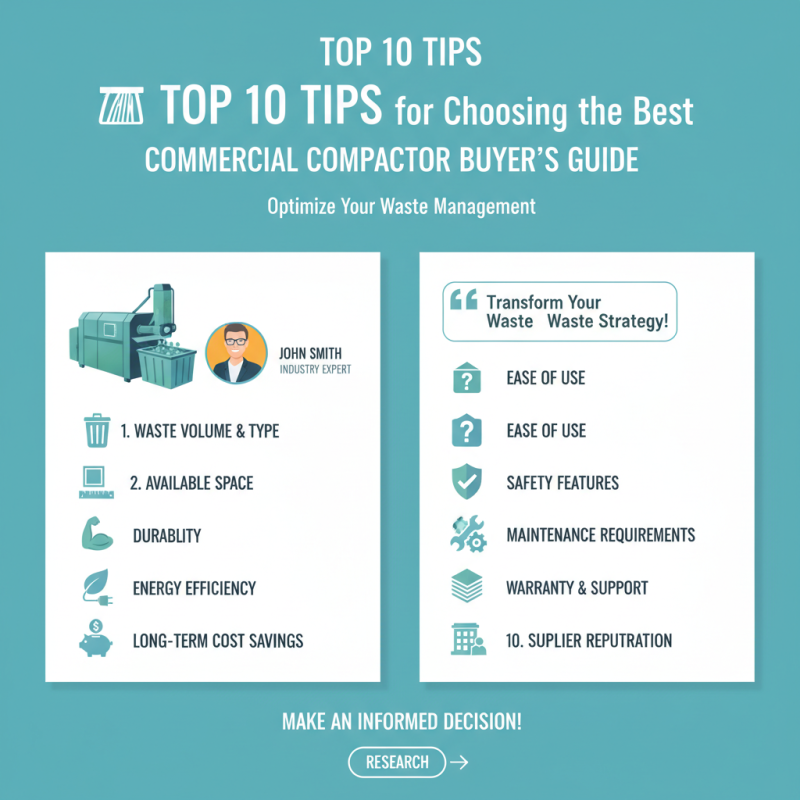
Top 10 Tips for Choosing the Best Commercial Compactor?
Choosing the right Commercial Compactor is crucial for businesses aiming to optimize waste management. Industry expert John Smith, a consultant with over 20 years of experience, emphasizes, "The right compactor can transform your waste strategy." This statement highlights the importance of making an informed decision.
Various factors influence the selection of a Commercial Compactor. Understanding your waste volume and type is essential. A compactor suited for cardboard might not work for organic waste. Additionally, evaluating the space available is vital. Many businesses underestimate the footprint required for a compactor.
While considering features, pay attention to durability and energy efficiency. A reliable compactor saves money in the long run. Yet, with so many options available, the decision can be overwhelming. Reflecting on these aspects will lead to a better choice.
Understanding Your Waste Management Needs
Understanding your waste management needs is crucial when selecting a commercial compactor. Begin by assessing your waste volume. Larger operations typically generate more waste. Identifying peak times for waste production can help tailor your compaction needs. This can lead to cost-saving efficiencies in waste disposal.
Considering the types of materials you handle is also important. Different materials require specific compaction methods. For instance, cardboard may need different handling than organic waste. Look into the compactor's specifications and capabilities. Not all models can efficiently manage all waste types.
Don't overlook space constraints. A compactor must fit within your facility's layout. Measure the area where the compactor will reside. It's not just about fitting the machine; ensure there's enough room for safe operation and maintenance. Reflect on your company's long-term needs too. Growth may necessitate different equipment. Evaluating these factors thoroughly can guide you to the right choice.
Evaluating Different Types of Commercial Compactors
When selecting a commercial compactor, understanding the types available is crucial. There are vertical compactors, ideal for limited spaces, and horizontal compactors, better for high volumes. Each type serves specific needs based on waste type and volume. Vertical compactors are suitable for general waste, while horizontal models handle more diverse materials. Knowing the characteristics of each can simplify your decision.
Another key factor is the compaction ratio. Some compactors achieve higher ratios for better waste reduction. This can save space and reduce disposal costs. When evaluating compactors, consider the machine's capacity and how often you'll need to empty it. Efficiency is vital, yet some machines may not perform as expected. Evaluating user reviews helps you gauge their reliability.
Maintenance requirements vary among compactors. Some need regular upkeep, while others have simpler designs for easy maintenance. When choosing, think about repair resources in your area. The expertise of technicians can vary, making it essential to assess local options. Inadequate support could lead to prolonged downtime and increased costs, which is an important aspect to reflect upon.
Top 10 Tips for Choosing the Best Commercial Compactor
Key Features to Look for in a Compactor
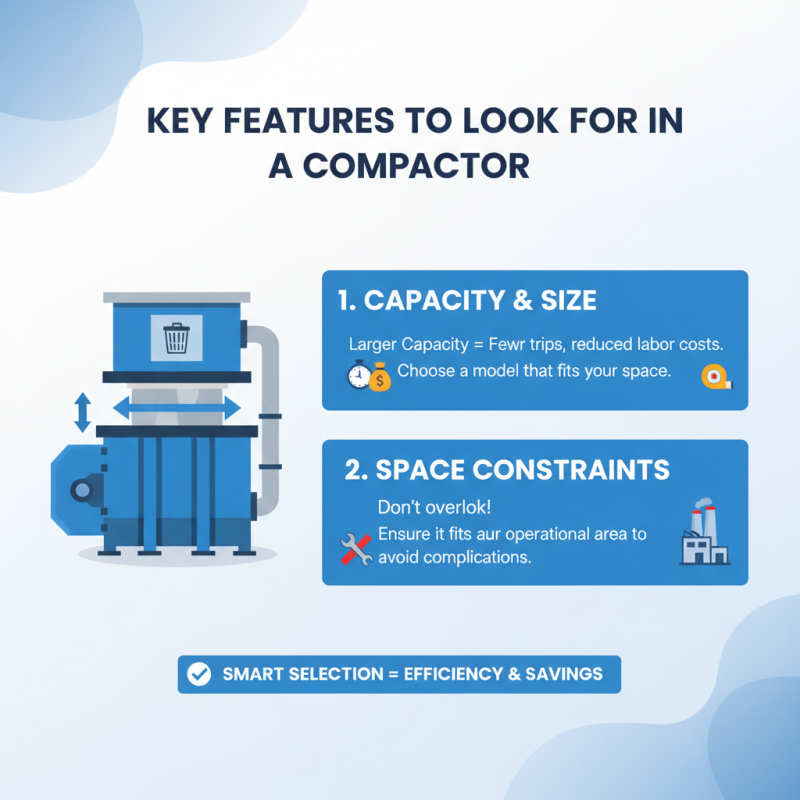
When selecting a commercial compactor, key features play a pivotal role. The compactor’s capacity and size are crucial. A larger capacity means fewer trips to unload. This can save time and reduce labor costs. However, it’s essential to choose a model that fits your space constraints. Many businesses overlook this aspect and face complications later.
Energy efficiency is another critical feature. An efficient model can lower operational costs by up to 30%, according to industry reports. This reduction is significant given rising energy prices. Additionally, look for compactors with advanced controls. These allow for better monitoring and optimization of performance, ensuring you get the most out of your investment.
Durability matters too. Steel construction often indicates a longer lifespan. If a compactor lacks robustness, maintenance costs can increase significantly. Choose a model designed for continuous use in demanding environments. A reliable warranty can also reflect the manufacturer's confidence in their product. Ultimately, choosing the right compactor requires careful consideration of these essential features and how they align with your operational needs.
Assessing Size and Capacity Requirements
When selecting a commercial compactor, assessing
size and capacity requirements is crucial.
Understanding your waste volume is the first step.
A site that generates large amounts of cardboard or plastic may need a high-capacity unit.
On the other hand, a smaller facility might only require a compact model.
Misjudging the size can lead to inefficiencies.
A unit too small will fill quickly, while an oversized model may occupy too much space.
Consider the dimensions of your workspace.
Make sure the compactor fits comfortably, allowing for easy access and maintenance.
Measure doorways and hallways to ensure the compactor can be delivered without issues.
Additionally, evaluate how you will load the compactor.
A model with a low loading height can save time and effort during operation.
It’s also wise to think about your long-term needs.
Waste generation may increase, causing you to require more capacity in the future.
If you anticipate growth, plan ahead.
A slightly larger model might be a wiser investment compared to continuously upgrading smaller units.
This approach will save time and money in the long run.
Comparing Costs and Maintenance Options
When selecting a commercial compactor, maintenance costs play a significant role. Data from the Environmental Protection Agency shows that improper maintenance can lead to increased operational expenses. It's reported that companies can spend up to 20% more on waste management if their compactors are not regularly serviced. This highlights the importance of developing a reliable maintenance schedule.
Comparing maintenance options is crucial. Some compactors require daily checks, while others may be fine with weekly or monthly evaluations. According to industry studies, the average cost of maintenance for compactors ranges from $150 to $300 monthly. However, investing in a high-quality compactor can lower this cost. Equipment with advanced technology often comes with features that reduce wear and tear, ultimately saving money over time.
Additionally, proactive maintenance can prevent substantial failures that might cost thousands to repair. Many businesses overlook the potential costs associated with downtime. A temporary shutdown can result in lost revenue, with estimates suggesting that it can cost businesses upwards of $1,000 for each hour of downtime. Prioritizing maintenance helps ensure that your compactor functions smoothly and efficiently.