What Is a Quick Connect Coupler and How Does It Work?
A Quick Connect Coupler joins hoses, tools, or fluid lines without requiring a threaded connection each time. It is commonly used in pneumatic, hydraulic, and water systems, but coupler designs differ. A typical assembly has a female socket and a matching male plug. Push them together, and an internal locking mechanism holds the connection in place. To disconnect, the operator usually pulls back a sleeve or releases a latch. Small parts matter.
Inside the coupler, locking balls or pins may engage a groove on the plug. Some models also contain valves that close when disconnected, helping limit fluid or air loss. Not every model does. That distinction matters when choosing equipment, especially where pressure, temperature, flow rate, or fluid compatibility are important. A connector that fits physically may still be unsuitable for the system.
This guide explains how a Quick Connect Coupler works, what its main parts do, and where different designs are used. It also covers practical selection and maintenance considerations, such as checking seals, inspecting the locking sleeve, and confirming the manufacturer’s pressure rating. Relieve system pressure before disconnecting unless the equipment instructions specify a safe alternative. Fit is not enough. Real systems involve wear, vibration, and occasional misuse, so specifications and regular inspection deserve attention. The simplest-looking connection can still fail when mismatched, damaged, or installed incorrectly. A careful check takes little time. It can prevent leaks, interruptions, and avoidable equipment damage.
What Is a Quick Connect Coupler?
A quick-connect coupler is a fitting that lets two compatible lines connect and separate without threading them together. One side usually holds the coupler; the other carries a matching plug. You may find these fittings on air hoses, water lines, and some hydraulic equipment. They save time when a line needs regular removal. A quick connection is not automatically a safe one.
In many designs, a sleeve slides back to release the plug. Locking balls or a similar mechanism hold it in place when connected. Some couplers also contain valves that stop flow when the halves separate, but not every model does. That detail matters: a trapped or escaping fluid can create a mess, pressure hazard, or equipment damage. Check the fitting’s stated pressure, temperature, and fluid compatibility before use. Keep the mating surfaces clean; grit can prevent a secure seal. Push the plug fully into place and tug gently to confirm it has locked. If the connection leaks or feels loose, stop and inspect it rather than forcing it. The mechanism is simple, but matching the right parts takes care.
What Is a Quick Connect Coupler and How Does It Work?
| Topic | How It Works | Practical Details |
| What it is | A quick connect coupler is a fitting that joins two fluid or gas lines so they can be connected and disconnected without repeatedly threading fittings together. | Couplers are used in hydraulic, pneumatic, water, and other fluid-transfer systems. The correct type depends on the medium, pressure, temperature, and application. |
| Main components | A typical set has a socket (the female half) and a plug or nipple (the male half). A locking mechanism holds the halves together; some designs also include internal valves. | Seals help prevent leakage at the connection. Construction materials and seal compounds should be suitable for the fluid and operating conditions. |
| Connection process | The plug is inserted into the socket until the locking mechanism engages. Depending on the design, the sleeve may need to be pulled back or a collar pushed forward. | A click or other clear engagement can indicate that the halves have locked, but users should still check the connection according to the equipment instructions. |
| Disconnection process | The release sleeve or locking collar is operated to disengage the plug, which can then be withdrawn from the socket. | Isolate the supply and relieve trapped pressure before disconnecting unless the equipment is specifically designed for safe disconnection under pressure. |
| Valve options | Some couplers have no shutoff valve. Others use a valve in one half or valves in both halves that close when the connection is separated. | Double-shutoff designs can help limit fluid loss and air entry during disconnection, but they do not eliminate all spillage or the need for safe handling. |
| Common styles | Ball-lock couplers use locking balls; push-to-connect designs engage when the plug is inserted; flat-face couplers have flush mating faces. | Flat-face styles are often selected where reducing fluid spillage and keeping mating surfaces cleaner are priorities. The suitable style depends on the system. |
| Typical applications | Quick connect couplers are found on air tools, hydraulic equipment, wash-down hoses, and other systems that require frequent line changes. | Application suitability depends on the coupler’s rated pressure, flow capacity, temperature range, materials, and connection standard. |
| Compatibility check | The plug and socket must have matching profiles and dimensions to connect and seal correctly. | Similar-looking couplers are not necessarily interchangeable. Check the series, size, thread type, pressure rating, and fluid compatibility before use. |
| Inspection and care | Inspect the locking parts and seals for wear, damage, contamination, or corrosion, and keep disconnected ends protected from dirt. | Replace damaged seals or couplers and follow the equipment maker’s maintenance guidance. Never force incompatible halves together. |
Key Components and Their Functions
A quick-connect coupler joins a hose or tool to a fluid line without threaded assembly. Its socket contains a sliding sleeve, locking balls or pins, a return spring, and an internal seal. The mating plug has a shaped groove that gives the locking elements a place to engage. Push the plug into the socket, and the sleeve moves back; the spring then drives it forward to secure the connection. You should hear or feel a click. That detail is easy to miss. In many designs, a valve inside the socket opens during connection and closes when the plug is removed, helping limit fluid loss. Some couplers shut off both sides; others do not.
Each part has a distinct job, but small defects can undermine the whole assembly. Worn seals may leak, while grit around the sleeve can stop it from locking fully. The U.S. Department of Energy’s Improving Compressed Air System Performance: A Sourcebook for Industry reports that leaks can waste 20–30% of compressed-air output in poorly maintained systems. The figure covers system leaks, not couplers alone, but it shows why checking connection points matters. Match the coupler’s pressure, temperature, and flow ratings to the application, then inspect the seal and locking action during maintenance. A practical check is simple: connect the plug, tug gently, and look for leakage under the specified test conditions. One caution: a click alone does not prove the connection is leak-free.
What Is a Quick Connect Coupler and How Does It Work?
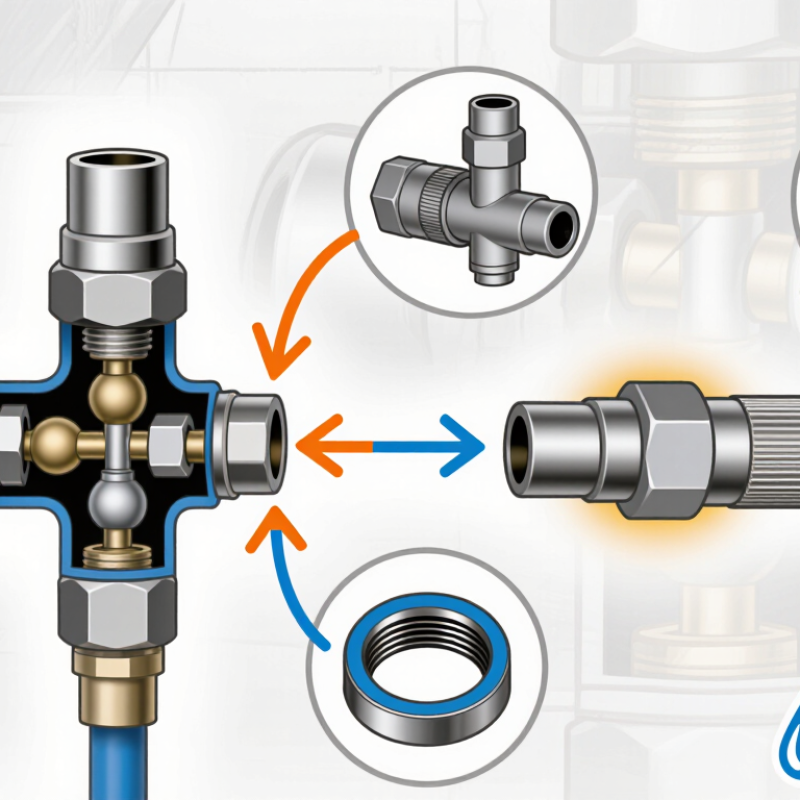
Key components and their functions in a typical valved, ball-lock coupler.
A quick connect coupler joins fluid lines without threading them together. The sleeve moves to release or secure the locking balls; the balls retain the mating plug. When connected, the plug opens the valve to allow flow. Seals help prevent leakage, while the body houses the flow path and internal parts. Counts show the functions described here, not a performance rating; designs vary.
How a Quick Connect Coupler Works Step by Step
A quick-connect coupler links a hose or tool to a fluid or air line without threaded assembly. Its socket contains a spring-loaded sleeve and internal valve; the plug has a shaped nose that opens the valve when fully seated. Exact designs vary, so check the fitting’s pressure rating and compatibility before connecting.
Step one: relieve pressure if the system requires it. Pull the socket sleeve back, align the plug, and push it in until it stops. Release the sleeve; its spring returns it to the locked position. Give the plug a gentle pull to confirm engagement. Then pressurize the line gradually and check for leaks. For disconnection, isolate and depressurize the line before retracting the sleeve and removing the plug, unless the coupling is specifically designed for safe connection under pressure. The sequence looks simple, but a gritty sleeve can prevent full engagement. The U.S. Department of Energy’s Improving Compressed Air System Performance sourcebook estimates that leaks can waste 20–30% of compressor output in poorly maintained systems. A coupler is only one possible leak point, but a brief leak check after connection is worthwhile.
Common Types and Their Applications
Quick connect couplers link and separate fluid lines without tools, but their design determines where they work safely. Hydraulic flat-face couplers limit fluid loss and air entry during connection, making them useful on excavators, loaders, and other equipment changed between attachments. ISO 16028 covers this style. Ball-valve couplers are common in general hydraulic circuits, where a spring-loaded valve opens after connection. They are practical, but dirt on the sealing surfaces can still cause leaks.
For compressed air, push-to-connect fittings suit workshop hoses, pneumatic tools, and compact automation lines. Industrial users should check pressure ratings, hose compatibility, and whether the connection can release suddenly. The U.S. Department of Energy’s Improving Compressed Air System Performance sourcebook estimates that leaks can waste 20–30% of compressor output in a typical industrial facility. Couplers are only one possible leak point, but checking seals and listening for escaping air can reveal problems quickly.
Small leaks matter.
Agricultural machinery often uses standardized hydraulic couplers, while food-processing and washdown environments may require corrosion-resistant materials and easy-clean surfaces. Flat-face designs can reduce spillage, though they are not automatically the right choice for every pressure or flow. Match the coupler to the fluid, operating pressure, temperature, and connection frequency. A fitting that clicks into place is not proof of a secure seal; inspect it under the system’s approved test procedure.
Safe Use, Inspection, and Maintenance
What Is a Quick Connect Coupler and How Does It Work?
A quick connect coupler joins a hose or tool to a fluid or air line. Its sleeve locks onto a matching plug, while internal valves control flow. Some designs shut off flow automatically when disconnected; others do not. Check the coupling type before assuming it is safe to separate under pressure.
Safe use starts with the system depressurized, isolated, and cool enough to handle. Never force a stubborn sleeve or test leaks with your hand. A fine hydraulic jet can penetrate skin. Inspect the plug, sleeve, and seals for cracks, corrosion, flattened O-rings, or grit. Small defects matter. Keep dust caps clean, and replace damaged parts with components rated for the system’s pressure and fluid. Do not mix couplers that merely look alike.
The U.S. Bureau of Labor Statistics recorded 5,283 fatal work injuries in 2023 in its Census of Fatal Occupational Injuries. That figure is not specific to couplers, but it reminds us that routine equipment handling deserves care. Follow the equipment maker’s inspection interval, and check for leaks after reconnecting. A visual check is useful, but it can miss internal wear; replace uncertain parts rather than trusting appearance alone.