
INDUSTRIES2023-04-26T19:33:38+00:00

What Is a Lithium Vacuum Cleaner and How Does It Work?

A Lithium Vacuum Cleaner is more than a cordless appliance with a modern battery. It combines a lithium-ion power pack, compact motor, airflow channels, filters, and a dust container. Together, these parts create portable cleaning power without a wall outlet.

Dr. M. Stanley Whittingham, a Nobel Prize-winning battery scientist, said, “The lithium-ion battery has changed the world.” His observation helps explain why cordless vacuums became practical. Lithium batteries store substantial energy in a relatively small and light package. A Lithium Vacuum Cleaner can therefore move easily from a kitchen floor to car seats or narrow stair edges. The motor draws energy from the battery, spins an impeller, and produces suction through the cleaning head. Dust travels through the tube before reaching the filter and bin.

The process sounds simple. It is not always simple.

Battery capacity, motor efficiency, airflow resistance, and filter condition affect real performance. A cleaner may feel powerful during the first minutes, then weaken as its charge falls. Fine dust can also restrict airflow when the filter is neglected. That detail is easy to miss. A reliable evaluation should examine runtime, charging time, suction consistency, noise, weight, and battery replacement options. Personal experience matters too; a heavy handle may become uncomfortable during a ten-minute cleaning task. This article explains how a Lithium Vacuum Cleaner works, what its internal components do, and where its practical limitations deserve honest attention.
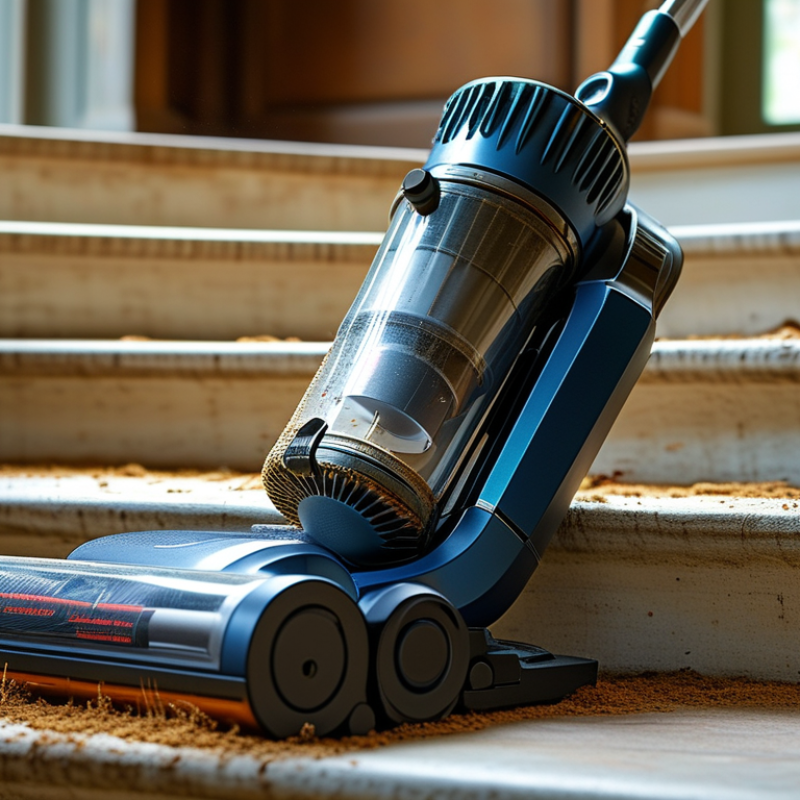
What Is a Lithium Vacuum Cleaner and How Does It Work?

What Is a Lithium Vacuum Cleaner? Definition and Main Components

A lithium vacuum cleaner is a cordless cleaning device powered by rechargeable lithium-ion cells. The term describes its energy source, not a special cleaning method. Instead of drawing continuous power from a wall outlet, it stores electricity in a removable or built-in battery. During operation, the battery sends controlled current to a motor. The motor spins an impeller, creating airflow that pulls dust, hair, and crumbs into the dust bin. This design offers easier movement around stairs, cars, and tight corners.

Its main components work as one system. The battery pack contains several lithium-ion cells and a battery management system. This system monitors temperature, voltage, and charging conditions. A digital controller regulates motor speed through the handle or control panel. The motor and fan produce suction, while the floor head guides debris toward the air path.

A dust bin collects larger particles. Filters capture fine dust before air leaves the cleaner. Some models include sensors that detect blockages or adjust power automatically. These sensors are useful, but they are not always perfectly accurate.

A charger restores the battery after cleaning, although charging time varies with capacity and temperature. High suction usually consumes power faster. In practical use, carpets, full filters, and blocked brushes can reduce performance noticeably. The machine may feel light at first, but a large battery can make the handle tiring. Lithium batteries also lose capacity gradually, even with careful charging. This point is often overlooked. Regular filter cleaning and correct storage help, but they cannot prevent normal battery aging.

How Lithium-Ion Cells Store Energy at 3.6–3.7 V Nominal Voltage

What Is a Lithium Vacuum Cleaner and How Does It Work?

A lithium vacuum cleaner uses rechargeable cells to power its motor, sensors, and control circuit. Each lithium-ion cell stores energy through reversible chemical movement. During discharge, lithium ions travel from the negative graphite electrode to the positive electrode through the electrolyte. Electrons move through the external circuit instead. That electrical flow drives the motor and creates suction.

A single cell has a nominal voltage of about 3.6–3.7 volts. Nominal means an average operating value, not a constant reading. A fully charged cell may reach roughly 4.2 volts, while its voltage falls as energy is used. The vacuum’s battery pack connects several cells in series when higher voltage is needed. Parallel connections can increase capacity and running time. A battery management system monitors voltage, temperature, and charging conditions.

The numbers can feel confusing.

For example, a pack rated at 21.6 volts commonly contains six cells in series. Its energy depends on both voltage and ampere-hours. A 21.6-volt, 3-Ah pack stores about 64.8 watt-hours before practical losses. Actual performance changes with airflow, filter resistance, motor load, and battery age. Heat also reduces efficiency. Lithium cells are powerful, but not perfectly predictable. A worn filter may make a healthy battery seem weak, which is an easy mistake during everyday testing. Safety depends on proper charging control, cell matching, insulation, and temperature protection.

What Is a Lithium Vacuum Cleaner and How Does It Work? - How Lithium-Ion Cells Store Energy at 3.6–3.7 V Nominal Voltage

Data Dimension Typical Value or Range How It Applies to a Lithium Vacuum Cleaner
Cell chemistry Rechargeable lithium-ion Electrochemical reactions move lithium ions between the anode and cathode while electrons flow through the external circuit.
Nominal cell voltage Approximately 3.6–3.7 V This is the average operating voltage used for capacity and energy calculations; it is not the voltage at every moment of use.
Fully charged cell voltage Usually about 4.2 V The battery-management system and charger regulate charging to prevent overvoltage.
Low-voltage protection Approximately 2.5–3.0 V per cell, depending on cell design The protection circuit disconnects the load before excessive discharge can damage the cells. The exact threshold is model-dependent.
Common cylindrical cell format 18 mm diameter × 65 mm length for an 18650-type cell Compact cylindrical cells can be arranged in series and parallel to create a larger vacuum-cleaner battery pack.
Typical cell capacity About 2.0–3.5 Ah for many 18650-type cells Higher capacity generally increases runtime, while high-current designs may prioritize power delivery and thermal performance.
Series connection Voltages add; capacity in Ah remains approximately the same A 6-cell series group has approximately 21.6–22.2 V nominal, calculated as 6 × 3.6–3.7 V.
Parallel connection Capacity in Ah and available current add; voltage remains approximately the same Two equal cells in parallel provide about twice the Ah capacity of one cell at the same nominal voltage.
Battery energy calculation Energy in watt-hours ≈ nominal voltage × ampere-hours For example, a 21.6 V, 2.5 Ah pack stores approximately 54 Wh before conversion losses and reserve limits.
Motor power conversion Battery electricity is converted into mechanical airflow and suction A motor controller regulates current to the brushless motor, which spins an impeller to create airflow and pressure difference.
Estimated runtime formula Runtime in hours ≈ usable Wh ÷ average electrical power in W A 54 Wh pack supplying an average 180 W load could theoretically run for about 0.30 hours, or 18 minutes, before practical losses and reserve capacity.
Power-mode effect Higher suction requires higher electrical power Boost mode normally shortens runtime because the motor draws more current; actual runtime also changes with floor type, airflow restriction, and attachments.
Battery-management system Monitors voltage, current, temperature, and cell balance The system helps prevent overcharging, over-discharging, excessive current, and unsafe temperature conditions.
Charging method Constant-current followed by constant-voltage charging The charger first supplies controlled current, then holds the pack at its target voltage while current gradually decreases.
Charging temperature Commonly about 0–45 °C, subject to the battery design Charging outside the permitted temperature range can reduce battery life or create a safety risk, so the control system may pause charging.
Factors that reduce runtime Dirty filters, blocked airflow, dense carpet, high power mode, and battery aging Greater resistance and higher motor demand increase energy consumption during each cleaning session.
Battery aging Capacity gradually declines with cycles, time, heat, and high current An older pack may provide shorter runtime and greater voltage sag under heavy suction, even when it still charges normally.
Important safety principle Use only the specified charger and an undamaged battery pack Lithium-ion packs should not be short-circuited, crushed, exposed to excessive heat, or disassembled without appropriate technical controls.

Note: Values are representative engineering ranges for lithium-ion vacuum-cleaner systems. Exact voltage limits, capacity, runtime, charging temperature, and cell configuration vary by battery design and operating conditions.

How the Battery Management System Controls Power and Safety

What Is a Lithium Vacuum Cleaner and How Does It Work?

A lithium vacuum cleaner uses rechargeable lithium-ion cells to power its motor. The cells store energy chemically, then release it as electrical current. This current drives the motor, which spins the fan and creates suction. In practical use, suction can feel strong at first, then weaken as the battery voltage falls. That change is normal, but it should not be ignored.

The battery management system controls power and safety. It measures cell voltage, current, and temperature several times each second. If a cell becomes too hot, the system can reduce output or stop the cleaner. It also prevents overcharging during docking and limits deep discharge during use. Some systems balance individual cells, helping them age more evenly. A small control board usually operates electronic switches, rather than cutting power through a simple mechanical button. This design is efficient, though no protection system is perfect. A damaged sensor or aging cell can still create unexpected behavior.

Tips

Keep the air path clear, because a blocked filter makes the motor work harder. Charge the battery in a dry, moderate-temperature room. Stop using the cleaner if you notice swelling, a sharp chemical smell, or unusual heat. Do not judge battery health by runtime alone; a sudden shutdown may indicate cell imbalance. Check the charging contacts regularly. Dust can interrupt charging, and that detail is easy to miss.

How Brushless Motors Convert Battery Power into Suction

A lithium vacuum cleaner uses a rechargeable lithium-ion battery instead of a fixed power cord. The battery stores chemical energy and releases electrical current through a control circuit. That current reaches a brushless motor, which drives the fan that creates suction. The design feels simple, but the timing is precise.

Inside the motor, electronic sensors and switching components control magnetic fields around the rotor. These fields pull the rotor forward continuously, without physical brushes rubbing against a commutator. Less friction usually means quieter operation, better efficiency, and reduced wear. The spinning fan then lowers air pressure inside the cleaner. Air rushes through the nozzle, carrying dust into the filter and collection chamber. In practical use, suction may weaken when the filter clogs or battery voltage drops. I have found that published runtime figures can feel optimistic, especially on maximum power. Real floors are less cooperative.

Tips: Keep the filter clean and allow it to dry fully after washing. Use lower power on hard floors when possible. Store the battery away from extreme heat. Listen for unusual rattling, because it may indicate debris near the fan. Do not ignore gradual performance changes. They often reveal airflow resistance before a complete failure.

How 150–250 Wh/kg Energy Density Affects Runtime and Weight

What Is a Lithium Vacuum Cleaner and How Does It Work?

How 150–250 Wh/kg Energy Density Affects Runtime and Weight

A lithium vacuum cleaner stores electrical energy in rechargeable lithium-ion cells. The battery feeds a motor, which spins an impeller and creates airflow. That airflow carries dust into a filter and collection chamber. The process sounds simple. Battery design is not.

Energy density describes how much energy a battery stores for each kilogram. At 150–250 Wh/kg, a 200 Wh battery may weigh about 0.8–1.3 kilograms at the cell level. The complete pack weighs more because it includes housing, wiring, protection circuits, and cooling parts. This distinction matters. Advertised figures may describe cells, not the finished battery.

Runtime depends on power demand. A vacuum drawing 200 watts could theoretically use a 200 Wh battery in one hour. Real operation is shorter. Motor losses, filter resistance, battery temperature, and safety reserves reduce usable energy. On a service bench, a 200 Wh pack might provide roughly 35–50 minutes in a moderate setting. Maximum suction can cut that time sharply.

Higher energy density can reduce hand-held weight or extend cleaning time. It cannot solve every design problem. A lighter pack may feel easier upstairs, yet a smaller motor or narrow airflow path can weaken cleaning performance. I would also question any runtime claim without its power mode and test conditions. The neat calculation is useful, but household dust rarely behaves neatly.

Go to Top