What is an Industrial Network Switch and How Does it Work?
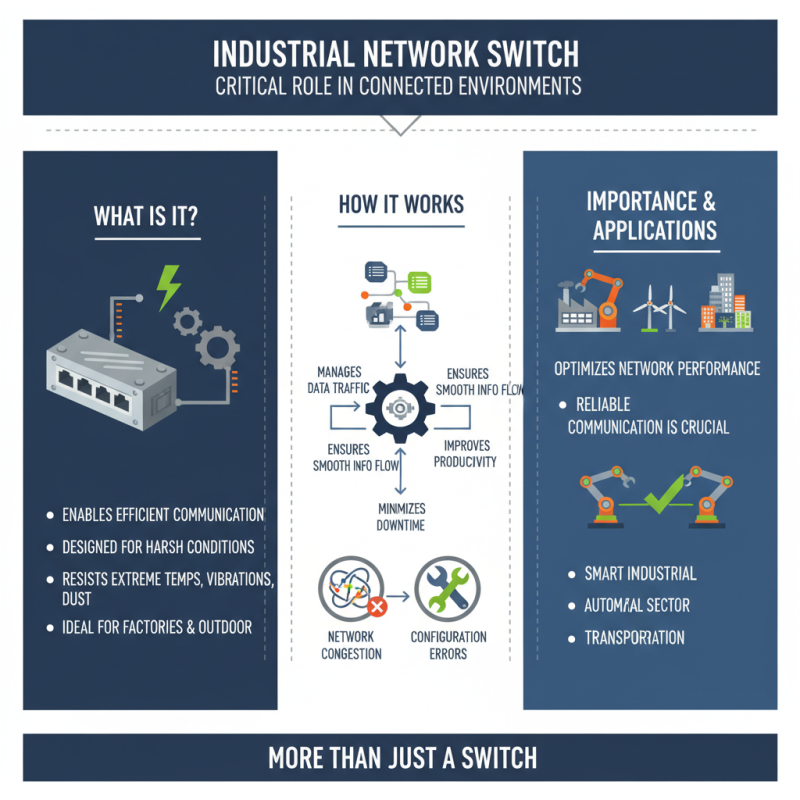
An industrial network switch plays a critical role in today’s connected environments. It enables efficient communication between various devices in manufacturing and automation. Unlike standard switches, an industrial network switch is designed to operate in harsh conditions. It can withstand extreme temperatures, vibrations, and dust. These features make it ideal for factories and outdoor installations.
Understanding how an industrial network switch works is essential for optimizing network performance. It manages data traffic, ensuring that information flows smoothly. In complex systems, reliable communication between devices is crucial. A well-functioning switch minimizes downtime and improves productivity. However, the effectiveness of these switches can be impacted by factors like network congestion and configuration errors.
Exploring the functions and applications of an industrial network switch reveals its importance. Many might overlook the complexity involved in their operation. It's easy to assume that all network switches are the same. Yet, each type has unique features tailored for specific environments. Reflecting on this can lead to a deeper appreciation of the technology that powers our industrial systems.
Definition of an Industrial Network Switch
An industrial network switch is a device designed to connect various devices within a network. These switches function differently compared to standard ones. They operate in harsh environments, such as factories and warehouses, where temperature and dust levels can be extreme.
The primary role of an industrial network switch is to manage data traffic. It routes information between devices efficiently. Each port on the switch connects to a different device, enabling seamless communication. This setup is crucial for real-time data transmission in industrial applications. The reliability of these switches ensures minimal downtime. Users often overlook the importance of these devices until a failure occurs, leading to potential production losses.
In practical terms, an industrial network switch often includes features like redundancy and rugged casing. These ensure continued operation despite external challenges. However, not every switch is suited for every environment. Choosing the right one requires careful analysis. This selection process can sometimes be rushed, resulting in poor performance. Understanding the specific needs of a system is essential for optimal operation.
Key Features of Industrial Network Switches
Industrial network switches play a crucial role in modern manufacturing and automation. These devices are built to withstand harsh environments. They provide reliable connectivity for industrial Ethernet networks. A key feature of these switches is their durability. Many are designed to operate in extreme temperatures, from freezing to intense heat. This is essential for factories and outdoor installations.
Another important feature is the redundancy and failover support. Industrial networks cannot afford downtime. Features like ring topology help maintain connectivity by automatically rerouting traffic if a link fails. Furthermore, these switches often support Power over Ethernet (PoE). This allows them to deliver power to connected devices, reducing the need for additional wiring.
Security is also a growing concern. Many industrial switches incorporate advanced security measures. These measures protect against unauthorized access and cyber threats. However, this area often needs more attention. While some manufacturers add significant security features, many users may overlook regular updates. The balance between usability and security is sometimes challenging. It’s essential to review security practices regularly in such critical systems.
How Industrial Network Switches Operate
Industrial network switches are crucial for maintaining communication in industrial environments. These devices connect multiple devices, allowing seamless data transfer. They operate by receiving data packets and forwarding them to the appropriate destination based on MAC addresses. This process ensures minimal delay and increased reliability in critical applications.
In high-demand sectors like manufacturing, studies show that nearly 70% of downtime is linked to network issues. A robust industrial switch can mitigate these risks. It employs standards like IEEE 802.3 for secure connectivity, which helps reduce packet loss. Advanced features such as QoS (Quality of Service) prioritize traffic, which is essential for real-time applications.
**Tip**: Regularly monitor your network's performance. Check for latency and throughput issues. Small factors can lead to bigger problems. Always ensure your switches are up to date with the latest firmware and security protocols. This simple check can drastically improve network reliability.
Remember, neglecting regular maintenance can create vulnerabilities. Ensuring that devices are properly configured enhances overall system efficiency. Keeping track of your industrial network's health is vital for long-term success.
What is an Industrial Network Switch and How Does it Work?
| Feature | Description |
| Purpose | Connects multiple devices in an industrial environment allowing for communication and data exchange. |
| Durability | Designed to withstand harsh conditions such as extreme temperatures, dust, moisture, and vibrations. |
| Types | Managed, unmanaged, PoE (Power over Ethernet), and fiber switches. |
| Protocols Supported | Supports various networking protocols including Ethernet, TCP/IP, and more. |
| Management Features | Includes features like VLAN support, Quality of Service (QoS), and network monitoring. |
| Power Supply | Can be powered via standard AC/DC supply or through PoE for easier installation. |
| Connectivity Options | Offers various port configurations including copper and fiber optic connections. |
| Usage Scenarios | Used in manufacturing, energy, transportation, and other industrial sectors. |
Applications of Industrial Network Switches in Various Industries
Industrial network switches play a crucial role across various industries, including manufacturing and transportation. In the manufacturing sector, these switches support real-time data exchange between machines. According to recent reports, 60% of manufacturers are investing in smart technologies. This transition heavily relies on robust network infrastructure, making reliable switches indispensable.
In the transportation industry, industrial network switches connect systems like traffic management and vehicle tracking. A study indicates increased traffic efficiency by up to 30% when implementing these systems. However, many companies struggle with the integration of older systems. This gap hinders full potential utilization, exposing vulnerabilities and delays.
Healthcare facilities also benefit from industrial network switches. They ensure seamless communication between medical devices. Reports state that around 40% of health organizations cite network reliability as critical. Yet, some organizations face challenges in maintaining data security while upgrading their networks, leading to worries about patient privacy.
Industrial Network Switch Installation Across Various Industries
This chart illustrates the number of industrial network switches installed in different sectors. Notably, the manufacturing and energy sectors have the highest installations, reflecting the critical role of reliable networking in these areas. The data underscores the importance of industrial network switches in ensuring efficient communication and connectivity across diverse applications.
Benefits of Using Industrial Network Switches in Automated Systems
Industrial network switches play a crucial role in automated systems. They enable seamless communication between machines, sensors, and controllers. By providing robust connectivity, these switches enhance productivity in various industries. With a rugged design, they endure harsh environments. This durability is vital for factories, where conditions can be challenging.
Using industrial network switches improves system reliability. They can manage large volumes of data without losing packets. This ensures timely and accurate information flow. Furthermore, their ability to handle multiple protocols makes integration easier. Many systems often struggle with interconnectivity issues. An industrial switch can help mitigate these problems.
However, not every switch is perfect for every application. Users must consider their specific needs. For example, network topology and bandwidth requirements vary across different setups. Selecting the right switch can involve trial and error. It's essential to evaluate performance after installation. Continuous monitoring ensures that the switch adapts to changing demands.