How to Choose a Custom Battery Pack for Your Product
Choosing a custom battery pack is not simply a matter of adding more cells. It is a product-design decision involving energy, space, safety, cost, and service life. The International Energy Agency reported that global electric-vehicle battery demand reached about 750 GWh in 2023. BloombergNEF’s 2023 Battery Price Survey also placed average lithium-ion pack prices at $139 per kWh. These figures show a competitive market, but they do not guarantee the right solution for your product.
“The battery is the heart of the electric vehicle,” says Dr. Shirley Meng, a leading battery scientist and professor at the University of Chicago. Her statement also applies to medical devices, robotics, portable equipment, and industrial electronics. A reliable custom battery pack should match the device’s voltage, peak current, operating temperature, enclosure, charging method, and expected cycle life. Engineers should request cell traceability, protection-circuit details, thermal testing, abuse-test results, and production quality records. Relevant standards may include IEC 62133-2, UL 2054, UL 2271, and UN 38.3, depending on the application and market.
The difficult part is balancing competing requirements. Higher energy density can increase thermal-management demands. A smaller enclosure may restrict airflow. Lower cost can reduce available testing. A neat prototype can still fail after vibration, cold starts, or repeated fast charging. This guide cannot predict every field failure. That limitation matters. Careful suppliers, documented testing, and realistic use-case data create stronger decisions than impressive specifications alone. A custom battery pack should be selected as a complete system, not as a collection of cells.
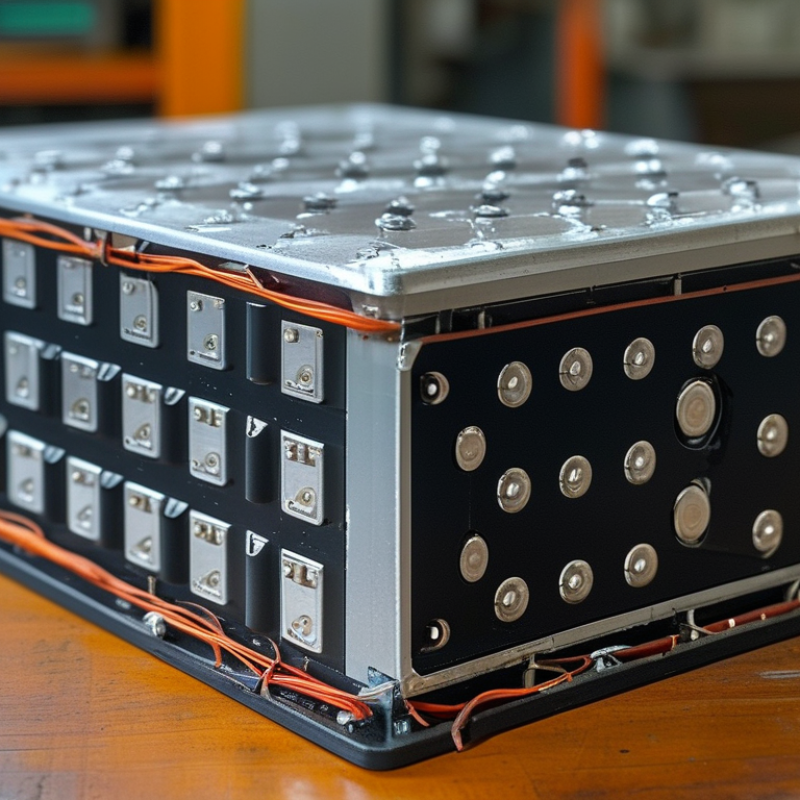
Define Your Product’s Power and Performance Requirements
How to Choose a Custom Battery Pack for Your Product
Define your product’s power and performance requirements before discussing cell chemistry or pack shape. Measure operating voltage, average current, peak current, runtime, recharge time, and standby consumption. A handheld scanner may draw 2 A during transmission but only 0.2 A while idle. That difference changes the pack design.
Start with a real duty cycle, not a hopeful estimate. Record current every few seconds during startup, operation, sleep, and shutdown. Include cold temperatures, motor stalls, screen brightness, and wireless activity. Add capacity for aging, but avoid excessive oversizing. The International Energy Agency reported that global electric-vehicle battery demand reached about 750 GWh in 2023, growing roughly 40% year over year. This scale shows why energy density matters, but smaller products often need safer thermal control more than maximum capacity. A spreadsheet can still lie.
Tips: Calculate usable energy with the formula voltage × amp-hours. Then reduce the result for conversion losses, temperature, and aging. Check peak power separately. A pack may have enough energy but still fail when a motor starts. Define acceptable voltage drop, charging limits, enclosure space, and user weight early. Test at the worst expected temperature. Repeat the test after partial aging.
Battery cost also affects performance choices. BloombergNEF reported an average lithium-ion battery pack price of 115 dollars per kWh in 2024, a 20% decline from the previous year. Lower prices may encourage larger packs, but extra cells increase weight, protection demands, and certification work. Your first requirement may be wrong. Measure again.
Match Battery Chemistry to Safety, Cost, and Energy Needs
How to Choose a Custom Battery Pack for Your Product
Match Battery Chemistry to Safety, Cost, and Energy Needs
Choosing a custom battery pack starts with the product’s real operating pattern, not its advertised capacity. Measure startup surges, average current, idle periods, and charging frequency. A device drawing two amps briefly may need stronger discharge performance than its average load suggests. Small details matter.
Lithium-ion cells can deliver high energy in a compact space, making them useful for portable equipment. However, they require careful protection against overcharge, overheating, short circuits, and deep discharge. Lithium iron phosphate chemistry usually offers stronger thermal stability and longer cycle life, but its lower energy density may require a larger enclosure. Nickel-based options can suit specific temperature or cost requirements, though they may add weight and charging complexity.
Cost comparisons should include more than cell prices. Consider the battery management system, charger, enclosure, thermal controls, testing, and replacement schedule. In design reviews, teams sometimes select the cheapest chemistry and overlook downtime. That choice can become expensive.
Test the pack inside the finished product. A battery that performs well on a bench may heat differently near motors, seals, or insulation. Check cold starts, repeated charging, vibration, and aging. I have seen capacity estimates look convincing until real users operated equipment continuously. Recheck assumptions. Safety margins should be measured, not guessed.
Choose the Right Pack Size, Shape, and Electrical Configuration
Choosing a custom battery pack starts with the product’s real space, not an ideal drawing. Measure the cavity, mounting points, cable route, and service clearance. A pack may fit on paper but fail after insulation, connectors, and vibration are added. Leave a small tolerance.
Shape affects both performance and assembly. Flat packs suit slim handheld products, while stacked cells can use deeper spaces more efficiently. Rounded corners may reduce stress inside a portable enclosure. However, unusual shapes often increase tooling costs and complicate inspection. That trade-off is easy to underestimate.
Electrical configuration must match the device’s voltage, peak current, operating time, and charging method. Series cells raise voltage; parallel cells increase capacity and current capability. The battery management system should support balancing, temperature monitoring, overcurrent protection, and controlled charging. Test the pack under startup loads, not only average loads. A device that draws 2 amps normally may briefly demand far more.
Thermal behavior deserves physical testing. Place temperature sensors near the warmest cells and check the pack during charging and continuous operation. Engineers sometimes focus too heavily on capacity claims. I have seen compact packs lose useful runtime because heat limited their output. That result is disappointing, but it reveals a better design question: does the pack remain safe, stable, and serviceable in the product’s actual environment?
How to Choose a Custom Battery Pack for Your Product
Pack size, shape, and electrical configuration determine the voltage, capacity, energy, and available installation space. The chart compares common lithium-ion configurations built from cells rated at 3.7 V and 2.5 Ah each.
How to read the chart: Cells connected in series increase voltage, while cells connected in parallel increase amp-hour capacity. Nominal energy is calculated as voltage multiplied by capacity. Actual usable energy varies with the cell specifications, discharge limits, temperature, current demand, aging, and battery-management settings.
Evaluate Protection Circuits, Charging Methods, and Thermal Control
A custom battery pack should begin with its failure modes, not its advertised capacity. In prototype reviews, I examine load spikes, stall current, connector faults, and accidental reverse insertion. A protection circuit should respond to overcharge, over-discharge, short circuits, and excessive current. It also needs balanced cell monitoring when cells operate in series. Set thresholds with the product’s real load profile. A circuit that trips during motor startup can make a safe product appear defective. That mistake is common.
Charging method deserves equal attention. Constant-current and constant-voltage charging may suit lithium-ion cells, but the charger must match the cell arrangement and chemistry. Never rely on a generic adapter. It can push the wrong voltage. Add temperature sensing near the warmest cell, not beside a cooling vent. Firmware should stop charging when readings become abnormal. I prefer testing at low and high ambient temperatures, with worn connectors and partially aged cells included. Thermal control may require spacing, heat spreaders, airflow, or a lower charge rate. More cooling is not always better. Fans add dust, noise, and another failure point. I have seen temperature sensors mounted too far away; the data looked calm while the cell core overheated. That design passed an early bench test, but it needed rework. Document every limit, test result, and unresolved assumption before production.
How to Choose a Custom Battery Pack for Your Product – Evaluate Protection Circuits, Charging Methods, and Thermal Control
| Battery Chemistry | Nominal Voltage per Cell | Typical Charge Method | Full-Charge Voltage per Cell | Recommended Charge Temperature | Key Protection Requirements | Thermal-Control Considerations | Suitable Product Scenarios |
| Lithium-ion / Lithium-polymer | 3.6–3.7 V | Constant-current / constant-voltage (CC/CV) | Normally 4.20 V; chemistry-dependent | Typically 0–45 °C | Overcharge, over-discharge, overcurrent, short circuit, cell imbalance, and temperature protection. A battery-management system is recommended for multi-cell packs. | Use temperature sensors, current derating, thermal spacing, and restricted charging outside the permitted temperature range. Avoid sustained operation near the cell’s maximum temperature rating. | Portable electronics, medical equipment, tools, robotics, communication equipment, and compact industrial devices. |
| Lithium iron phosphate (LiFePO4) | 3.2–3.3 V | CC/CV with chemistry-specific limits | Approximately 3.60–3.65 V | Typically 0–45 °C | Overcharge, over-discharge, overcurrent, short circuit, balancing, and low-temperature charge protection. | Generally offers better thermal stability than many conventional lithium-ion chemistries, but charging below 0 °C normally requires inhibition or controlled heating. | Energy-storage systems, outdoor equipment, mobility products, industrial instruments, and applications requiring long cycle life. |
| Nickel-metal hydride (NiMH) | 1.2 V | Constant-current charging with termination by time, temperature rise, or negative delta voltage | Not defined by a fixed CV value | Commonly 10–45 °C, depending on charge rate | Overtemperature, overcharge-time, reverse-polarity, short-circuit, and excessive charge-rate protection. | Charging losses can produce noticeable heat. Monitor cell temperature and terminate fast charging reliably to limit oxygen generation and capacity loss. | Consumer devices, legacy equipment, instruments, and products requiring replaceable cylindrical cells. |
| Lead-acid | 2.0 V | Constant-current / constant-voltage with float stage | Approximately 2.30–2.45 V, temperature-compensated | Typically 0–40 °C | Overcharge, excessive discharge, short circuit, reverse polarity, fuse protection, and ventilation considerations. | Provide ventilation and adequate clearance. Charging voltage should be adjusted for temperature because high temperature accelerates degradation and water loss. | Backup power, low-cost stationary systems, emergency equipment, and applications where weight is less critical. |
Custom Battery-Pack Evaluation Checklist
| Evaluation Dimension | Design Data to Confirm | Practical Selection Guidance |
| Voltage configuration | Required operating voltage, maximum input voltage, minimum shutdown voltage, and number of cells in series. | Match the series-cell count to the product’s electrical limits and use a charger designed for the exact battery chemistry and pack voltage. |
| Capacity and runtime | Average load, peak load, duty cycle, required runtime, aging allowance, and low-temperature performance. | Estimate capacity using actual load profiles rather than nominal current alone. Include reserve capacity for aging and conversion losses. |
| Protection circuit | Overvoltage, undervoltage, overcurrent, short-circuit threshold, balancing method, fuse rating, and fault-recovery behavior. | Choose protection thresholds below the cells’ absolute safety limits while preventing nuisance shutdown during normal startup or motor loads. |
| Charging method | Charge voltage, charge current, termination current or time, recharge behavior, connector polarity, and charger communication requirements. | Use CC/CV for most lithium-based packs and chemistry-specific termination methods for NiMH. Do not substitute a charger intended for another chemistry. |
| Thermal control | Ambient range, internal temperature rise, sensor location, charging temperature limits, enclosure heat dissipation, and thermal cutoffs. | Validate the worst-case condition, including maximum load, blocked ventilation, high ambient temperature, and simultaneous charging and operation. |
| Mechanical integration | Available envelope, mounting points, vibration, shock, connector placement, cell orientation, and service access. | Prevent cell movement, compression, abrasion, and accidental connector reversal. Keep heat-producing components away from temperature-sensitive cells. |
| Validation and compliance | Electrical, thermal, mechanical, transport, abuse, and product-level safety testing requirements. | Test the complete pack, charger, enclosure, and product together. Final requirements depend on chemistry, pack size, transport route, and market. |
Note: Voltage and temperature values are typical engineering ranges, not universal limits. Always use the cell manufacturer’s specifications, the approved protection-circuit parameters, and applicable product-safety requirements for the final design.
Verify Compliance, Reliability, Testing, and Long-Term Support
Choosing a custom battery pack requires more than matching voltage and capacity. Compliance must be checked at the cell, pack, charger, and shipping levels. Relevant frameworks include IEC 62133-2, IEC 62619, UN 38.3, and applicable regional product rules. The International Energy Agency reported that global electric vehicle battery demand exceeded 750 GWh in 2023, increasing about 40% from 2022. This scale increases pressure on suppliers, but volume does not prove safety or quality. Ask for traceable test records, certified materials, and controlled design changes.
Reliability should be demonstrated under realistic conditions. Test samples through charging cycles, vibration, impact, humidity, thermal changes, and abnormal charging. Monitor cell balance, temperature rise, insulation resistance, and battery-management-system records. A pack that works on a clean laboratory bench may fail beside a hot motor or in a cold warehouse. That uncomfortable gap matters. Testing can also miss connector wear or software faults. Review failure criteria before testing, not after results look disappointing.
Tips:
Request a sample test plan and one complete failure report. Confirm who owns firmware updates, field returns, spare packs, and end-of-life notices. The supplier should explain response times and provide serial-level traceability. Avoid accepting vague claims such as “tested to standard.” Ask which edition, which sample size, and which results. Long-term support is part of product reliability, even when it receives less attention during purchasing.