INDUSTRIES2023-04-26T19:33:38+00:00

2026 How to Choose a Rough Terrain Pallet Truck?

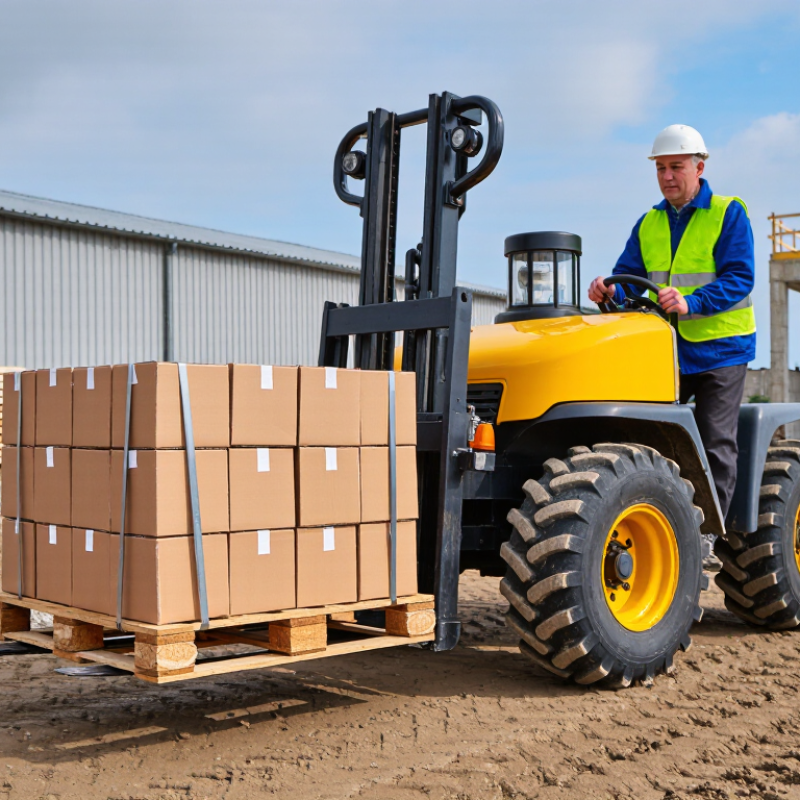
Choosing a Rough Terrain Pallet Truck in 2026 starts with the ground, not the brochure. Warehouses, farms, construction sites, and outdoor yards present different challenges. Loose gravel can swallow small wheels. Wet concrete can reduce braking confidence. A pallet carrying 1,000 kilograms may feel stable on level ground, then shift on a short ramp. That change matters. During equipment evaluations, experienced operators usually inspect the load center, handle control, wheel material, and braking response before comparing brand names. They also measure aisle width and turning space. A truck that moves well outside may struggle beside a loading dock. Small details become expensive quickly.

A reliable buying decision combines manufacturer specifications with practical site testing. Check rated capacity, lift range, fork dimensions, ground clearance, steering angle, and service requirements. Confirm that the stated capacity applies to your actual load center, not an idealized example. Ask for test records, warranty terms, spare-parts availability, and operator guidance. Reputable suppliers should explain limitations clearly, including performance on slopes, mud, and uneven surfaces. Independent standards and documented inspections can strengthen confidence, but paperwork cannot replace a hands-on trial. Try the truck with a representative pallet on the surfaces it will actually face. Listen for wheel drag. Watch the load. Notice operator fatigue. No checklist is perfect. Some choices still involve judgment, budget pressure, and imperfect information. The best 2026 model is not necessarily the newest or cheapest. It is the Rough Terrain Pallet Truck that safely matches your loads, terrain, operators, and maintenance capacity over time.
2026 How to Choose a Rough Terrain Pallet Truck?

Understanding Rough Terrain Pallet Truck Applications and Work Environments

2026 How to Choose a Rough Terrain Pallet Truck?

Understanding Rough Terrain Pallet Truck Applications and Work Environments

Choosing a rough terrain pallet truck starts with the ground, not the advertised lifting capacity. These machines suit farms, construction sites, garden centers, timber yards, and outdoor warehouses. Their work areas may include gravel, compacted soil, wet grass, loading ramps, or shallow ruts. Measure the route while carrying a typical load. A smooth yard can hide soft edges after rain. It happens.

Look for pneumatic or traction-focused wheels, adequate ground clearance, stable steering, and dependable braking. Fork length must match pallets and still leave room for turning. In narrow outdoor aisles, a shorter chassis may matter more than extra capacity. On slopes, confirm the truck’s rated performance and keep loads low.

Never judge stability from a showroom floor. A pallet truck that moves well on concrete may sink into loose soil or bounce across broken ground. That difference changes productivity and operator fatigue.

Before choosing, observe the actual shift. Note travel distance, gradients, weather exposure, pallet condition, and charging or refueling access. Ask operators where wheels slip and where visibility disappears. Their comments often reveal more than a specification sheet. Review maintenance access, corrosion protection, emergency controls, and training requirements with a qualified technician. I would also test a partly loaded unit, because perfect test pallets can create false confidence. Some choices still need revision after seasonal use. A simple site trial can expose weak traction, poor ergonomics, or insufficient clearance before expensive problems appear.

Evaluating Load Capacity, Fork Dimensions, and Ground Clearance

How to Choose a Rough Terrain Pallet Truck in 2026

Load capacity should match the real load, not its advertised maximum. Check the weight, load center, and weight distribution together. OSHA 29 CFR 1910.178 requires industrial trucks to carry marked rated loads safely. NIOSH reports that forklifts cause about 85 work-related deaths and 34,900 serious injuries annually in the United States. These figures support a cautious capacity decision. A 1,500-kilogram load may exceed a truck’s rating when the center shifts forward. That detail is easy to miss.

Fork dimensions must support the pallet without excessive overhang. Measure entry openings, pallet length, and fork spacing at the actual site. Longer forks may seem safer, but they can reduce maneuverability and increase bending stress. Ground clearance matters on gravel, compacted soil, and broken concrete. Measure the lowest chassis point, not only the wheel diameter. A clearance of 100 millimeters may work on a clean yard, but deep ruts can still stop movement. ISO 3691-1 emphasizes stability, visibility, and operating conditions, yet real surfaces remain unpredictable. A specification sheet cannot fully describe a muddy loading area.

Tips: Photograph the route after rain. Record the heaviest load, pallet size, and deepest rut. Test the truck with a partial load before purchase. This is often overlooked. Recheck turning space with forks raised only as required. A perfect paper match can still fail in daily work.

Comparing Wheel Types, Traction Systems, and Operator Controls

How to Choose a Rough Terrain Pallet Truck?

Wheel choice determines how confidently a pallet truck crosses gravel, mud, and uneven concrete. Pneumatic tires absorb shocks and provide better comfort on loose ground. However, they can puncture under sharp debris. Solid rubber tires resist damage but transmit more vibration to the operator. Foam-filled tires offer a useful compromise, though they may feel less responsive during tight turns. Check tire width, tread depth, and ground clearance against your actual site conditions.

Traction systems matter when loads move across slopes or wet surfaces. Two-wheel drive may suit firm yards with moderate inclines. Four-wheel drive offers stronger grip on soft ground, but it can increase cost, weight, and turning effort. Test the truck with a realistic pallet, not an empty machine. A specification sheet cannot show every surface problem. That is an easy detail to underestimate.

Tips: Choose controls that remain clear while the operator wears gloves. A responsive tiller, proportional travel control, emergency stop, and automatic braking improve handling. Confirm that lift and lower buttons are separated by touch, not only by labels. Walk-behind models should include a reliable deadman control and reverse protection. Test visibility around the pallet and listen for unusual wheel slip. Small controls matter. Operators may use them hundreds of times per shift. One imperfect trial does not prove suitability, so repeat checks after loading, turning, and stopping on the roughest safe section.

2026 How to Choose a Rough Terrain Pallet Truck? - Comparing Wheel Types, Traction Systems, and Operator Controls

Category Option Typical Characteristics Main Advantages Limitations and Considerations Best-Matched Conditions
Wheel Type Pneumatic Rubber Wheels Air-filled tires with flexible sidewalls; commonly used in larger diameters to cross uneven outdoor surfaces. Good shock absorption, improved flotation on loose ground, and better comfort over gravel or compacted soil. Can puncture; air pressure must be checked regularly. Low pressure increases rolling resistance and may reduce stability. Gravel yards, farms, construction areas, landscaping sites, and moderately uneven outdoor ground.
Solid Rubber Wheels Non-pneumatic rubber tires designed to resist punctures while retaining more cushioning than hard plastic wheels. Puncture resistance, predictable maintenance, and useful grip on mixed indoor and outdoor surfaces. Heavier steering effort than pneumatic tires; less shock absorption; may leave marks on some finished floors. Mixed-use facilities where punctures are a concern and the truck must travel between paved floors and outdoor work areas.
Foam-Filled Tires Pneumatic-style tires filled with resilient foam instead of air. Combines puncture resistance with more cushioning than many solid tires; maintains a consistent tire profile. Usually heavier and more expensive than standard pneumatic tires; ride comfort can be lower than air-filled tires. Sites with sharp debris, nails, or branches where reduced downtime is more important than minimum tire cost.
Polyurethane or Hard Polymer Wheels Hard, low-deflection wheels commonly used on smooth, firm, and clean surfaces. Low rolling resistance, long service life on suitable floors, and good resistance to oils and many chemicals. Limited shock absorption and reduced traction on loose gravel, mud, wet grass, or deeply uneven ground. Smooth concrete, loading docks, warehouses, and short transitions between paved surfaces.
Traction System Manual Push/Pull Operator supplies all travel force through the tiller or handle; no traction battery or drive motor. Simple construction, low purchase cost, low service complexity, and no battery charging requirement. Physical effort increases with load, slope, wheel resistance, and uneven ground. Not suitable for frequent long-distance movement of heavy loads. Short travel distances, light to moderate loads, level surfaces, and occasional outdoor handling.
Powered Walk-Behind Drive An electric drive motor propels the truck while the operator walks behind and controls travel from the tiller. Reduces pushing effort, provides controlled acceleration, and is practical for repeated movement of heavier loads. Requires battery charging and periodic electrical, brake, and drive-system maintenance. Longer travel routes, moderate slopes, repeated loading cycles, and mixed indoor/outdoor applications.
Powered Drive with Hill-Hold or Regenerative Braking Electric drive with electronic speed control, controlled deceleration, and braking assistance when releasing the travel control. Improves control on ramps, limits unintended rollback, and can reduce mechanical brake wear. More electronic components and greater dependence on battery condition and system calibration. Facilities with ramps, frequent stopping and starting, or loads that require smooth speed management.
Four-Wheel or Multi-Wheel Traction Drive and support wheels are arranged to maintain contact over uneven terrain; some designs use articulated or oscillating components. Better stability and traction distribution when crossing ruts, thresholds, or irregular ground. Higher cost, greater machine weight, and potentially a larger turning radius than simpler layouts. Frequent outdoor work on uneven surfaces where maintaining wheel contact is more important than compact maneuverability.
Operator Controls Mechanical Tiller Handle Steering, lifting, and lowering functions are operated through direct mechanical controls. Easy to understand, durable, and less dependent on electronic sensors or software. Can require more operator effort and may offer fewer speed-control features than powered electronic controls. Simple handling tasks, low-use environments, and applications where straightforward serviceability is a priority.
Ergonomic Powered Tiller Tiller-mounted buttons or paddles control travel, lifting, lowering, braking, and sometimes horn or speed selection. Reduces repetitive effort and keeps key functions within the operator’s hand position. Controls must be protected from impact, moisture, and contamination; operators need basic familiarization. Frequent handling cycles, heavier loads, and operations requiring precise low-speed maneuvering.
Adjustable Speed and Direction Control Variable travel control allows gradual acceleration, speed reduction, and forward or reverse selection. Supports safer positioning near people, racks, trailers, and uneven edges while reducing wheel spin. Incorrect settings or abrupt control inputs can still cause load movement or loss of traction. Busy yards, congested loading zones, ramps, and work areas with changing surface conditions.
Emergency-Reverse and Dead-Man Controls A presence-control switch stops or limits travel when released; an emergency-reverse feature helps prevent trapping against an obstacle. Provides an additional layer of operator protection during walk-behind operation. These features do not replace training, route control, visibility checks, or site-specific safety procedures. Any powered walk-behind application, especially areas with limited clearance or frequent changes in direction.
Selection Priority Choose the wheel type according to surface condition and puncture risk; choose powered traction according to load frequency, travel distance, and slope; choose operator controls according to maneuvering precision, visibility, and ergonomic requirements.

Note: The characteristics above are general industry comparisons. Actual capacity, gradeability, ground clearance, turning radius, battery runtime, and braking performance depend on the truck configuration, load distribution, tire size, surface condition, and the applicable safety requirements.

Assessing Power Sources, Safety Features, and Maintenance Requirements

2026 How to Choose a Rough Terrain Pallet Truck?

Choosing a rough terrain pallet truck starts with its power source. Battery-powered models suit warehouses, farms, and enclosed sites because they produce no exhaust fumes. However, cold weather and long outdoor shifts can reduce battery performance. Check charging access, spare battery availability, and expected travel distance before purchase. Engine-powered units may handle extended work better, but they require ventilation, fuel controls, and more frequent servicing. A larger engine is not automatically the wiser choice.

Safety depends on the ground as much as the machine. Look for reliable parking brakes, controlled lowering, emergency stops, warning lights, and stable forks. Wide, puncture-resistant tires can improve grip on gravel and uneven concrete. Confirm the rated capacity at the intended lift height. Loads can shift quickly on slopes. Operators also need clear visibility and a stable standing position, especially near loading ramps.

Maintenance planning should be practical, not theoretical. Inspect forks, steering joints, wheels, brake cables, and hydraulic seals every shift. Keep battery terminals clean and check charging leads for heat damage. Engine versions need oil, filter, and fuel-system inspections at scheduled intervals. Record faults immediately, even minor leaks. A small defect can become a costly failure. I would also test the truck on the actual route before approval. A short demonstration may reveal poor traction, awkward controls, or insufficient ground clearance. These details are easy to overlook.

Selecting the Right Rough Terrain Pallet Truck for Your Operation

2026 How to Choose a Rough Terrain Pallet Truck?

Selecting the right rough terrain pallet truck starts with the worksite, not the specification sheet. Walk the route first. Measure gravel, mud, slopes, loading ramps, and doorway widths. A truck may carry 2,000 kilograms on paper, yet soft ground can reduce stability sharply. Choose pneumatic or deep-tread tires when loose surfaces, stones, and uneven yards are common. Check ground clearance carefully. A few extra centimeters can prevent repeated impacts underneath the chassis.

Load behavior matters just as much. Record the pallet’s real dimensions, weight distribution, and lifting frequency. Long or uneven loads require stable forks and predictable steering. Battery models suit quieter indoor-outdoor work, while engine-powered units may support longer shifts in remote yards. However, fuel use, ventilation, noise, and maintenance can change the total operating cost. The MHI 2024 Annual Industry Report found that 55% of supply chain professionals expected workforce shortages. Simple controls and lower physical strain therefore deserve serious attention.

Do not trust capacity alone. Verify the rated capacity at the actual load center and incline. OSHA 1910.178 requires operator training, inspections, and safe operating practices for powered industrial trucks. Include these requirements during procurement. In field assessments, operators often notice problems that buyers miss, such as a cramped platform or poor visibility near the forks. I would also admit one common mistake: choosing maximum power too early. More power can mean higher costs, heavier handling, and unnecessary complexity. A short site trial may reveal the better answer. According to the International Energy Agency’s Global EV Outlook 2024, battery technology continues to improve, but charging access still affects equipment choices. Check the outlet location, charging time, and seasonal conditions before committing.

2026 How to Choose a Rough Terrain Pallet Truck?

Selecting the right rough terrain pallet truck starts with matching the truck to the working surface, load profile, access conditions, and daily operating environment.

How to use this chart: The percentages represent a practical evaluation framework for comparing options. Surface conditions and load capacity receive the highest weighting because uneven ground, loose materials, and heavy loads directly affect stability, traction, and productivity. Always verify rated capacity, gradeability, ground clearance, wheel specifications, and turning dimensions against the actual operating site.

Go to Top