What Are GFRP Bars and What Are They Used For?
Gfrp Bars are gaining attention in modern construction because they resist corrosion, reduce weight, and offer dependable tensile performance. Unlike steel reinforcement, they do not rust when exposed to moisture, chlorides, or coastal air. This advantage matters in bridge decks, parking structures, seawalls, tunnels, and industrial floors. A damaged concrete surface can reveal the difference: steel may leave orange stains, while Gfrp Bars remain non-metallic and corrosion-resistant.
Professor Antonio Nanni, a leading authority on fiber-reinforced polymer reinforcement, has explained, “FRP reinforcement is not a substitute for steel reinforcement; it is an alternative.” That distinction is important. Gfrp Bars have high tensile strength, but their behavior differs from steel. They are lighter, electrically nonconductive, and resistant to electromagnetic interference. However, they do not yield in the same gradual way. Engineers must consider stiffness, bond, anchorage, fire exposure, temperature, and long-term durability.
This material is useful.
Selecting Gfrp Bars still requires engineering judgment. Project teams should review design codes, test data, product certifications, and installation instructions. Field experience also matters. Bars can be easier to carry, yet careless bending or cutting may damage their surface. The technology is reliable, but it is not effortless. Some applications may benefit greatly, while others may still favor steel or hybrid reinforcement. This article examines what Gfrp Bars are, how they perform, and where their practical value is strongest. It also considers limitations that marketing materials sometimes overlook. Better decisions begin with accurate expectations.
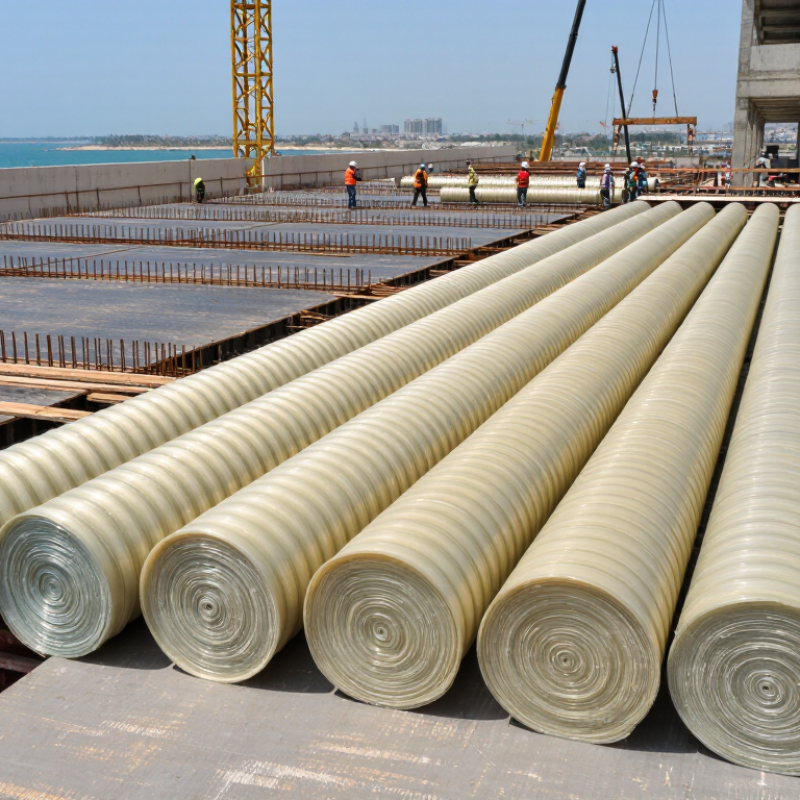
What GFRP Bars Are and How They Are Made
GFRP bars, or glass fiber reinforced polymer bars, combine continuous glass fibers with a resin matrix. The fibers carry tensile forces, while the resin binds and protects each strand. Unlike steel, GFRP does not rust when moisture and chlorides reach reinforcement. It is also lightweight, which can reduce handling effort on site.
Manufacturing usually begins with glass rovings pulled from reels. The fibers pass through a resin bath, where the polymer coats each strand. They then enter a heated forming die. This pultrusion process controls the bar’s diameter and aligns fibers along its length.
Heat cures the resin into a rigid composite. A textured surface may be formed with helical wrapping, ribs, or mineral grit. That texture improves the bond with concrete.
The finished bars are cut to specified lengths and checked for dimensions, surface condition, and mechanical performance. Small process changes matter. Resin temperature, fiber tension, and curing speed can affect consistency. This is where practical judgment remains important. A bar can look sound yet perform poorly if bonding or curing is uneven. Engineers commonly use GFRP in bridge decks, parking structures, seawalls, and slabs exposed to salt or persistent dampness. However, its lower stiffness and different behavior under fire require careful design rather than direct steel substitution.
The Main Properties of GFRP Reinforcement
What Are GFRP Bars and What Are They Used For?
The Main Properties of GFRP Reinforcement
Glass fiber reinforced polymer (GFRP) bars strengthen concrete without using steel. They contain continuous glass fibers held in a resin matrix. This structure provides high tensile strength with a low weight. On construction sites, workers can carry long bars more easily. Cutting also requires fewer heavy tools.
GFRP reinforcement does not rust when exposed to moisture, salts, or many chemicals. This property suits bridge decks, parking structures, marine facilities, and wastewater plants. It also has low electrical and thermal conductivity. Engineers may select it near sensitive equipment or where electromagnetic interference matters. However, GFRP behaves differently from steel. It has a lower elastic modulus and does not yield before failure. Design calculations must reflect this brittle response. Durability still depends on correct handling, concrete quality, and installation details. My practical concern is simple: treating GFRP like steel can create avoidable mistakes.
Tips: Confirm the bar size, surface profile, and design requirements before ordering. Keep bars supported during storage. Avoid sharp bends, crushing, and dragged sections. Follow the project engineer’s installation instructions. Small errors matter.
GFRP bars can reduce maintenance needs over a structure’s service life. They may also lower lifting effort and improve jobsite efficiency. Yet they are not the best choice for every project. Temperature exposure, fire performance, bond behavior, and local design standards require careful review. A qualified engineer should verify the complete reinforcement system before construction begins.
What Are GFRP Bars and What Are They Used For?
Representative mechanical properties of glass fiber-reinforced polymer (GFRP) bars compared with steel reinforcement.
GFRP bars consist of continuous glass fibers embedded in a polymer resin. They are lightweight, electrically nonconductive, and resistant to corrosion caused by moisture, chlorides, and many chemicals. These characteristics make them suitable for bridge decks, marine structures, parking facilities, tunnels, seawalls, and other concrete applications exposed to corrosive environments.
The chart uses representative values: actual performance varies by fiber content, manufacturing process, bar size, resin system, and applicable design standards. GFRP generally has lower elastic stiffness than steel, so structural designs must account for greater deflection and its non-ductile behavior.
How GFRP Bars Compare With Steel Rebar
GFRP bars are reinforcement rods made from glass fibers embedded in a polymer resin. They are lightweight and resist corrosion from water, salts, and chemicals. In a bridge deck, this can prevent rust stains and concrete cracking around expanding steel. GFRP bars are also nonconductive, which helps in facilities containing sensitive electrical or magnetic equipment. Handling is easier. A worker can often move long lengths without lifting equipment.
The comparison with steel rebar is not perfectly tidy. Steel has a higher elastic modulus, so it limits deflection more effectively under many loads. It also yields before failure, giving engineers a visible warning. GFRP behaves differently. It remains elastic until rupture and does not yield in the same way. Its lower stiffness may require larger bar sizes or closer spacing. Cutting also requires suitable dust control and protective equipment. These details matter on a real jobsite.
GFRP performs well in bridge decks, marine structures, parking areas, and wastewater facilities. It can extend service life where corrosion is the main concern. However, it is not automatically the better choice. Design must consider fire exposure, temperature, bond behavior, span length, and local structural codes. Engineers should use tested material data, not only supplier claims. A careless substitution for steel can create excessive deflection or difficult repairs. The honest question is not which bar is stronger. It is which reinforcement fits the exposure, loading, construction method, and maintenance plan.
Common Construction Uses of GFRP Bars
What Are GFRP Bars and What Are They Used For?
Common Construction Uses of GFRP Bars
Glass fiber reinforced polymer (GFRP) bars reinforce concrete without steel’s corrosion risk. They contain continuous glass fibers inside a resin matrix. The Federal Highway Administration reports that GFRP reinforcement can resist chloride-related corrosion in bridge environments. This makes it useful where salt, moisture, or chemicals reach concrete. Bridge decks, parking structures, seawalls, and wastewater facilities are common applications. It works quietly.
GFRP bars also appear in retaining walls, tunnels, precast panels, sidewalks, and concrete slabs. Contractors can cut them with abrasive tools, reducing heavy lifting on site. The ACI 440.1R-15 guide reports typical GFRP tensile strengths of roughly 600 to 1,000 MPa. However, its elastic modulus is much lower than steel’s, often around 35 to 60 GPa. Designers must therefore control cracking and deflection carefully. More strength does not mean more stiffness.
GFRP is electrically nonconductive, so it suits MRI rooms, rail infrastructure, and sensitive electrical facilities. It also avoids magnetic interference. Still, it is not a universal replacement for steel. Fire exposure, connection details, surface damage, and long-term design assumptions require attention. A rushed substitution can create problems. Engineers should follow project-specific provisions and verify bar spacing, development length, and handling procedures. The material performs well, but only when the design reflects its different behavior. That distinction is easy to miss.
Key Benefits and Limitations of GFRP Reinforcement
GFRP bars are reinforcement rods made from glass fibers embedded in a polymer resin. They are placed inside concrete to improve tensile capacity, much like steel reinforcement. GFRP does not rust when moisture, salt, or chemicals reach the concrete. This makes it useful for bridge decks, parking structures, seawalls, tunnels, and wastewater facilities. Each bar is also much lighter than steel. Carrying several bars by hand can reduce lifting effort on site.
The main benefit is durability. GFRP can extend service life where corrosion causes cracking and expensive repairs. It is nonconductive and nonmagnetic, which suits hospitals, laboratories, rail systems, and sensitive electrical areas. However, GFRP is not a universal replacement for steel. It has a lower elastic modulus, so reinforced concrete may show wider cracks or greater deflection. The bars also fail more suddenly because they are brittle. High temperatures, fire exposure, ultraviolet light, and poor surface protection require careful evaluation. A clean comparison is difficult without checking the project conditions.
Tips: Follow current structural design codes and verified manufacturer data. Do not bend standard GFRP bars on site. Plan bends, laps, and supports before concrete placement. Keep the bars away from sharp tools and dragging damage. Field mistakes happen, even with experienced crews. Inspect spacing, cover, and bar condition before pouring.