How to Create Customized Valve Guides for Your Engine?
Creating a customized valve guide is essential for optimizing engine performance. A Valve Guide Customized for your specific needs can enhance durability and improve airflow. However, this process requires careful planning and precision.
When designing valve guides, one must consider various factors. This includes the engine type, valve size, and material choice. Designers often face challenges. It’s not always easy to find the right balance between strength and weight. Sometimes, mistakes happen. A poorly designed valve guide can lead to engine failure.
Understanding the intricacies of valve guide customized solutions will lead to better results. It's crucial to test different designs comprehensively. In the end, refining these guides can yield significant performance gains. Yet, continuous improvement is necessary. There is always room for better designs and materials. Embracing this mindset could lead to breakthroughs in engine technology.
Understanding the Function and Importance of Valve Guides in Engines
Valve guides play a vital role in engine performance. They provide accurate alignment for the valves, enabling them to open and close smoothly. This alignment is crucial for maintaining proper compression and preventing leaks. A poorly aligned valve can lead to increased wear and tear on the engine components. As a result, understanding the function of valve guides is essential for anyone working on engines.
Customized valve guides can enhance performance significantly. They can be designed to fit specific engine setups. A precise fit can optimize airflow and improve combustion. However, crafting these guides requires technical skill and knowledge of the engine's dynamics. Mistakes can lead to subpar performance or even engine damage. Careful measuring and testing are critical. Small deviations in size can have significant effects on overall engine efficiency.
Some enthusiasts overlook the importance of quality materials. Using substandard materials can lead to rapid wear and failure. A valve guide made from inferior metal may not withstand high temperatures and pressures. This oversight can cause more problems down the line. Attention to detail is necessary to ensure longevity and reliability. In the end, precision and quality in creating valve guides is key for any engine builder.
Selecting the Right Materials for Customized Valve Guides
Selecting the right materials for customized valve guides is crucial for engine performance. Common choices include bronze, aluminum, and steel. Each material has unique properties that cater to specific needs. For instance, bronze offers excellent wear resistance and thermal conductivity. However, it can be quite heavy, which might not suit every application.
Aluminum is lighter and has good heat dissipation. It’s often used in racing engines where weight is a critical factor. Yet, aluminum can wear quickly under high stress.
Steel, on the other hand, is durable but can be prone to corrosion. The decision must involve balancing weight, durability, and the operating environment of the engine.
Understanding your engine's requirements is important. Imagine a high-performance engine that requires precision; the wrong guide material could lead to early failure. Reports show that nearly 30% of engine failures relate to material selection. Calculating expected thermal expansion and wear patterns is not always straightforward. The data suggests that improper material choices can lead to severe performance losses. It’s a complex puzzle demanding thoughtful consideration and engineering insights.
Step-by-Step Process for Designing Customized Valve Guides
Creating customized valve guides for your engine is a meticulous process. Start by gathering precise measurements of your engine's existing guides. These measurements include the inner diameter, outer diameter, and length. It’s essential to focus on these specifications. According to industry data, a small variance in diameter can impact overall engine performance. The right fit reduces wear and maintains optimal oil pressure.
The next step involves selecting the right material. Popular choices include bronze and aluminum, each offering unique benefits. Bronze is known for its durability, while aluminum is lighter. A study shows that the right material can extend engine life by up to 15%. However, don’t overlook potential downsides. For instance, aluminum guides may wear faster under extreme conditions. It’s vital to evaluate the expected usage of your engine before making a decision.
Finally, precision machining is crucial. The guides must be manufactured to exact specifications. Any deviation can result in significant issues, like poor sealing or increased friction. Engineers often recommend allowing a tolerance of just a few thousandths of an inch. Still, mistakes are common. Regularly reviewing the design and process can help reduce errors. Ultimately, custom-designed valve guides can enhance engine efficiency. But, perfection takes time and careful adjustments.
Techniques for Machining and Fitting Valve Guides
Creating customized valve guides for your engine requires careful machining and precise fitting. Properly designed valve guides control the positioning of the valves and ensure optimal performance. According to recent industry reports, precision in valve guide dimensions can improve engine efficiency by up to 15%.
When machining valve guides, start with the correct material selection. Steel alloys like chrome-molybdenum are popular due to their wear resistance. Use CNC machines for accurate cuts and finishes. Check tolerances frequently to avoid oversizing or undersizing, which can lead to issues like valve misalignment. Tips: Regularly calibrate your machines to maintain precision.
Fitting valve guides involves more than just insertion. Take time to measure the clearance accurately. Ideally, a clearance of 0.001 to 0.003 inches is effective for most applications. If the fit is too tight, it can cause binding, leading to accelerated wear. Monitor this during assembly. Tips: Always test fit guides before final installation to identify any discrepancies early.
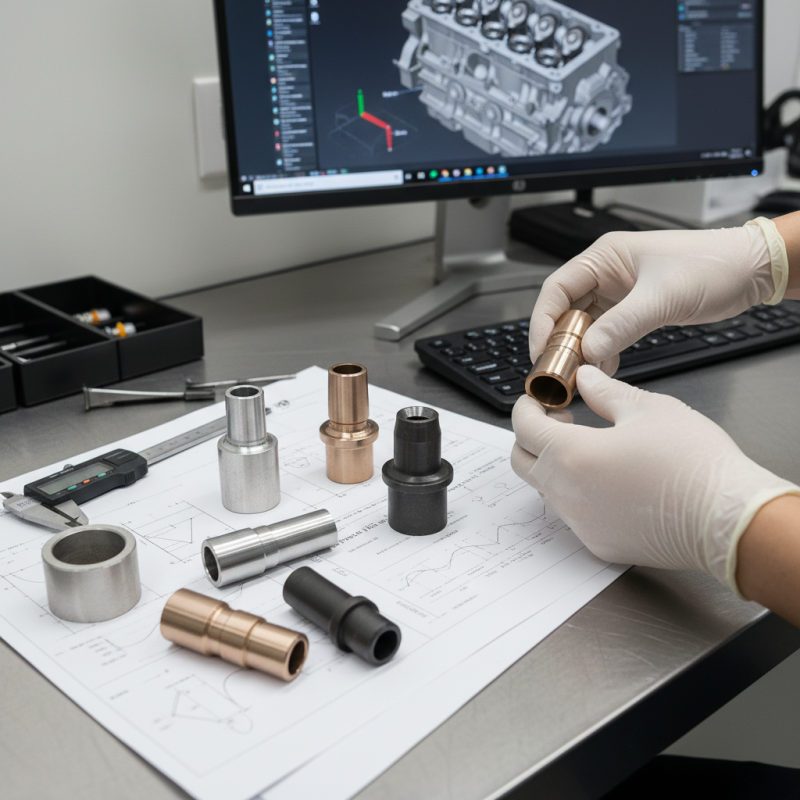
Customized Valve Guides Manufacturing Techniques
Testing and Quality Assurance for Customized Valve Guides
Testing and quality assurance are crucial in creating customized valve guides for engines. Every component must meet specific standards. A common test involves checking the fit within the engine. A guide that is too tight or loose can lead to significant performance issues. Precision measurement tools, like calipers, help ensure accurate dimensions.
Another vital aspect is material testing. Materials used for valve guides must withstand high temperatures and pressures. Conducting heat resistance tests is standard. Selecting the wrong material can lead to premature wear and engine failure. However, many engineers underestimate this step. They often rely solely on theoretical data, which is risky. Real-world testing reveals complexities that models cannot predict.
Visual inspections also play a role. Inspecting each guide for imperfections, like surface cracks, is necessary. Imperfections can lead to serious problems down the line. However, human error is common in this phase. Often, rushed inspections overlook issues. This highlights the need for a robust quality control process. Each step must focus on detail. Only then can a high-quality product be ensured.