INDUSTRIES2023-04-26T19:33:38+00:00

How to Choose the Right Plastic Enclosures?

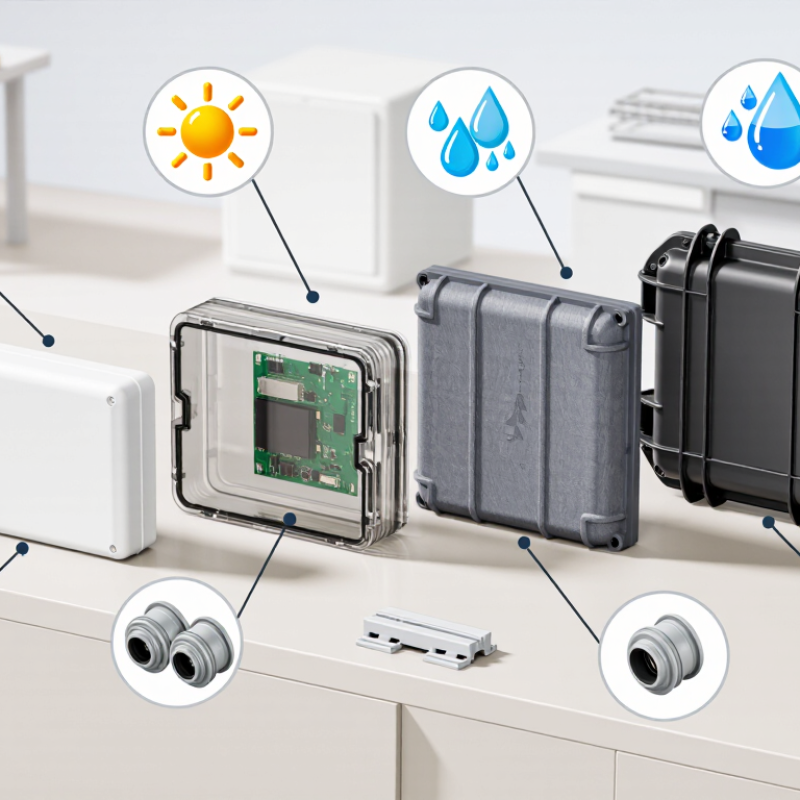
Choosing the right Plastic Enclosures begins with the environment, not the appearance. A compact box may look suitable on a product drawing, yet fail beside heat, moisture, vibration, or chemical exposure. The correct choice protects internal components while supporting assembly, maintenance, and long-term reliability.

Dr. Tim Osswald, a respected plastics engineering professor and author, emphasizes a practical principle: “The material, the design, and the process must work together.” This idea matters when comparing ABS, polycarbonate, fiberglass-reinforced polyester, and other materials. ABS can suit indoor electronics where impact resistance and cost matter. Polycarbonate offers stronger impact performance and clearer inspection options. Outdoor equipment may require UV stability, an effective gasket, and a carefully rated ingress protection level.

Look closely at the details. Check wall thickness, mounting points, hinge strength, cable glands, ventilation, and screw-boss durability. Place the enclosure near its real operating environment. Touch the surface after heat exposure. Inspect whether a cover can be opened without damaging wires. Small oversights become expensive problems.

No enclosure is perfect.

A thoughtful selection also considers manufacturing volume and future servicing. A custom enclosure may provide a precise fit, but standard Plastic Enclosures often reduce tooling costs and shorten delivery times. Still, standard dimensions can force awkward layouts. That trade-off deserves honest review. Performance claims should come from technical datasheets, test reports, and supplier experience, not attractive photographs. The best decision balances protection, usability, compliance, appearance, and total ownership cost.
How to Choose the Right Plastic Enclosures?

Define Electrical Needs: Voltage, Heat Load, and Component Clearance

How to Choose the Right Plastic Enclosures?

Define Electrical Needs: Voltage, Heat Load, and Component Clearance

Begin with the highest working voltage, not the average reading. Include switching surges and transient conditions. IEC 60664-1 evaluates clearance and creepage using voltage, pollution degree, and overvoltage category. Therefore, there is no universal “safe” spacing. A compact enclosure may pass a bench test yet fail in dusty, humid service. Map each terminal, fuse, and conductor before selecting internal dimensions. Leave room for insulation barriers and tool access.

Heat is equally important. Add the wattage lost by every power supply, relay, resistor, and converter. For example, 120 watts inside a sealed box can create a serious temperature rise. A simple thermal estimate uses ΔT = power × thermal resistance, but real airflow rarely behaves neatly. IEC 60529 identifies IP54 as protection against limited dust ingress and splashing water, while IP65 requires dust-tight construction and water-jet protection. Higher sealing can also reduce natural cooling. That trade-off is easy to underestimate.

Tips: Draw a full-scale layout on paper. Mark a 10 mm service margin around terminals, unless the component instructions require more. Check cable bend radius, mounting screw depth, and the hottest surface near plastic walls. Compare the enclosure’s tested temperature range with the actual ambient range. Recheck the design after adding labels and glands. Small details often consume the space you thought was available.

Select Materials: UL 94 V-0 Limits Flame Burning to 10 Seconds

How to Choose the Right Plastic Enclosures?

Select Materials: UL 94 V-0 Limits Flame Burning to 10 Seconds

Material selection should begin with the enclosure’s electrical and thermal risks. UL 94 V-0 means each vertical flame application allows burning for no more than 10 seconds. The material must also prevent flaming drips that ignite the cotton indicator. This rating improves fire performance, but it does not make an enclosure fireproof. Always review the complete test report, thickness, color, and processing conditions. A thinner wall may perform differently from the tested sample.

In practical enclosure evaluations, engineers should examine heat sources near terminals, power supplies, and ventilation openings. A V-0 plastic can reduce flame spread during a fault, giving people more time to disconnect equipment. However, poor internal spacing can still create excessive heat. Do not select material by rating alone. Consider impact strength, UV exposure, chemical contact, and dimensional stability. A common mistake is ignoring assembly stress around screws. Cracks may appear later, especially after repeated heating cycles.

Tips: Request certification details from the material supplier. Confirm the exact grade and wall thickness. Check whether additives change color or strength. Test a production-like sample, not only a flat coupon. Document the results. Recheck them after design changes. Some decisions seem obvious, but field conditions can be less predictable than laboratory tests.

Choose Ingress Protection: IP65 Means Dust-Tight and Water-Jet Resistant

Choosing the right plastic enclosure starts with understanding its IP rating. IP65 offers two specific protections. The first digit, 6, means the enclosure is dust-tight. Dust should not enter during standardized testing. The second digit, 5, indicates protection against water jets from different directions.

This rating suits control equipment, sensors, and outdoor electrical connections exposed to rain or routine cleaning. It does not mean the enclosure is waterproof during immersion. A flooded junction box needs a different rating. High-pressure washing may also exceed the tested conditions. Small differences matter.

Check the complete installation, not only the printed rating. A drilled opening can weaken protection. Cable glands, plugs, and mounting screws must match the enclosure’s sealing design. Tighten them evenly. Over-tightening can distort the plastic or damage a gasket. I have seen excellent enclosures fail because a cable entry was left poorly sealed.

Temperature changes deserve attention too. Plastic can expand, contract, or become brittle under strong sunlight and cold conditions. Select a material suited to the working environment. Inspect the gasket for cuts and flattening during maintenance. IP65 protection depends on assembly quality, service conditions, and ongoing care. That detail is easy to underestimate.

How to Choose the Right Plastic Enclosures?

Ingress Protection ratings combine dust protection (first digit) and water protection (second digit).

Key takeaway: IP65 means the enclosure is dust-tight and protected against water jets from any direction. The chart displays the two standardized IP code digits separately; these digits are protection levels, not percentages.

Specify Impact Strength: IK08 Enclosures Withstand a 5-Joule Impact

Choosing the right plastic enclosure starts with the force it must survive. An IK08 enclosure withstands a 5-joule impact under controlled testing conditions. That energy is similar to a heavy object striking the housing with considerable force. It can protect internal components from accidental knocks, dropped tools, and rough handling.

Check the test standard, not just the rating. IEC 62262 defines the IK impact classification, while the enclosure’s material, wall thickness, hinges, and mounting method affect real performance. A rigid enclosure may pass testing but crack near a screw hole if installed poorly. During equipment evaluations, inspect corners, cable entries, and lid joints carefully. These areas often receive less attention.

Look for weak points.

IK08 does not automatically indicate water resistance, chemical resistance, or UV stability. Those properties require separate specifications and practical testing. Consider the enclosure’s installation environment, including vibration, temperature changes, and maintenance access. A transparent lid may improve visibility, but it can respond differently to impact than an opaque panel. This detail is easy to overlook. Also, one successful impact test does not prove unlimited repeated-impact performance. The selection process is not perfect, but documenting likely hazards makes the decision more reliable.

Confirm Environmental Compliance: NEMA 4X Supports Corrosion Resistance

How to Choose the Right Plastic Enclosures?

Confirm Environmental Compliance: NEMA 4X Supports Corrosion Resistance

When selecting a plastic enclosure, study the environment before comparing dimensions or appearance. NEMA 4X indicates protection against corrosion, dust, rain, splashing water, and hose-directed water. It is valuable for coastal sites, food-processing rooms, chemical areas, and outdoor control panels. Still, the rating is not a universal guarantee. Material compatibility matters.

Check the enclosure resin, gasket, hinges, fasteners, and cable entries. A reinforced polyester body may perform well near salt spray, while another plastic may weaken after repeated contact with cleaning agents. Polycarbonate can offer strong impact resistance, but chemical exposure still requires review. Small details matter. A damaged gasket can defeat a sound enclosure design.

Request documented test information from the supplier. Confirm the exact NEMA 4X configuration, not only the empty box. Review operating temperature, ultraviolet exposure, washdown pressure, and chemical concentration. NEMA 4X does not automatically mean submersible or suitable for every solvent. That assumption causes trouble. In practical design reviews, teams sometimes focus on the enclosure shell and overlook cable glands or mounting screws. I have found that the weakest accessory often becomes the real failure point. Allow room for inspection, drainage considerations, and future wiring changes. The best choice is not simply the strongest enclosure. It is the enclosure whose tested protection matches the site’s actual hazards.

How to Choose the Right Plastic Enclosures? - Confirm Environmental Compliance: NEMA 4X Supports Corrosion Resistance

Selection guide for non-metallic electrical enclosures requiring outdoor protection and corrosion resistance.
Evaluation Dimension What to Confirm Relevant Technical Information Recommended Selection Approach Documentation to Request
Required enclosure rating Whether the enclosure must withstand outdoor water, dust, hose-directed water, and corrosive conditions. NEMA Type 4X is intended to provide protection against windblown dust and rain, splashing and hose-directed water, and corrosion. It also addresses external ice formation. Select a product specifically evaluated and marked for NEMA Type 4X when that rating is required. Do not infer the rating from the enclosure material alone. Manufacturer rating statement, applicable test information, installation instructions, and certification or evaluation records where required by the project.
Corrosion resistance Exposure to salt spray, moisture, cleaning chemicals, fertilizers, acids, alkalis, or industrial pollutants. The “X” in NEMA 4X indicates additional protection against corrosion compared with a basic Type 4 enclosure. Actual chemical resistance still depends on the resin, gasket, hardware, and exposure conditions. Choose a non-metallic material and hardware combination that has documented compatibility with the specific chemicals, concentration, temperature, and exposure duration. Chemical-resistance chart, material specifications, gasket compatibility data, and any corrosion-test information relevant to the application.
Plastic material selection Mechanical strength, impact exposure, chemical contact, UV exposure, and required service life. Polycarbonate generally offers high impact resistance; ABS is commonly used for general-purpose applications; glass-fiber-reinforced polyester can provide strong mechanical and outdoor performance. Performance varies by formulation and design. Compare the complete enclosure system rather than selecting resin by name only. Verify wall construction, hinges, fasteners, mounting points, and gasket material. Resin identification, impact and temperature ratings, UV information, flammability data where applicable, and construction drawings.
Water and dust ingress Whether the installation includes rain, washdown, outdoor dust, or temporary water exposure. A rating such as NEMA Type 4X describes enclosure performance when properly assembled. Cable entries, vents, unused openings, and door compression can affect the final installation. Use compatible glands, hubs, plugs, and sealing accessories. Follow the specified torque and installation instructions for the cover and entry hardware. Ingress-protection test details, sealing instructions, allowable entry accessories, and recommended fastener or cover torque.
UV and weathering exposure Direct sunlight, seasonal temperature changes, freeze-thaw cycles, and long-term outdoor placement. NEMA Type 4X does not by itself define the service life of a plastic resin under sunlight. UV stabilizers, color, wall thickness, and formulation influence weathering performance. Use an enclosure with documented outdoor or UV suitability when installed in direct sunlight. Evaluate brittleness, discoloration, and seal aging over the intended service period. UV-weathering data, operating-temperature range, outdoor-use statement, and gasket aging information.
Operating temperature Ambient temperature, internal heat from electrical equipment, solar loading, and low-temperature impact conditions. The enclosure must maintain its mechanical and sealing performance across the actual temperature range. Internal components may require thermal calculations or ventilation solutions. Check the complete assembly’s temperature limits, including plastic, gasket, hinges, latches, cable entries, and installed electrical equipment. Published operating-temperature range, thermal calculations when needed, and limitations for high or low temperature service.
Gasket and closure system Seal compression, repeated opening, chemical exposure, temperature cycling, and maintenance requirements. A durable gasket and correctly secured cover are essential to maintaining the enclosure rating. Seal degradation can reduce water and dust protection even when the housing remains intact. Prefer replaceable, application-compatible gaskets and closures that provide consistent compression without distorting the plastic body. Gasket material, replacement-part information, closure-adjustment guidance, and maintenance instructions.
Electrical and installation requirements Voltage, current, grounding or bonding needs, cable routing, component heat dissipation, and available mounting space. A plastic enclosure may not provide the same grounding path as a metal enclosure. Electrical safety depends on the complete installation and applicable electrical codes. Provide separate grounding or bonding provisions when required, and verify clearances, cable-entry placement, and component temperature limits. Dimensional drawings, mounting instructions, electrical ratings, material flammability information, and grounding provisions.
Standards and compliance verification Which standards and local regulations apply to the equipment and installation location. NEMA enclosure types and IEC ingress-protection codes are separate classification systems. A NEMA Type 4X claim should not automatically be treated as an IEC IP-code claim unless both have been evaluated. Match the enclosure marking and evidence to the specification, authority having jurisdiction, and installation environment. Applicable standard references, product marking details, independent certification or evaluation documents, and installation records.
Go to Top