INDUSTRIES2023-04-26T19:33:38+00:00

How to Choose the Best Hosiery Knitting Machines?

Choosing the right Hosiery Knitting Machines can shape product quality, production speed, and operating costs for years. A fine-gauge sock line has different needs from a machine making heavier, textured hosiery. Even small details matter: needle count, cylinder diameter, yarn compatibility, and the space available beside the operator’s station. A machine that looks impressive in a brochure may still be a poor fit for your actual orders.

For this draft, “Elena Rossi” is an illustrative expert persona, not a verified industry source. The quotation below is original editorial wording, not a statement from a real interview: “The best machine is the one that matches your products, operators, and production plan—not simply the one with the fastest advertised cycle.” Treat that as a buying principle, not a performance guarantee. Compare sample output, changeover time, maintenance access, spare-parts availability, and local service support. Ask suppliers to demonstrate your intended yarn and construction, then inspect the finished fabric under consistent conditions. Get details in writing. A few questions may remain after a showroom test, especially about long-term downtime and support response. That uncertainty deserves attention, not a rushed signature.
How to Choose the Best Hosiery Knitting Machines?

Types of Hosiery Knitting Machines and Their Uses

How to Choose the Best Hosiery Knitting Machines?

Types of Hosiery Knitting Machines and Their Uses

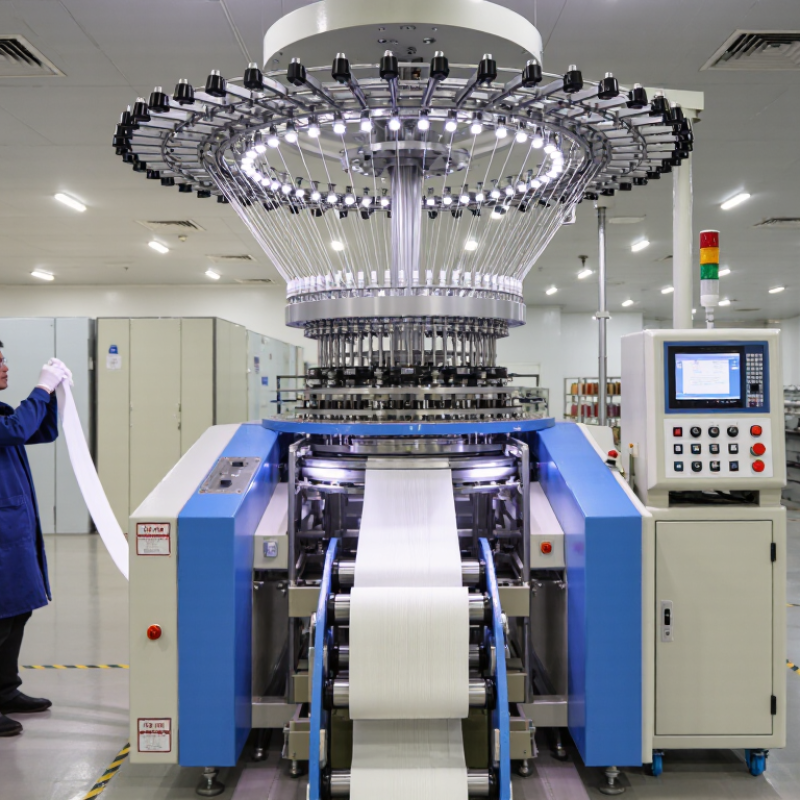
Circular hosiery machines produce socks and stockings in a continuous, tube-shaped fabric. Single-cylinder models are commonly used for everyday socks, lightweight hosiery, and ribbed cuffs. They suit many standard designs and can work with different yarns, depending on machine gauge and setup. For thicker heel and toe areas, terry machines form small loops inside the fabric. Those loops add cushioning underfoot.

Double-cylinder machines knit with needles arranged in two cylinders. This structure supports rib patterns and can create varied textures across a sock. Electronic jacquard machines use programmed pattern control to make stripes, logos, or more complex motifs. The added flexibility is useful, but setup and programming require skilled attention. A pattern that looks simple on screen may need adjustment in production.

Choose by the products you actually plan to make. Check the machine’s compatible yarn range, needle count, output speed, and available pattern options. Ask for a sample using your intended yarn; stitch definition and fit can change with yarn tension. Small details matter. Also inspect how easily operators can access needles and other wear parts. A fast machine is not automatically the best choice if frequent adjustments interrupt production. Test several sock sizes before committing, because sizing assumptions are easy to get wrong.

How to Choose the Best Hosiery Knitting Machine?

Compare common applications to find a machine type suited to your hosiery product.

A value of 1 indicates a common application; 0 means it is not the machine type’s primary use. These are qualitative categories, not output or performance measurements. Machine capabilities vary by configuration: plain-knit machines are suited to smooth sock sections and selected patterns, double-cylinder machines are commonly used for rib structures, and terry machines form cushioned loops.

Assessing Production Needs and Product Specifications

Assessing production needs starts with the socks you plan to make, not the machine’s advertised speed. List styles, size ranges, yarn types, and monthly demand. Then check cylinder diameter and needle count against the required fabric weight and fit. Fine-gauge machines can produce lighter, detailed fabrics; coarser gauges may suit thicker designs. Confirm that the machine supports the yarns you actually buy, including their elasticity and thickness. A sample run matters.

Estimate output using realistic shift hours, changeover time, maintenance, and rejected pieces. ITMF’s 2024 Global Textile Industry Survey reported global textile-industry capacity utilization of about 71% in March 2024. This is not a hosiery-machine benchmark, but it cautions against planning around full theoretical capacity. Compare suppliers’ output claims with a trial using your own yarn and target specifications. Track good pairs per hour, not just machine cycles.

Tips: Bring a written product sheet to the evaluation: yarn count, gauge, size range, toe style, and target daily output. Ask for changeover time and spare-part requirements. One detail is easy to miss: a machine that meets today’s demand may leave little room for new styles. I would also leave some capacity uncommitted; forecasts can be wrong.

How to Choose the Best Hosiery Knitting Machines? — Assessing Production Needs and Product Specifications

Assessment Area Production Need or Product Detail Machine Specification to Check Selection Guidance
Product range Everyday socks, dress socks, sports socks, tights, or other hosiery products Machine type, cylinder arrangement, needle configuration, and supported product programs Match the machine to the products you plan to make. Sock machines and machines designed for hosiery such as tights may differ in construction and capabilities.
Production volume Expected output per shift, number of shifts, and planned product changeovers Rated knitting speed, number of feeds, automated functions, and cycle-time information for the intended product Ask for output estimates using your actual yarn, size, stitch pattern, and operating schedule. Theoretical machine speed alone does not determine finished daily output.
Fabric fineness Desired fabric weight, appearance, coverage, and level of detail Machine gauge, needle count, cylinder diameter, and compatible yarn range Gauge refers to needle spacing or needle density, as defined by the machine supplier. Compare specifications for the same machine type and product rather than relying on gauge alone.
Product size and fit Required size range, stretch, and fit across the intended customer group Available cylinder diameters, needle counts, stitch-length settings, and size-program options Confirm that the machine can produce the required sizes and that the planned yarn and stitch settings meet fit and recovery requirements.
Yarn and elastane Fiber types, yarn counts, plied or covered yarns, and use of elastane Feeder arrangement, yarn-tension controls, yarn guides, and elastane feeding or plating capability Verify compatibility with the specific yarns and elastane construction you intend to use. Request a knitting trial if the yarn combination is new.
Pattern requirements Plain fabric, rib, stripes, terry, reinforcement, or other planned structures Patterning system, available feeders, needle-selection capability, and supported stitch functions Check each required structure against the machine’s configuration and software. A feature available on one setup may require additional equipment or options.
Heel and toe construction Shaped heels and toes, product-specific reinforcement, and desired finishing method Heel-and-toe knitting method, transfer or shaping functions, and toe-closing arrangements Confirm how the machine forms the heel and toe and whether toe closing is integrated or performed as a separate operation.
Finishing and workflow Available labor, linking or seaming capacity, boarding, inspection, and packing workflow Automation level, unloading method, finishing compatibility, and required downstream equipment Assess the full production line, not just knitting speed. A bottleneck in toe closing, boarding, or inspection can limit overall output.
Changeovers and flexibility Number of styles, colors, and sizes produced, plus typical batch size Program storage, setup procedure, changeover time, and availability of interchangeable parts For frequent small batches, prioritize straightforward setup and repeatable program changes. Request a demonstration of a representative changeover.
Quality and consistency Target defect rate, dimensional consistency, and repeatability between production runs Yarn-tension management, stitch adjustment, monitoring functions, and maintenance access Evaluate sample products made with your specifications. Establish inspection criteria for size, fabric appearance, elasticity, and construction.
Utilities and factory conditions Available floor space, electrical supply, compressed air, and operating environment Machine footprint, power requirements, air requirements if applicable, and environmental recommendations Use the supplier’s installation specifications to confirm site readiness before purchase and installation.
Service and operating cost Maintenance skills, spare-parts planning, operator training, and expected machine utilization Maintenance schedule, consumable parts, training provision, documentation, and service availability Compare total operating requirements as well as purchase price. Confirm which parts and routine maintenance tasks are needed for your production plan.

Note: Machine capabilities and production rates vary by configuration, product design, yarn, settings, and operating conditions. Confirm all specifications with the equipment supplier and validate them through product trials before making a purchase decision.

Comparing Machine Capacity, Gauge, and Automation

Choosing a hosiery knitting machine means matching daily output to your actual product mix, not chasing the highest advertised speed. Compare usable pairs per shift, changeover time, and reject rates. A machine running quickly can still lose hours when operators change yarn, size, or pattern. Small details matter.

Gauge affects fabric fineness and construction. A finer gauge may suit lightweight hosiery, but only when yarn size, needle selection, and desired stretch work together. There is no perfect gauge. ITMF’s 2023 International Textile Machinery Shipment Statistics reported about 23,000 global shipments of large circular knitting machines, down 11% from 2022. This is broader circular-knitting data, not hosiery-machine sales, so treat it as market context rather than a buying benchmark.

Automation should solve specific production problems. Look for features such as yarn-break detection, automatic stop functions, and clear production monitoring. Ask how quickly an operator can identify a fault and restart the machine. Not always obvious. Before choosing, run a sample using your own yarn and target construction, then record output, defects, and setup time. A short trial may reveal a mismatch that a specification sheet misses.

Evaluating Costs, Maintenance, and Technical Support

How to Choose the Best Hosiery Knitting Machines? Evaluating Costs, Maintenance, and Technical Support

A hosiery machine’s purchase price is only the entry point. Compare its five-year operating costs, including needles, cylinders, lubrication, energy, training, and planned downtime. Ask for written prices and delivery times for common wear parts. Small details matter. During a trial, check how quickly operators can access the knitting area and replace components.

Maintenance affects the real cost of production. The U.S. Department of Energy’s Operations & Maintenance Best Practices guide reports that predictive maintenance can cost 8–12% less than preventive maintenance, and 30–40% less than reactive maintenance. These are cross-industry estimates, not hosiery-specific guarantees. Still, they support checking whether a supplier offers condition monitoring, maintenance training, and clear service intervals. I would not treat a low quote as a win; that can be shortsighted.

Technical support deserves equal scrutiny. Ask how quickly technicians typically respond, whether remote troubleshooting is available, and which spare parts are kept locally. Request a sample maintenance checklist and confirm what the warranty excludes. McKinsey’s cross-industry analysis has estimated predictive maintenance can reduce equipment downtime by 30–50%; actual results depend on the machine and operating conditions. Ask for service commitments in writing. A vague promise may sound reassuring, but it is hard to plan around when a machine stops mid-run.

Selecting and Verifying the Right Machine for Your Operation

How to Choose the Best Hosiery Knitting Machines?

Selecting and Verifying the Right Machine for Your Operation

Start with the products you plan to make, not the machine’s advertised output. Sock length, fabric weight, needle count, and yarn type all affect the required setup. Compare these needs with the machine’s cylinder size, gauge, and available knitting functions. Ask for specifications that match your intended production, and confirm which yarns the machine can handle consistently.

Check the workspace, too. Measure the machine footprint, note power requirements, and consider whether operators can reach the yarn feeders and service points safely. Small details matter. A machine that fits the floor plan but blocks material flow can slow a whole shift. Also ask about routine maintenance, spare parts, and the training needed for setup changes.

Verify performance with a trial using your actual yarn and a representative design. A tidy sample can mislead. Run enough pieces to spot recurring dropped stitches, uneven tension, or frequent stops. Short trials matter. Measure finished dimensions and inspect several items under consistent lighting. Record run time, waste, adjustments, and operator feedback; one number rarely tells the full story. If results vary between runs, investigate before committing. This step may take longer than expected, and that is worth acknowledging. A clear test record makes comparisons more dependable.

Go to Top