Why Choose a Switching Power Supply for Your Electronics Needs?
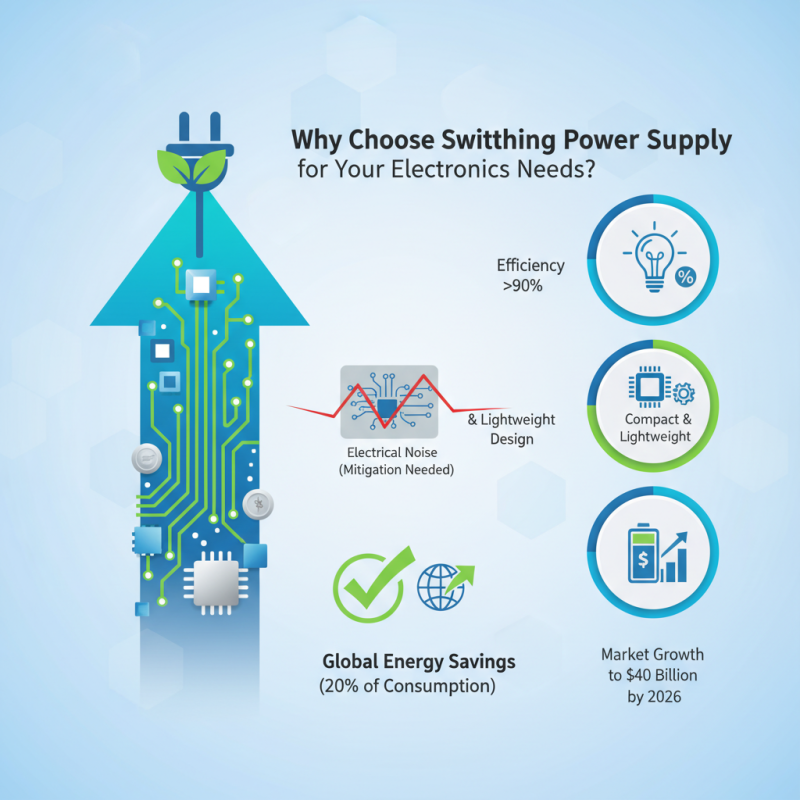
Switching Power Supply technology is transforming the electronics landscape. In recent years, the demand for efficient energy solutions has surged. According to a report by the International Energy Agency, power supplies account for about 20% of global electricity consumption. This figure emphasizes the importance of selecting an effective power supply for electronic devices.
Switching Power Supplies offer significant advantages. They are lightweight, compact, and highly efficient. Efficiency rates can exceed 90%, which stands in sharp contrast to linear power supplies. However, these systems can sometimes introduce electrical noise. This noise may affect sensitive components. While they are efficient, ensuring proper design to minimize this is essential.
Market research indicates that the Switching Power Supply sector is poised for growth. It is projected to reach $40 billion by 2026. This growth points to technology’s integral role in innovation. Meeting power efficiency standards gives electronics an edge in the marketplace. By understanding these factors, manufacturers can harness the benefits of Switching Power Supplies effectively.
Understanding the Basics of Switching Power Supplies
Switching power supplies have become vital in modern electronics. Their efficiency is unmatched, particularly in compact devices. According to a 2022 report by the International Energy Agency, these power supplies operate at 80-90% efficiency, reducing energy waste. This efficiency leads to less heat generation, prolonging device lifespan. However, achieving high efficiency requires careful design. An improperly configured power supply can lead to instability and diminished performance.
Moreover, switching power supplies are versatile. They handle a wide input voltage range. This adaptability allows them to power various devices reliably. A 2021 market analysis indicated that over 70% of electronic devices utilized switching technology. Yet, there are challenges. Noise and electromagnetic interference (EMI) can be issues. Engineers must implement filtering techniques to mitigate these effects. Not addressing these can result in device malfunctions or compromised safety.
Designing a switching power supply demands attention to detail. Components like transformers and capacitors must be chosen wisely. Using low-quality parts can lead to inefficiency and reliability concerns. In some cases, manufacturers prioritize cost over quality. This may save money upfront but can lead to higher long-term costs. Understanding these trade-offs is essential for optimal performance.
Key Advantages of Switching Power Supplies Over Linear Options
Switching power supplies have become a popular choice for many electronic applications. Their key advantages over linear power supplies make them stand out. One big benefit is efficiency. Switching supplies convert power more effectively, leading to less wasted energy. This can mean significant savings in energy costs. They also generate less heat, allowing for smaller cooling solutions.
Another advantage is size. Switching power supplies tend to be more compact. This allows for better space utilization in electronic devices. Smaller devices can be more portable and user-friendly, which is particularly important in today’s market. However, compact designs can sometimes lead to quality control issues, so it’s essential to pay attention to the details.
Tip: When selecting a power supply, consider load requirements. Ensure the supply can handle peak loads without issues.
The versatility of switching power supplies is also noteworthy. They can operate over a wide range of input voltages. This feature is useful in different geographical regions. However, their complexity may lead to potential interference with sensitive electronics. It's important to review specifications carefully to mitigate such risks.
Tip: Look for power supplies with good regulation features. This will help maintain stable output even with varying input conditions.
Common Applications for Switching Power Supplies in Electronics
Switching power supplies are versatile components in modern electronics. They are commonly found in devices such as laptops, smartphones, and gaming consoles. Their ability to convert electrical energy efficiently makes them ideal for various applications. For example, a laptop uses a compact switching power supply to manage battery charging and power the screen.
Another notable application is in industrial equipment. Switching power supplies are essential for robotics and automation systems. They provide stable power to sensors and actuators. This stability is critical for precise control in manufacturing. However, the complexity of these systems can sometimes lead to issues like electromagnetic interference. It’s essential to design with care to minimize such disruptions.
Home electronics also benefit from switching power supplies. Many household devices rely on them for energy efficiency. TVs and audio systems use these supplies to ensure high-quality performance. Yet, users often overlook the importance of proper ventilation. Inadequate cooling can lead to overheating. Attention to detail is necessary to optimize these devices effectively.
Why Choose a Switching Power Supply for Your Electronics Needs? - Common Applications for Switching Power Supplies in Electronics
| Application | Voltage Output | Power Rating | Efficiency | Key Features |
| Consumer Electronics | 5V - 12V | 5W - 100W | 85% - 95% | Compact Size, Low Heat Generation |
| Telecommunications | 48V | 50W - 500W | 88% - 92% | High Reliability, Remote Monitoring |
| Medical Devices | 12V - 24V | 10W - 600W | 90% - 94% | Isolation Protection, Low Noise |
| Industrial Automation | 24V - 48V | 100W - 1kW | 85% - 90% | Rugged Design, Wide Operating Temperature |
| LED Lighting | 12V - 24V | 20W - 200W | 88% - 92% | Dimming Capability, Flicker-Free |
Factors to Consider When Choosing a Switching Power Supply
When selecting a switching power supply, multiple factors can influence your decision. Efficiency is paramount. A higher efficiency reduces energy waste and heat generation. Lower heat production enhances the longevity of your components. However, consider where the power supply will be used. Some environments have temperature extremes that can affect performance.
Another critical aspect is output voltage and current. Make sure they match your device's specifications. An inappropriate output can damage sensitive electronics. Also, take into account the power supply's form factor. Space constraints can limit your options, especially in compact designs. It's a balance between performance and fit.
Lastly, think about reliability. A reliable power supply ensures consistent performance over time. You might want to check the lifespan ratings of components. Common mistakes include underestimating power requirements. Don't rush this decision. Take time to analyze your needs. Properly reviewing these factors can save you from future headaches.
Future Trends and Innovations in Switching Power Supply Technology
The future of switching power supply technology looks promising. Recent industry reports indicate that the global market for switching power supplies is set to exceed $40 billion by 2026. This growth is driven by rising demand for compact and efficient electronic devices. More manufacturers are turning to switching power supplies due to their smaller size and higher efficiency compared to linear power supplies.
Innovations in this sector include advancements in control algorithms and semiconductor materials. Wide bandgap semiconductors like silicon carbide are gaining traction. They allow for higher voltage and temperature operation, improving reliability. However, challenges remain. The complexity of design and thermal management can hinder some applications. The need for advanced heat dissipation strategies is crucial to avoid overheating issues.
Moreover, the integration of smart technology into switching power supplies is evolving. Real-time monitoring and adaptive control systems are being developed. These innovations could enhance performance and energy efficiency. Yet, the learning curve for engineers can pose a barrier. A thorough understanding of these systems is essential to fully leverage their potential.