How to Choose a PTFE Elgiloy Lip Seal in 2026?
Choosing a Ptfe Elgiloy Lip Seal in 2026 requires more than comparing price, temperature ratings, or catalog dimensions. Industrial sealing reports from Grand View Research and MarketsandMarkets continue to identify energy, chemical processing, aerospace, and semiconductor equipment as major demand areas. These applications expose seals to aggressive fluids, pressure cycling, vacuum, and fluctuating temperatures. A seal that works in clean hydraulic oil may fail quickly in abrasive slurry.
The selection process should begin with operating evidence. Record shaft diameter, speed, pressure, temperature, lubricant, chemical exposure, and expected service hours. Parker’s O-Ring Handbook and the SKF Seal Handbook both stress the importance of shaft finish, alignment, installation quality, and material compatibility. These details matter physically. A 25-millimeter shaft with a sharp lead-in can damage the lip before commissioning. A rough surface can generate heat under continuous rotation. PTFE offers low friction and broad chemical resistance, while Elgiloy spring energizers provide strong corrosion resistance and stable loading. However, neither material solves poor housing design.
Technical references from ASTM and Elgiloy Specialty Metals should be checked against the actual grade, not only the alloy name. Elgiloy composition, heat treatment, and spring geometry can affect performance. I would not pretend that one data sheet predicts every field result. Test conditions often differ from plant conditions. Prototype testing under real pressure, media, and cycling remains essential. The final choice should balance leakage control, wear life, installation risk, and total maintenance cost—not just the lowest purchase price.
What Is a PTFE Elgiloy Lip Seal?
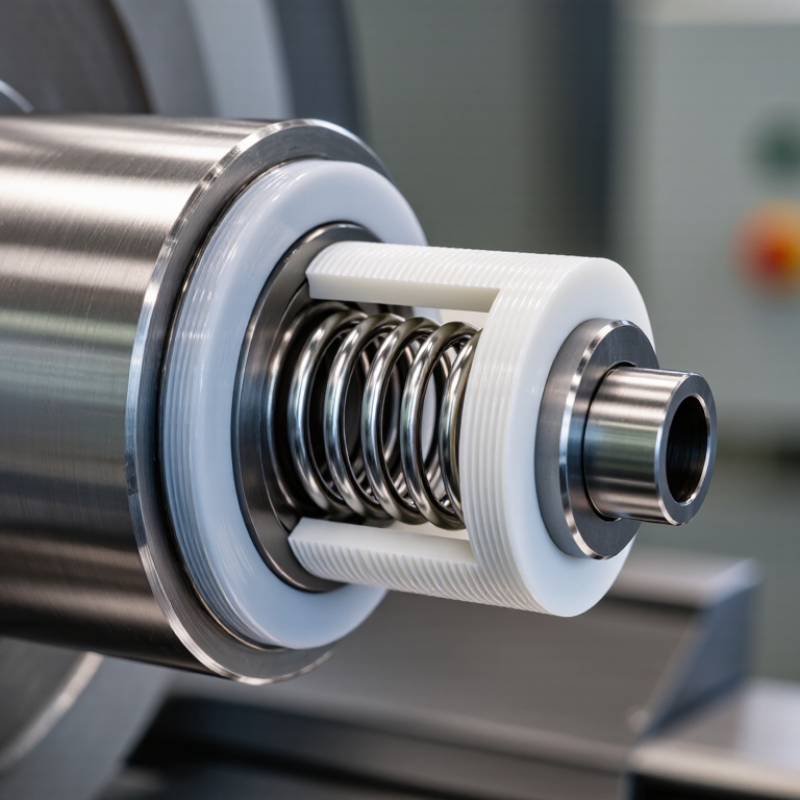
A PTFE Elgiloy lip seal is a flexible sealing ring made from polytetrafluoroethylene, reinforced by a corrosion-resistant cobalt-chromium-nickel spring. The PTFE lip contacts a rotating or reciprocating shaft. The spring maintains contact as pressure, temperature, and wear change. Unlike rubber seals, PTFE offers low friction and strong chemical resistance. It also tolerates dry running better, though not indefinitely.
The metal spring matters. Elgiloy-type alloys retain useful strength at elevated temperatures and resist many corrosive environments. This makes the seal suitable for pumps, valves, chemical equipment, and high-purity processing systems.
Grand View Research estimated the global PTFE market at about USD 3.2 billion in 2023, with continued growth driven by chemical and industrial applications. MarketsandMarkets also reported steady expansion in the global sealing-products sector through 2028. These figures indicate demand, not guaranteed seal performance.
Selection requires more than checking temperature and pressure. Measure shaft diameter, housing dimensions, surface roughness, and rotational speed. Confirm chemical compatibility with the exact fluid, additives, and cleaning agents. A poorly finished shaft can damage the lip quickly. Too much pressure may deform the PTFE profile. Too little spring force may cause leakage. In practice, the best design is often a compromise. I would verify test data under real duty conditions, because published laboratory results can look better than field service.
How PTFE and Elgiloy Properties Affect Seal Performance
How to Choose a PTFE Elgiloy Lip Seal in 2026?
PTFE and Elgiloy work together because their strengths differ. PTFE offers very low friction, chemical resistance, and a typical service range near -200°C to 260°C. ASTM material data commonly places its dry friction coefficient against steel around 0.04–0.10. However, PTFE creeps under constant pressure. That weakness can create leakage after long service. Elgiloy, a cobalt-based alloy, supplies spring force, corrosion resistance, and fatigue strength. ASM Handbook data shows cobalt-chromium alloys can exceed 1,000 MPa in tensile strength, depending on processing. These figures are useful, but real seal life depends on temperature, pressure, shaft finish, and installation.
In field inspections, I check the energized lip first. A weak spring cannot compensate for excessive PTFE deformation. A rough shaft may cut the lip within hours. For rotating equipment, keep shaft surface finish within the seal supplier’s specified range, often near 0.2–0.4 μm Ra. Confirm chemical compatibility using ASTM D543 testing data, not only a fluid chart. Pressure cycling also matters. A seal that survives steady pressure may fail during frequent starts and stops. I still see designs chosen from temperature alone. That is an avoidable mistake.
Tips: Match PTFE grade to wear and creep demands. Select Elgiloy spring force for pressure and temperature cycles. Verify dimensional tolerances before assembly. Record leakage, torque, and temperature during testing. Report sources include ASTM D4894, ASTM D543, and ASM Handbook, Volume 18. These references support selection, but application testing remains essential.
Which Operating Conditions Should You Evaluate?
How to Choose a PTFE Elgiloy Lip Seal in 2026?
Start with temperature, pressure, and shaft speed. PTFE melts at approximately 327.1°C, according to the NIST Chemistry WebBook. That figure is not a safe operating limit. Creep, compression, and thermal cycling can damage sealing performance much earlier. Record the cold-start temperature, continuous temperature, and peak temperature separately. A seal facing a 180°C housing may still experience local heating near the lip.
Pressure deserves equal attention. Measure both steady pressure and short pressure spikes. Check the extrusion gap, shaft runout, surface finish, and rotation speed. These details often decide whether a PTFE lip seal survives or leaks. API 682 and ISO 23936-1 both emphasize matching sealing materials with equipment conditions and process fluids. Their guidance supports a practical rule: evaluate the complete system, not only the seal compound.
Fluid chemistry must be tested at real temperature. Oil, steam, solvents, sour gas, and abrasive particles can produce very different results. A cobalt-chromium-nickel spring alloy may resist corrosion, but spring compatibility still depends on chlorides, acids, and cleaning chemicals. Ask for immersion data and pressure-cycle results. Do not rely on a generic compatibility chart alone. I have seen specifications omit idle periods, yet dry starts can be the most damaging event. That omission deserves a second review. Use ISO 15848-1 testing where fugitive-emission control matters, and document every assumption before approval.
How to Verify, Install, and Maintain the Selected Seal
A PTFE lip seal with a cobalt-based spring alloy should be verified before installation. Check the shaft diameter, housing bore, pressure rating, temperature range, and fluid compatibility against the supplier’s technical drawing. ISO 3601-3 provides useful dimensional guidance for sealing components, but it does not replace application testing. Measure the shaft with a calibrated micrometer. Inspect it for scratches, burrs, and spiral machining marks. Even a small defect can cut the sealing lip.
Installation needs patience. Clean the bore and shaft with a lint-free cloth, then apply a compatible assembly lubricant. Protect the lip from keyways and threads with a tapered sleeve. Press the seal evenly into the housing. Never strike the flexible lip directly. A slight tilt may look harmless, yet it can create uneven contact and early leakage. In field work, rushed alignment is a common failure cause. My own assumption was once wrong: a tight seal is not always a good seal.
Maintenance should follow operating hours, leakage trends, and temperature readings. The U.S. Department of Energy reports that compressed-air leaks may waste 20% to 30% of system output, showing why small seal losses deserve attention. Record pressure, speed, fluid exposure, and installation date. Inspect for hardening, swelling, or spring corrosion during planned shutdowns. ISO 14224 supports structured equipment-failure data collection, although seal records are often incomplete. Improve the checklist each cycle. Five minutes of better documentation can prevent an expensive repeat failure.