How to Choose a Painting Line for Global Production in 2026?
Global production in 2026 will demand faster, cleaner, and more adaptable coating operations. Grand View Research valued the global paints and coatings market at approximately USD 206.56 billion in 2023. It also forecasts continued growth through 2030. That expansion increases pressure on manufacturers to select the right Painting Line, not simply the cheapest equipment.
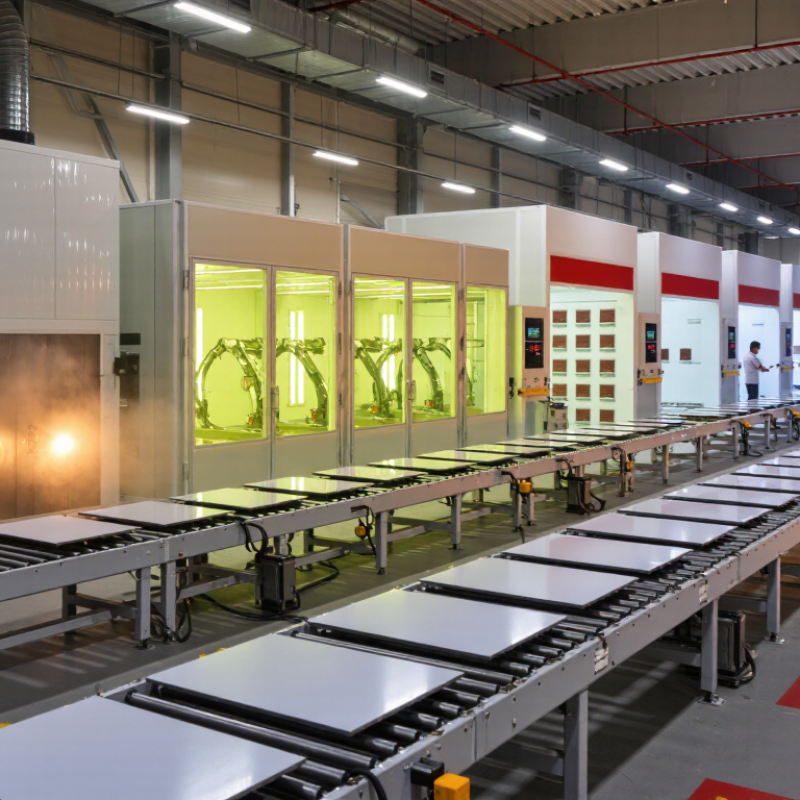
The decision should connect product quality, factory layout, labor skills, and energy use. The International Federation of Robotics reported 541,302 industrial robot installations worldwide in 2023. This figure shows how automation is becoming a practical production standard. However, automation alone cannot solve poor process planning. A line may include pretreatment tanks, drying ovens, spray booths, curing systems, conveyors, and inspection stations. Each section affects the final result. A small temperature variation can create uneven gloss. Poor conveyor spacing can cause scratches between stations.
Energy deserves equal attention. The International Energy Agency identifies industry as one of the largest global energy-consuming sectors. Therefore, oven insulation, heat recovery, and efficient motors should influence the investment decision. Compliance with ISO 9001, ISO 14001, and ISO 50001 can also strengthen operational control.
No line is perfect. A highly automated system may reduce labor needs but increase maintenance complexity. A compact line may fit a crowded plant but restrict future capacity. Manufacturers should compare total ownership cost, validated supplier experience, spare-part access, and local technical support. Data from suppliers must be tested against real production samples. That step is often underestimated.
Define Production Requirements and Global Market Goals
How to Choose a Painting Line for Global Production in 2026?
Define Production Requirements and Global Market Goals
A painting line should begin with measurable production needs, not equipment catalogs. Record daily output, part dimensions, coating types, color changes, and acceptable defect rates. A line for steel frames may require different pretreatment and curing capacity than one for small aluminum components. Measure the largest and heaviest parts carefully. Small errors become expensive later.
Set a realistic production target for each market. One region may demand fast delivery, while another may prioritize energy efficiency or low emissions. Check local requirements for ventilation, wastewater, worker protection, and coating materials before selecting the process. These details affect booth design, oven temperature, filtration, and operating costs. Keep the figures traceable. Reliable decisions need reliable data.
Plan for variation. Customer orders may change, and seasonal demand can expose weak capacity estimates. A flexible conveyor speed, quick color-change system, or additional curing capacity may protect future growth. However, flexibility adds cost and maintenance. Our assumptions can be wrong. Test them with sample parts, a pilot run, and measured energy use. Ask operators to inspect access points, cleaning time, and control clarity. Their experience often reveals problems that spreadsheets miss. Global production also needs local service skills, spare-parts access, and training plans, not only a high initial output.
Compare Painting Line Types and Process Configurations
How to Choose a Painting Line for Global Production in 2026?
Painting line selection starts with the product, not the equipment catalog. Continuous lines suit stable, high-volume production with repeatable dimensions. Batch lines offer greater flexibility for mixed models, repairs, and seasonal orders. That flexibility costs more handling time. A conveyorized liquid-paint line can support complex color changes, while a powder line may reduce solvent management and overspray waste. However, powder requires suitable coating thickness, curing temperatures, and part geometry.
Process configuration matters just as much as line type. A typical setup may include pretreatment, drying, masking, spraying, flash-off, curing, inspection, and packing. Each stage needs measurable controls. For example, humidity affects pretreatment consistency, while oven airflow affects curing uniformity. An experienced engineering team should test representative parts, including deep corners and welded joints. Small test panels are not enough. They can hide real production problems.
Global production adds practical pressure. Use modular zones when future capacity or local requirements may change. Select sensors that record temperature, pressure, coating thickness, and downtime. Data helps compare plants without relying on optimistic reports. Energy recovery can lower operating costs, but its value depends on working hours and load patterns. A perfect configuration rarely exists. I would challenge any proposal that ignores maintenance access, operator training, or spare-part availability. Those details often decide whether a line performs well after installation. Some assumptions will still need revision.
How to Choose a Painting Line for Global Production in 2026?
Comparison of common painting-line types using representative industrial planning benchmarks for metal-part production. Higher throughput and transfer efficiency generally support global scale, while the best configuration depends on product mix, coating technology, labor cost, floor space, and environmental requirements.
Values are indicative benchmark points within commonly reported industrial operating ranges. Actual results vary with part geometry, coating material, curing method, line speed, color changes, and production batch size.
Assess Compliance, Safety, Energy Use, and Sustainability
Choosing a painting line for global production in 2026 requires more than comparing output rates. Compliance must be visible, documented, and adaptable to each destination market. Ask for machine risk assessments, electrical conformity records, chemical handling procedures, and traceable maintenance logs. Verify that ventilation controls match the coatings used, not merely the equipment brochure. Local emissions, worker exposure, waste, and fire-safety requirements can differ sharply. A line that passes one factory audit may still need modifications elsewhere. That detail is often missed.
Safety should be tested on the shop floor, during cleaning, changeovers, and jams. Guards need reliable interlocks, emergency stops, safe access, and clear isolation procedures. Operators should receive practical training in their own working language. Watch the first production runs. Small habits, such as bypassing a sensor, can reveal larger design weaknesses. Independent inspection is valuable, especially when supplier documents seem polished but lack operating evidence.
Energy performance deserves measured data. Request consumption per coated square meter, including ovens, pumps, fans, and standby periods. Heat recovery, variable-speed drives, efficient curing, and automatic shutdowns can reduce both cost and emissions. Still, estimated savings are not guaranteed. Production mix, humidity, and maintenance change the result. Examine water use, overspray capture, recyclable packaging, and end-of-life repair options. Set sustainability targets with meters, monthly records, and corrective actions. No assessment is perfect. A responsible decision leaves room to question attractive numbers.
Calculate Total Cost and Plan Installation, Validation, and Support
How to Choose a Painting Line for Global Production in 2026?
Calculate Total Cost and Plan Installation, Validation, and Support
Choosing a painting line for global production starts with total cost, not the equipment quotation. Calculate booths, conveyors, curing ovens, filtration, controls, shipping, duties, utilities, spare parts, training, and site preparation. A low purchase price can hide costly electrical upgrades or service visits. Build a five-year cost model. Include energy use per part, labor hours, coating waste, planned downtime, and disposal fees. Use local utility rates, not optimistic estimates. Small assumptions matter.
Installation planning should begin before the purchase order. Confirm floor loading, ventilation routes, fire protection, compressed air quality, and temperature control. Assign a local coordinator and a technical decision-maker. Request installation-ready drawings. During delivery, photograph crates and inspect critical components. Create a staged schedule for assembly, wiring, dry runs, coating trials, and operator training. A two-week delay can affect customer commitments.
Validation needs measurable acceptance criteria. Check film thickness, color consistency, adhesion, curing temperature, transfer efficiency, and cycle time across several shifts. Record results with calibrated instruments. Test faults, changeovers, cleaning, and recovery after power loss. Support should define response times, remote diagnostics, stocked wear parts, and refresher training. I would not approve a line after one successful trial. That is too narrow. Require production data from different operators and materials, then revise the cost model when reality disagrees.