
INDUSTRIES2023-04-26T19:33:38+00:00

What Is Bulk Instant Coffee and How Do You Choose It?

Bulk Instant Coffee serves cafés, offices, hotels, and manufacturers that need dependable coffee in larger quantities. Yet “bulk” describes the order size, not the quality. A carton may contain fine, evenly dried crystals—or powder that clumps and tastes flat. The difference shows up in the cup. Notice the aroma when you open the pouch, how quickly the granules dissolve, and whether the last sip tastes harsh.

Coffee scientist Christopher H. Hendon studies how chemistry affects coffee flavor. Without a verified source, I won’t attribute an invented quotation to him. A sound buying principle is simple: “Choose for the cup you need to serve.” It is an editorial guideline, not his recorded words. That distinction matters. So does the sample test. Brew the product at the same strength and water temperature you expect to use, then compare aroma, body, aftertaste, and consistency between batches.

Choosing well means reading beyond the price per kilogram. Check the ingredient list, roast or flavor profile, packaging format, shelf-life details, and supplier’s quality information. Ask for a sample before committing to a large order. A lower price can look appealing; waste and complaints cost more. This guide explains what Bulk Instant Coffee is, how production and formats affect the cup, and which practical checks can help buyers select a product that fits their needs. No single choice suits every menu. That is worth remembering.
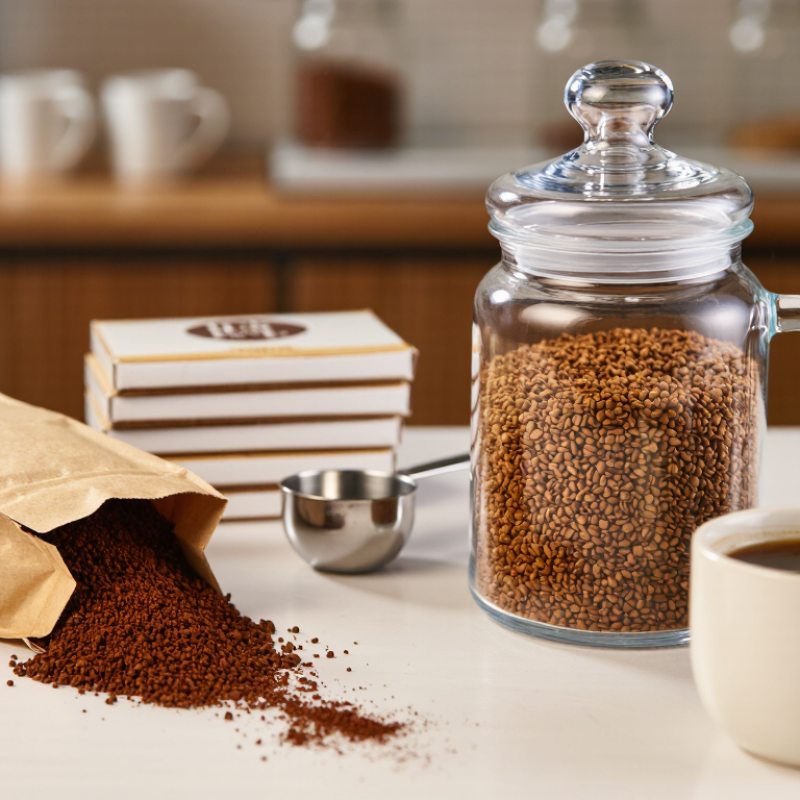
What Is Bulk Instant Coffee and How Do You Choose It?

What Bulk Instant Coffee Is and How It Is Made

Bulk instant coffee is concentrated brewed coffee with most of its water removed, then dried into soluble powder or granules. In a factory, roasted beans are ground and extracted with hot water. The resulting coffee liquid is concentrated before drying. Spray drying turns droplets into powder using hot air; freeze-drying freezes the extract, then removes ice under low pressure. The methods affect aroma, texture, and cost. Neither process makes every product taste the same.

Bulk describes the larger format, not a guaranteed grade or recipe. Food-service buyers may receive bags or tubs for portioning, while manufacturers may purchase larger lots for packaged drinks and recipes. Check the ingredient list, particle size, moisture protection, and recommended serving dose. A pale, even powder can still taste flat if it has lost aroma during storage. That detail is easy to overlook. The International Coffee Organization’s Coffee Report and Outlook (December 2023) estimated global coffee consumption at 178.5 million 60-kilogram bags in 2022/23, up 1.7% year over year. This measures all coffee, not instant coffee alone, so it is useful market context rather than proof of instant-coffee demand. For a practical comparison, dissolve equal measured doses in the same water temperature, then note aroma and aftertaste. Real kitchens are messier. Storage and water quality can change the result.

What Bulk Instant Coffee Is and How It Is Made

Bulk instant coffee is soluble coffee made by extracting roasted, ground coffee with water and drying the resulting concentrate into powder or granules. The bars show production order—not processing time or quantity. Drying may use spray drying or freeze drying; agglomeration is an optional step that joins fine particles into larger granules.

Common Forms and Grades of Bulk Instant Coffee

Bulk instant coffee commonly comes as fine spray-dried powder, porous agglomerated granules, or freeze-dried crystals. Spray-dried powder dissolves quickly and suits vending mixes, bakery recipes, and large-batch drinks. Its fine texture can create dust when scooped. Agglomerated coffee forms larger, easier-to-handle pieces that usually dissolve well in hot water. Freeze-dried crystals often preserve a more distinct aroma and visible shape, though appearance alone does not prove better flavor.

Grades need careful reading. Terms such as “premium” or “food service” may describe a seller’s own categories, not a universal grading system. Check the product specification for coffee composition, roast profile, moisture, solubility, and any added ingredients. The texture matters. A sample brewed at your intended serving strength can reveal bitterness, aroma, and residue better than a label can. For an office dispenser, consistent dissolution and low dust may matter most; for a café menu, aroma and cup character may carry more weight. Packaging size, liner quality, and resealing options also affect freshness after opening. Even detailed specifications have limits: water temperature and storage can change the cup. A small trial is useful, but one tasting may not represent every batch.

How to Assess Flavor, Solubility, and Quality

Bulk instant coffee is dried brewed coffee, but bulk purchasing makes consistency as important as price. Flavor can shift with bean blend, roast, extraction, and drying method. The USDA Foreign Agricultural Service’s December 2024 Coffee: World Markets and Trade report forecast 174.9 million 60-kilogram bags of global coffee production for 2024/25. That scale makes lot-to-lot checks worthwhile.

Assess aroma and taste with a repeatable test: use the same coffee weight, water volume, and temperature for every sample. The National Coffee Association’s 2024 National Coffee Data Trends report found that 67% of U.S. adults drank coffee the previous day. Everyday use rewards a cup that tastes dependable, not merely impressive once. Smell it dry. Then taste it. Look for a clear coffee aroma, balanced bitterness, and a finish without stale, papery notes. I would not treat a dark color as proof of strength; it can mislead.

Check solubility in both warm and cool water, stirring for the same amount of time. Note clumps, sediment, and whether the powder wets evenly. Dissolving fast is useful, but it does not prove good flavor. Ask suppliers for lot-specific sensory records, moisture results, and bulk-density specifications. Compare samples side by side. Even careful testing has limits: water hardness and serving temperature can change what you taste.

What Is Bulk Instant Coffee and How Do You Choose It? — How to Assess Flavor, Solubility, and Quality

Assessment area What to check Practical assessment Positive indicators Potential concerns
Product type Confirm that the product is soluble coffee, rather than ground coffee or a coffee-containing mix. Review the ingredient statement and product specification. Clear identification as instant or soluble coffee; ingredients match the intended use. Unclear ingredient list, added sweeteners or creamers when pure coffee is expected, or ground coffee sold as soluble.
Production form Identify whether the coffee is spray-dried or freeze-dried. Compare the product specification and a representative sample; do not assume one method guarantees better quality. The form is consistent with the desired balance of cost, appearance, handling, and flavor. Choosing by process name alone without tasting or testing the product.
Flavor and aroma Assess aroma, bitterness, acidity, body, and aftertaste. Prepare samples using the same coffee-to-water ratio and water temperature, then compare blind if possible. Clean coffee aroma and a flavor profile suited to the intended drink or recipe. Musty, stale, smoky, or unusually harsh notes; flavor that varies noticeably between samples.
Solubility in hot water Check whether the granules dissolve evenly and leave visible sediment. As a simple screening test, stir 2 g into 150 mL of hot water and record any clumps or residue. This is a comparison method, not a universal standard. Even dissolution with little or no visible undissolved material under the same test conditions. Persistent clumps, substantial sediment, or a result that differs greatly between batches.
Solubility in cold water Determine whether the product is intended for iced drinks or cold-mix applications. Test in the actual recipe, using a consistent stirring time and liquid temperature. Dissolves acceptably for the intended cold application without persistent lumps. Assuming hot-water performance guarantees easy dissolution in cold liquids.
Granule appearance and flow Look for consistent color and particle form, and check whether the product pours freely. Inspect a sample in good light and note clumping, excessive fines, or irregularity. Appearance and flow are reasonably consistent with the product specification and across samples. Moisture-related caking, foreign matter, or pronounced variation in color or texture.
Moisture protection Review packaging integrity and storage instructions; instant coffee can take up moisture from the air. Check that bulk packaging is sealed, undamaged, and suitable for repeated handling after opening. Packaging limits exposure to air and moisture, with clear storage guidance. Torn seals, damp or hardened product, or storage conditions that leave the coffee exposed.
Batch consistency Compare sensory profile, appearance, and dissolution across more than one lot when possible. Keep sample records and use a repeatable preparation method for each comparison. Results remain consistent enough for the intended beverage or manufacturing process. Marked changes in aroma, color, taste, or solubility between lots.
Traceability and documentation Check lot identification, production or best-before information, and available quality documents. Request a current specification and relevant food-safety documentation for the purchasing context. Documents and lot details are clear, current, and consistent with the delivered product. Missing lot information, unclear dates, or specifications that do not describe the supplied product.
Bulk suitability Match pack size, portioning, and storage needs to the expected rate of use. Estimate consumption and plan to reseal or transfer opened product into a clean, dry, airtight container. Pack size can be used and stored without prolonged exposure to moisture or air. A pack is too large for the available storage conditions or likely usage period.

Note: Sensory preferences and ideal specifications depend on the intended application. Use the same preparation conditions when comparing samples, and confirm any formal requirements against applicable product specifications and regulations.

How to Compare Suppliers, Packaging, and Cost

Bulk instant coffee is soluble coffee purchased in larger volumes for cafés, offices, food production, or resale. Compare suppliers using the same specifications: coffee type, roast profile, moisture level, solubility, and pack size. Request a recent specification sheet and certificate of analysis, then test a sample in the actual recipe. A powder that dissolves well in a clear mug may behave differently in milk or a vending machine. Small detail.

The International Coffee Organization projected global coffee consumption at 177.0 million 60-kilogram bags in 2023/24. That figure covers all coffee, not instant alone, so it provides market context rather than a direct demand forecast for soluble products.

Packaging affects freshness, handling, and landed cost. Ask whether the product comes in lined bulk bags, sealed pouches, or food-grade drums, and check the net weight per unit. Compare the delivered cost per kilogram and per prepared serving, including freight, duties, storage, expected waste, and minimum order quantities. Supplier quotes can look precise while leaving out real costs. Verify lead times, lot traceability, and how the supplier handles damaged or inconsistent batches; keep a retained sample for later comparison.

Tips: Ask each supplier for the same sample quantity and delivery terms. Record aroma, color, dissolution time, and taste after preparation. Compare results blind where possible. Recheck price after freight and packaging are added, and avoid choosing on price alone. A slightly cheaper powder may need more product per cup, which can erase the saving.

How to Choose and Store Bulk Instant Coffee

When choosing bulk instant coffee, compare the cost per prepared cup, not just the price per bag. Check the ingredient list and choose a product that clearly identifies instant coffee without unnecessary additions. Granules should look reasonably consistent, with no damp clumps or unusual odor. Smell it first. A fresh, clean aroma is a useful check, though aroma alone cannot tell you everything about quality.

Packaging matters when a container will be opened repeatedly. A strong resealable pouch or a tightly closing, food-safe container helps limit exposure to air and humidity. Consider how quickly you will use the coffee after opening; a cheaper oversized pack may lose aroma before you finish it. I would not judge value by size alone. That is an easy detail to overlook.

Store the coffee in a cool, dry cupboard away from the stove, sink, and direct sunlight. Steam from a kettle can introduce moisture, so use a clean, completely dry spoon and close the package promptly. Keep it dry. Avoid storing it in the refrigerator, where condensation may form when the container is taken out. Write the opening date on the container, and check for changes in smell, color, or texture before use. These checks are practical, not a guarantee of freshness.

Go to Top