
INDUSTRIES2023-04-26T19:33:38+00:00

What Is the Best Submersible Drainage Pump?

Choosing the best Submersible Drainage Pump depends less on a single “top” model and more on the water, debris, and working conditions it must handle. A pump clearing rainwater from a basement may need different features from one draining a muddy construction pit. Check the required flow rate, maximum head, solids-handling capacity, and discharge-hose size before comparing brands. These specifications affect how quickly water moves and whether the pump can cope with grit or small debris. A useful pump should also have a reliable float switch, a durable housing, and clear instructions for safe operation.

Details matter in real use. A narrow sump, a long hose, or water with leaves can reduce performance. A pump’s advertised flow rate is usually measured under ideal conditions, so actual output may be lower. That is easy to overlook. Match the pump to the job, and allow for practical limits rather than relying on the largest number on the box. This guide compares key pump types and features, explains which specifications deserve attention, and highlights common selection mistakes. It also considers maintenance and safe handling, since even a capable pump can disappoint when installed poorly. There is no perfect choice for every site. The right answer comes from understanding the water and checking the manufacturer’s guidance.
What Is the Best Submersible Drainage Pump?

What Is a Submersible Drainage Pump?

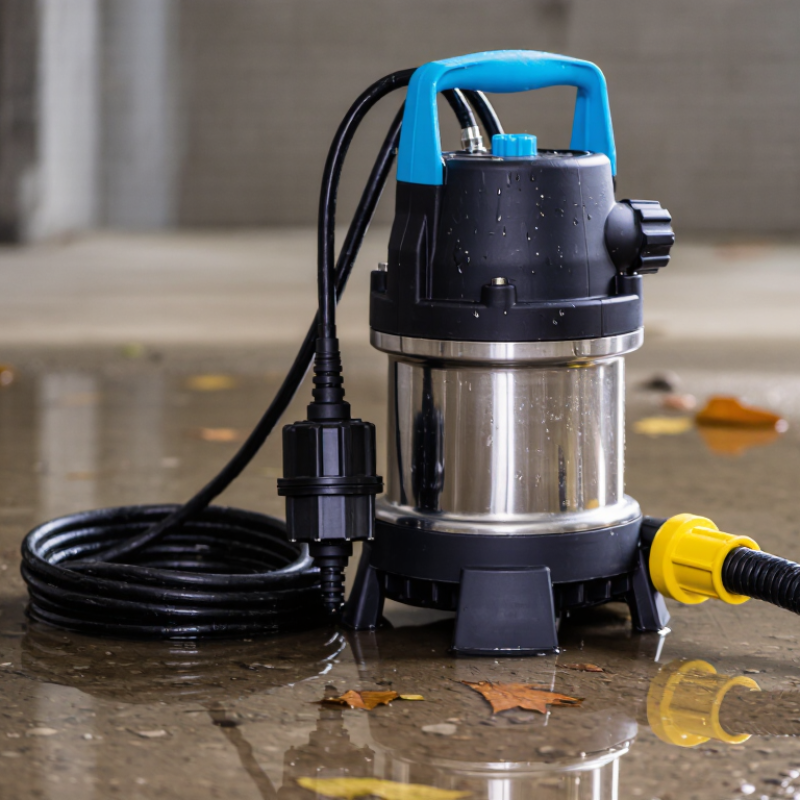
A submersible drainage pump is an electric pump designed to work underwater while removing unwanted water. Its motor sits inside a sealed housing, and an impeller pushes water through an outlet hose or pipe. Because the pump operates below the water surface, it does not need to draw water up through a long suction line. Typical uses include draining a flooded basement, emptying a construction pit, or clearing standing water from a yard. Some models use a float switch to start and stop automatically. Still, “drainage pump” can mean different things across product specifications, so check the permitted particle size and water temperature.

Capacity depends on more than the pump’s advertised flow rate. Water must travel through a discharge line, and lifting it higher increases the required head. Narrow hoses, bends, and debris can also reduce actual flow. The U.S. Department of Energy’s Improving Pumping System Performance sourcebook estimates that pumping systems use nearly 20% of global electricity demand; that figure covers pumping broadly, not drainage pumps alone. It is a useful reminder that correct sizing matters. Oversizing may waste energy, while an undersized unit can struggle during heavy inflow.

Tips: Measure the lift from the water surface to the outlet, and check the pump’s flow at that head. Keep the intake clear. Test the float switch before relying on unattended operation.

How Does a Submersible Drainage Pump Work?

What Is the Best Submersible Drainage Pump?
How Does a Submersible Drainage Pump Work?

A submersible drainage pump runs with its motor and impeller below the waterline. Water enters through an intake screen. The spinning impeller moves it into the pump casing, where pressure directs it up the discharge pipe. A sealed housing protects the motor from water, while a float switch can turn the pump on as water rises. Simple in principle. Not always in practice. Leaves, grit, or a kinked hose can restrict flow.

The right pump depends on water depth, debris, lift height, and required flow. A maximum-flow rating can mislead because flow usually drops as lift and pipe resistance increase. The U.S. Department of Energy’s Improving Pumping System Performance sourcebook estimates that pumping systems use nearly one-fifth of global electricity demand. That broad figure is not specific to drainage pumps, but it underscores why sensible sizing matters. An oversized pump may cycle frequently; an undersized one may struggle to keep up.

Tips: Check the pump’s flow rating at your actual lift, not just its headline maximum. Keep the intake clear and place the pump on a stable, slightly raised surface to limit sediment pickup. Test the float switch with a controlled rise in water. A careful setup helps, though real conditions can still surprise you.

What Types and Features Distinguish Drainage Pumps?

Drainage pumps are not all designed for the same water. Some handle relatively clear seepage in a basement, while others can move muddy water containing small debris. The permitted solids size matters as much as motor power. Check the pump’s stated limit before use. A few leaves can clog a narrow intake.

A submersible pump sits underwater, so sealed electrical components and a secure cable entry are important. A float switch starts and stops the unit as water rises and falls. In a shallow sump, a low-level cutoff can reduce dry running. It may still leave a thin layer behind. Check maximum head and flow together: lifting water several metres usually reduces the discharge rate. That detail is easy to miss.

Housing materials and protection features also distinguish models. Plastic housings can be lighter, while stainless steel or cast iron may suit tougher site conditions; neither is ideal for every job. Thermal overload protection can help guard the motor if it overheats. For example, a pump clearing gritty water from a cellar needs suitable solids handling, not simply a higher advertised flow rate. It is tempting to choose by that number alone, but real output depends on lift height, hose length, and bends.

How to read this chart: A value of 1 marks a typical design focus; 0 means it is not the type’s defining focus. These are qualitative categories, not performance ratings. Check a pump’s specifications for its actual solids-handling limits, flow rate, and head.

How to Choose the Best Pump for Your Needs

What Is the Best Submersible Drainage Pump?
How to Choose the Best Pump for Your Needs

The best pump is the one that handles your water, lift, and solids—not simply the model with the highest advertised flow. Measure the vertical distance from the water surface to the discharge point, then account for hose length, bends, and fittings. These add resistance and reduce actual flow. Check the pump’s performance chart at your required total head; its maximum flow rate usually applies only under easier conditions. Small details matter. A narrow hose can slow drainage, while a float switch needs clear space to move.

Match the pump to the water. Clear groundwater may need a different intake and solids capacity than muddy runoff from a flooded basement. Check the permitted particle size, minimum water level, duty cycle, and whether the unit can run unattended. The U.S. Department of Energy’s Improving Pumping System Performance: A Sourcebook for Industry reports that pumping systems use nearly 20% of global electricity. Though that figure covers many types of pumps, it underlines why efficient sizing matters: an oversized unit may waste power or cycle too often. One detail is easy to miss: a simple test with a bucket can reveal whether the real discharge rate matches your expectations. It is not a perfect measurement, but it can expose a mismatch before you rely on the pump during a heavy downpour.

What Is the Best Submersible Drainage Pump? - How to Choose the Best Pump for Your Needs

Drainage Need Water Type Suitable Pump Type Typical Flow Range Typical Head Range Solids Handling Features to Look For
Small amounts of clear water in a shallow area Rainwater or relatively clean water Clean-water drainage pump 50–150 L/min 5–10 m Usually small particles; check the specified maximum particle size Low-level water pickup, automatic float switch, thermal overload protection
Flooded basement, garage, or utility area Rainwater with some dirt or small debris Dirty-water drainage pump 100–250 L/min 5–12 m Often about 20–35 mm, depending on the model Wide intake openings, corrosion-resistant housing, float switch with enough room to move
Construction site or muddy excavation Silty or abrasive water Heavy-duty drainage or dewatering pump 150–500 L/min 8–20 m Varies widely; confirm both particle size and permitted solids concentration Wear-resistant components, robust strainer, suitable duty rating, accessible cleaning points
Wastewater pit or sewage collection tank Wastewater containing fibrous or larger solids Sewage pump, often with a vortex or solids-handling impeller 150–500 L/min 8–20 m Common models handle solids around 35–50 mm; verify the product specification Large free passage, sealed motor, suitable check valve, alarm or high-water float control
Draining a pool cover, flat roof, or shallow flooded floor Mostly clean water with limited debris Low-level or flat-suction drainage pump 50–150 L/min 3–8 m Typically limited; remove leaves and larger debris before pumping Low residual-water level, stable base, automatic operation if unattended

Selection tip: Flow and head ranges are indicative, not guaranteed operating points. Check the pump performance curve at your required lift and hose length, allow for bends and friction losses, and choose a pump rated for the water and solids involved. Never operate a pump outside its stated submersion, temperature, or electrical-safety limits.

How to Install, Use, and Maintain a Drainage Pump Safely

A drainage pump works safely only when its setup matches the site. Before installation, read the pump’s manual and check its rated water depth, discharge size, and maximum lift. Place it on a firm, level surface, away from loose debris that could block the intake. Keep plugs and connections dry, and use a properly grounded, GFCI-protected outlet. Never pull or carry the pump by its power cord.

During operation, route the discharge hose so it cannot kink, slip, or send water back toward the flooded area. Test the float switch in a clear space before relying on it.

NOAA’s 2023 U.S. Billion-Dollar Weather and Climate Disasters report recorded 28 events, with estimated losses of $92.9 billion. That figure is not a pump-performance measure, but it underscores why a tested drainage plan matters.

After use, unplug the pump before cleaning it; rinse away grit and check the intake, cable, and housing for wear. A rushed setup is easy to regret.

Tips: Keep the manual nearby. Use dry hands. Don’t enter floodwater where electrical hazards may be present. If the outlet, wiring, or water conditions seem unsafe, stop and ask a qualified electrician.

Go to Top