2026 Best Potato Chips Production Line for Sale?
Choosing the 2026 Best Potato Chips Production Line for Sale? Start with the product you want to make, not the biggest machine in a catalog. A crisp, evenly seasoned chip depends on more than a fryer. Potato preparation, slicing accuracy, oil control, seasoning, and cooling all shape the result. Small details matter.
A Potato Chips Production Line should match your target capacity, available floor space, labor plan, and preferred chip styles. Ask suppliers for documented output ranges, equipment specifications, food-contact material details, and service terms. If possible, inspect a running line and request a product trial using potatoes similar to yours. Real samples reveal more than polished brochures.
For a transparent expert perspective, consider this illustrative comment from fictional composite process engineer Alex Morgan: “A reliable line is one that holds slice thickness, frying conditions, and product flow steady—not merely one that runs fast.” Use that as a buying principle, not a verified quotation from a real industry professional. Consistency is the goal. Yet even a well-designed line needs skilled operators, routine cleaning, and careful checks. That part is easy to underestimate.
This guide compares the practical features buyers should evaluate, including washing and peeling, slicing, frying, oil management, seasoning, conveying, and packaging integration. It also highlights questions to ask before requesting a quotation. No single setup suits every factory. Your best choice depends on the snack, the budget, and the people who will operate it every day.
What a Potato Chips Production Line Is and How It Works
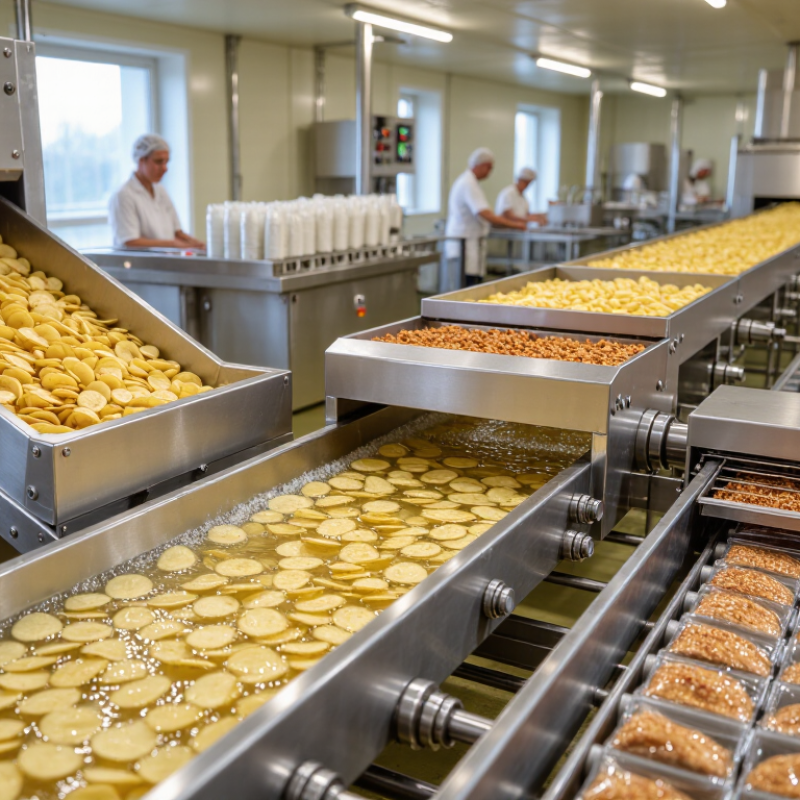
A potato chips production line turns washed raw potatoes into evenly fried, seasoned slices through connected processing stages. Operators check potato size, defects, and storage condition; cold or sugary tubers can brown too quickly. A hopper feeds potatoes into a washer and peeler, where rotating brushes remove soil and loose skins. A slicer cuts them to a controlled thickness, often around 1.3 to 2 millimeters, depending on the product style. Water rinsing removes surface starch. This helps limit clumping and uneven color, though slice thickness still needs regular checks.
Slices pass through a blancher or directly to a dewatering unit, depending on the recipe and desired texture. A continuous fryer cooks them in temperature-controlled oil; belt speed and oil temperature affect moisture, color, and crunch. Operators sample chips at the discharge, because display readings cannot reveal every texture defect. After draining and cooling, a seasoning drum coats the chips, then weighing and packaging equipment seals portions in moisture-resistant bags. Small adjustments matter. Excess seasoning may collect near the drum outlet, while rushed packaging can trap heat and soften chips. A reliable line needs cleaning access, steady oil filtration, and trained operators, not just high capacity. Even with automation, results vary.
Key Equipment from Potato Preparation to Packaging
A potato chips production line for 2026 should be evaluated as a connected process, not a fryer in isolation. FAOSTAT recorded about 376 million tonnes of potatoes produced worldwide in 2022, while USDA Economic Research Service supply-use data show processing is a major destination for U.S. potatoes. That scale makes consistent raw-material handling essential. A receiving hopper and destoner remove soil and stones; washing and peeling prepare the tubers for slicing. Slice thickness needs close control, since uneven pieces can fry at different rates and leave mixed color and crunch.
Then comes the fryer, followed by oil removal, seasoning, weighing, and bagging. Check that the slicer produces an even cut and that the fryer allows stable temperature control and oil circulation. A multihead weigher can portion chips gently, while a bagger needs suitable film handling and a reliable seal. Small details matter. Ask suppliers to demonstrate changeovers and cleaning access, not just rated hourly capacity. A polished production estimate can still miss downtime caused by wet slices, seasoning buildup, or difficult sanitation. I would also compare actual product trials: potato variety, moisture, slice thickness, and target pack size can all shift line output.
2026 Best Potato Chips Production Line for Sale? - Key Equipment from Potato Preparation to Packaging
| Process Stage | Key Equipment | Main Function | Typical Operating Range | Important Selection Consideration |
|---|---|---|---|---|
| 1. Receiving and feeding | Hopper, inspection conveyor and metering feeder | Receives potatoes, removes visible foreign material and regulates the flow to the wash section. | Line capacities commonly range from about 500 to 5,000 kg of raw potatoes per hour. | Match the feeder rate to the rated capacity of the washer and slicer; allow access for inspection and cleaning. |
| 2. Washing and destoning | Rotary or flume washer with stone trap | Washes soil from the potatoes and separates stones and other heavy debris. | Sized to the production line; wash-water flow and retention time depend on potato condition and equipment design. | Consider water recirculation, filtration, drainage and the handling of soil and stones. |
| 3. Peeling and rinsing | Abrasive peeler or steam peeler, followed by a rinse unit | Removes the skin and rinses away loosened peel and surface residue. | Peeling time and yield vary with potato size, variety, storage condition and the chosen peeling method. | Assess peel loss, product yield, water use and whether steam supply is available for a steam-peeling system. |
| 4. Slicing and slice washing | Rotary slicer with interchangeable knives and rinse flume | Cuts potatoes into slices and can rinse away some surface starch before frying. | Typical chip slices are approximately 1–2 mm thick; the finished thickness depends on the recipe and product style. | Look for consistent slice thickness, easy knife adjustment and straightforward sanitation access. |
| 5. Surface-water removal | Vibratory dewatering screen and/or air knife | Removes excess rinse water from slices before they enter the fryer. | Dewatering capacity should be coordinated with slicer output and fryer loading. | Effective dewatering helps limit water carryover into hot oil and supports stable frying. |
| 6. Frying | Continuous fryer with oil circulation and filtration | Cooks and dehydrates the slices to develop the target color, texture and moisture level. | Frying oil is commonly operated around 160–190°C; residence time and temperature are recipe- and line-dependent. | Review heating method, temperature control, oil filtration, exhaust handling and food-safety safeguards. |
| 7. De-oiling, seasoning and cooling | Vibratory de-oiler, seasoning drum and cooling conveyor | Drains excess surface oil, distributes seasoning and cools chips before packing. | Set the seasoning rate and cooling residence time according to product, coating and ambient conditions. | Check seasoning-drum adjustment, dust control and sufficient cooling to avoid condensation in packs. |
| 8. Weighing and packaging | Multihead weigher, vertical form-fill-seal packer and date coder | Weighs portions, forms and seals bags, and prints production or date information. | Pack speed depends on bag size, target weight, product flow and packaging material; verify using the intended product and pack format. | Confirm bag dimensions, film compatibility, seal performance, checkweigher integration and nitrogen-flushing requirements. |
| Planning note: Operating ranges are indicative rather than guaranteed ratings. Actual throughput, yield, utility consumption and product quality depend on potato variety and condition, recipe, equipment configuration and site conditions. Confirm specifications with product trials and a detailed line proposal. | ||||
How to Choose Production Capacity and Line Configuration
Choosing a potato chips production line starts with realistic output, not the largest number in a brochure. Estimate saleable kilograms per hour, then allow for cleaning, changeovers, and routine stops. A target of 300 kilograms per hour may require more capacity on paper if the fryer pauses for seasoning or packaging. Check each stage: washing, peeling, slicing, rinsing, frying, de-oiling, seasoning, and packing. The slowest stage can limit the whole line.
Tips: Ask for output based on your potato variety and slice thickness. Request a production trial, and record yield, oil use, and downtime. Keep room for maintenance access.
Configuration depends on your product range and available space. Thin, ridged, or kettle-style chips may need different slicers, fryer settings, or seasoning systems. Confirm whether the line handles one recipe or frequent product changes. Also check floor drainage, electrical supply, ventilation, and operator access before finalizing a layout. A compact design may save floor space but complicate cleaning. A spreadsheet can miss that detail. I would leave some capacity flexibility, but not pay for equipment your market cannot use. Verify quoted rates with actual raw potatoes; moisture and incoming quality can shift results.
Costs, Supplier Evaluation, and Purchase Considerations for 2026
For a 2026 potato-chip production line, compare total installed cost, not just the equipment quote. Include washing, peeling, slicing, frying, seasoning, cooling, conveying, and packing. Also price installation, operator training, spare parts, and commissioning. FAOSTAT reports global potato production of about 375 million tonnes in 2022, but this broad supply figure cannot predict your local demand or plant economics. Size the line against realistic sales forecasts, raw-potato quality, and planned operating hours. A low quote can still be expensive.
Ask each supplier for itemized costs, hourly capacity, yield assumptions, energy use per kilogram, and written acceptance-test criteria. Request references from plants with similar products and throughput. Check access to replacement belts, slicer blades, and fryer components, plus response times for technical support. The U.S. Department of Energy’s compressed-air guidance estimates that leaks can waste 20–30% of compressor output in some industrial systems. Treat that as a warning, not a guaranteed saving: measure your own utilities. A brochure figure is not proof. Require a witnessed trial using your potato variety and target slice thickness. One detail buyers sometimes overlook: seasoning consistency can suffer when line speed changes. That deserves a test, too.
Installation, Food Safety, and Ongoing Maintenance
A potato chips production line should be planned around cleaning access, not just hourly output. Leave room to open fryer covers, reach conveyor undersides, and remove crumbs near seasoning drums. During installation, confirm drain locations, safe walkways, electrical isolation points, and guarding before equipment is fixed in place. Small gaps matter. A missed corner can collect oil and debris.
Food safety needs written cleaning steps, clear responsibilities, and surfaces that workers can inspect. The FDA’s 2022 Food Code provides risk-based guidance for cleaning and sanitizing food-contact surfaces; actual schedules should match equipment use and the site’s food-safety plan. The CDC estimates that 48 million people in the United States get sick from foodborne illness each year. That figure is a reminder, not a potato-chip-specific risk estimate. For ongoing maintenance, log fryer oil checks, filter changes, belt condition, and temperature-sensor calibration. Stop and investigate unusual vibration or dark oil instead of waiting for a scheduled service. It is tempting to treat maintenance logs as paperwork. They are only useful when someone reviews them and acts. Regular inspection also helps catch loose fasteners and damaged seals before they become bigger problems.