Best Interlock Machines for Efficient Production Processes?
In today's fast-paced manufacturing environment, efficiency remains essential. Businesses constantly seek ways to optimize production processes. One vital tool in achieving this efficiency is the interlock machine. These machines provide reliable solutions for assembling various components with precision.
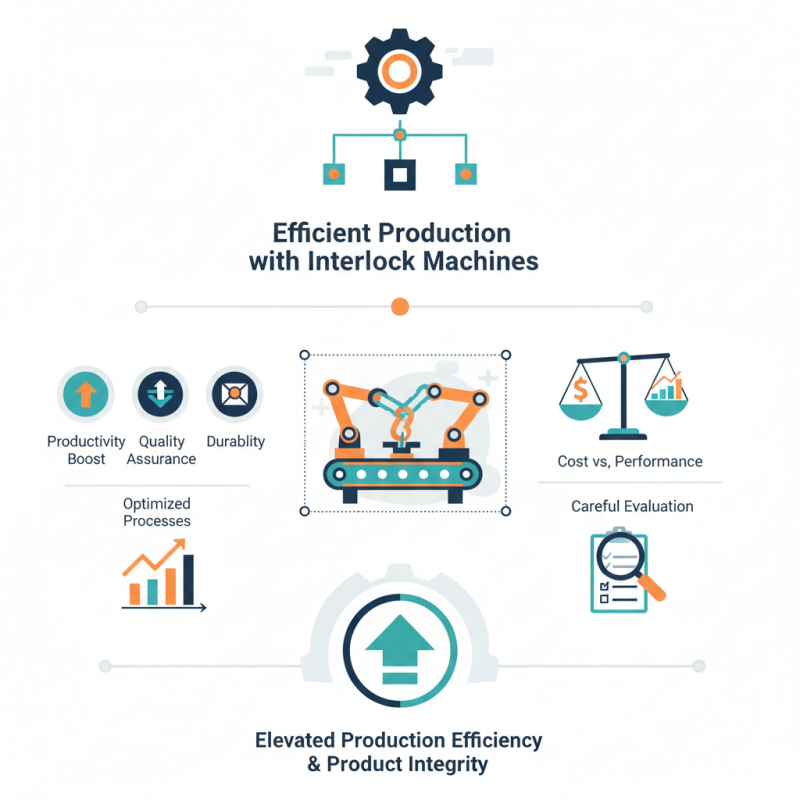
Interlock machines can enhance productivity while ensuring product quality. They facilitate tight connections between materials, offering strength and durability. However, not every interlock machine is suitable for every production line. It’s crucial to understand specific needs before making a choice. This requires careful evaluation of each machine's features.
Choosing the right interlock machine may seem daunting. There is a variety of options available, each with unique capabilities. Companies often face challenges while trying to balance cost and performance. Reflecting on these challenges can lead to better decision-making. Ultimately, the right interlock machine can significantly elevate production efficiency and product integrity.
Best Interlock Machines: An Overview of Industry Standards
Interlock machines are crucial for manufacturers focusing on efficiency and quality. These machines are designed to produce high-quality seams that withstand the rigors of wear. Understanding industry standards helps manufacturers choose the right type of interlock machine for their needs.
Efficiency is often measured by speed and precision. Machines that meet industry standards can produce consistent results with minimal energy consumption. Operators must pay attention to the machine's setup, as incorrect settings can lead to defects. Regular maintenance is also essential to ensure reliability.
In exploring the industry landscape, many machines still fall short in adaptability. Some may not accommodate various fabric types effectively. This limitation prompts operators to reconsider their choices. Awareness of these shortcomings can drive improvements in production processes. Each machine should ideally enhance overall productivity while maintaining high standards.
Key Features of High-Performance Interlock Machines for Production
When selecting high-performance interlock machines, focus on key features that enhance efficiency. A reliable interlock machine should provide consistent stitching quality. Poor stitching can lead to product failure or customer dissatisfaction. Therefore, checking the machine's stitch density and consistency is vital during selection.
Automation features often greatly enhance productivity. Look for machines with automatic thread trimming and fabric feeding systems. These features can significantly reduce downtime and improve workflow. Additionally, ease of operation is crucial. Training new operators should not take too long, as this delays production.
Consider the machine’s durability as well. High-performance interlock machines should withstand heavy use without frequent breakdowns. Robust construction and reliable components contribute to a machine's lifespan. However, even the best machines can have unanticipated issues. Regular maintenance is necessary to ensure optimal performance. It's essential to remain vigilant about wear and tear over time.
Comparative Analysis of Interlock Machine Efficiency Metrics and Outputs
Interlock machines are essential for many production lines. Their efficiency depends on several metrics. These may include speed, power consumption, and maintenance downtime. In comparing machines, one must assess how well they balance these factors. Some machines excel in speed but may consume excessive energy. Others might have lower output yet require less maintenance.
Analyzing output quality is equally vital. High-speed interlock machines can sometimes produce lower-quality results. The risk of defects may increase with higher production rates. Conversely, machines that prioritize quality may slow down the process. It's a delicate trade-off that requires careful consideration. Identifying a balance for each specific production need is crucial.
Moreover, understanding operational costs is essential. Machines that appear economical may incur high energy costs. This realization prompts companies to re-evaluate their selections. Operators must also be trained to optimize machine use. Their skills can significantly impact the overall efficiency of the production process. This highlights the need for ongoing training and assessment. Continuous improvement should always be a goal.
Market Trends: Adoption Rates of Interlock Machines in Manufacturing
The adoption rates of interlock machines in manufacturing have shown significant growth in recent years. According to a recent industry report, approximately 45% of manufacturers have integrated these machines into their production lines. Companies are becoming more aware of the crucial role these machines play in enhancing efficiency. As operational effectiveness becomes a priority, the embrace of interlock machines reflects this industry shift.
A study by the Association for Manufacturing Technology reveals that interlock machines can reduce production time by as much as 30%. This efficiency increase is paired with a noticeable reduction in waste, contributing to more sustainable practices. However, some manufacturers still hesitate to adopt these technologies. Concerns around initial costs and required training remain barriers to widespread implementation. Recognizing these challenges is vital for the industry's future.
Moreover, while the technology offers many benefits, not all interlock machines perform equally. Critical evaluations of performance and reliability are essential. An analysis of user experiences highlights ongoing issues with integration complexities. As manufacturers strive for higher productivity, addressing these nuances will determine the long-term success of interlock machine adoption. Companies need to weigh up the pros and cons carefully before making investments.
Adoption Rates of Interlock Machines in Manufacturing
Case Studies: Interlock Machines Impact on Production Line Efficiency
Interlock machines significantly enhance production line efficiency. In numerous case studies, companies reported improved output and reduced downtime. These machines automate complex stitching processes. This leads to fewer errors and lower labor costs. An efficient interlock setup can double production speed. However, improper training can negate these benefits.
A well-documented case involved a textile manufacturer. They integrated interlock machines into their workflow. Initially, they faced challenges with employee adaptation. Production initially dips before showing significant improvements. Training sessions became crucial for success during this transition. As employees became more skilled, they minimized errors and boosted output levels.
Tips: Regularly assess machine performance. Evaluate employee training efficiency. Small adjustments can yield significant productivity gains. Monitor production metrics closely. Look for patterns that highlight inefficiencies. Continuous refinement is essential. Remember, perfection is a journey, not a destination, despite technological advancements.