Discover the Best High Precision Tape Casting Machines for Global Buyers
High-Precision Tape Casting Machines play a crucial role in manufacturing processes across various industries. According to a recent industry report from MarketsandMarkets, the global market for these machines is expected to grow at a compound annual growth rate (CAGR) of 7.5% by 2025. This growth is driven by an increasing demand for high-quality products in sectors like electronics, automotive, and medical devices.
Expert in the field, Dr. John Hertel, emphasizes the importance of adopting advanced technologies. He stated, "High-Precision Tape Casting Machines are essential for achieving consistency and performance in production." This precision is not only vital for maintaining quality but also for ensuring operational efficiency. As a result, buyers looking for dependable machines must consider factors like accuracy, speed, and ease of maintenance.
However, there are challenges. Many manufacturers struggle with scaling production to meet demand without sacrificing quality. Identifying the best machine can be daunting due to the wide range of available options. Buyers must also reflect on the total cost of ownership, not just the initial purchase price. Balancing quality and cost remains a critical concern for global buyers in this evolving market.
Understanding Precision Tape Casting Machines: An Overview
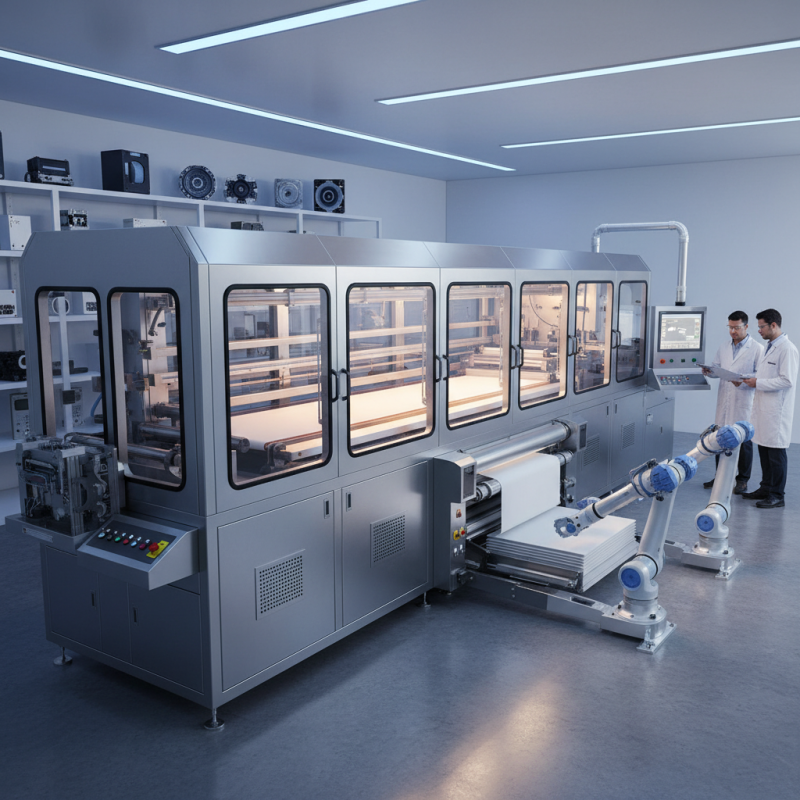
High precision tape casting machines play a crucial role in various manufacturing sectors. These machines create thin films used in electronics, batteries, and medical devices. Their importance cannot be overstated; the global market for tape casting technology is projected to reach over $3 billion by 2026, showcasing its growing relevance.
The key to successful tape casting lies in the machinery's precision. Machines need to maintain accurate thickness control, with tolerances as tight as ±5 micrometers. This level of precision ensures uniformity, essential for applications where consistency affects performance. However, not all machines meet these standards. Inadequate machines can lead to variations, causing costly production errors.
Additionally, operators must understand the intricacies of different materials. Adhesive properties and viscosity can dramatically affect outcomes. Reports indicate that nearly 20% of production issues arise from improper material selection and handling. Continuous training and knowledge updates are vital for maintaining high-quality production standards.
Key Features of High Precision Tape Casting Machines in the Market
High precision tape casting machines play a critical role in various industries. These machines are pivotal for producing thin films used in electronics, batteries, and more. Recent industry reports indicate that the demand for these machines has increased by over 15% in the last year alone. This surge highlights the need for manufacturers to keep up with technological advancements.
Key features of high precision tape casting machines include adjustable film thickness and uniformity. Advanced temperature controls enhance product consistency. According to a report by TechSci Research, machines with a precision tolerance of ±0.1 mm provide better performance in manufacturing processes. These specifications help meet the exacting standards of modern production environments. However, not all machines are created equal. Buyers should carefully assess durability and service records before making a purchase.
Tip: When evaluating machines, consider those with energy-efficient features. These can reduce operational costs significantly.
Another critical aspect is operational ease. User-friendly interfaces can improve workflow efficiency. In a fast-paced manufacturing environment, time savings can lead to increased output. However, some machines may require extensive training, which can create initial downtime. It’s essential to weigh these factors before committing to a specific model. A balance between precision and usability is key for long-term success.
High Precision Tape Casting Machines - Key Features Comparison
Market Trends and Growth Projections for Tape Casting Machines
The tape casting machine market is evolving rapidly. Recent reports indicate a projected growth rate of over 6% annually through 2027. This growth is driven by rising demand for ceramic and lithium-ion battery production. Industries are expanding their focus on precision casting methods for enhanced product quality.
A significant trend in the market is the integration of automation and advanced control systems. These technologies enhance precision and efficiency. Companies are increasingly investing in high-precision machinery to remain competitive. One study highlights that manufacturers adopting automation see a 30% reduction in waste and errors. This shift toward automation challenges traditional methods, pushing manufacturers to adapt quickly.
Despite these advancements, there are persistent issues. Many manufacturers still rely on outdated technology, limiting their capabilities. The complexity of integrating new systems can stall progress. Buyers must consider both current needs and future scalability when investing. It’s crucial to strike a balance between cost and precision in the selection process.
Comparative Analysis of Leading Manufacturers in Tape Casting Technology
In the world of manufacturing, tape casting is pivotal for producing high-precision films. The technology involves the uniform application of slurries onto a substrate. Leading manufacturers are continuously improving their machines to meet the evolving demands of global buyers. Comparing various models involves analyzing their design, functionality, and user feedback.
Innovative machines often feature advanced controls for adjusting thickness and speed. However, some models may still face challenges with consistency. Many users report variations in output quality under different conditions. This inconsistency prompts further investigation and improvement.
Moreover, understanding the specifications of casting machines requires technical know-how. Buyers should consider ease of maintenance, material compatibility, and after-sales support. While some machines boast high output rates, they may sacrifice precision. It’s vital to weigh these factors to make informed decisions.
Continuous dialogue in the industry helps to address these challenges. Ultimately, a machine's value lies not solely in its specifications but how it performs in real-world applications.
Performance Metrics: Evaluating Precision and Efficiency in Tape Casting
Precision in tape casting is crucial for achieving high-quality outcomes. Recent industry reports highlight that the accuracy of thickness in tape casting machines can reach tolerances as tight as ±5 micrometers. This level of precision ensures homogeneous layers, which are essential for various applications, including ceramics and lithium-ion batteries. However, measuring precision isn't straightforward. Variations in raw materials and environmental conditions can impact results, necessitating regular calibration and monitoring.
Efficiency is another key metric in evaluating tape casting machines. According to the latest statistics, the optimal production rate can exceed 50 meters per minute in high-performing machines. Yet, there's a trade-off. Machines that operate at high speeds may sometimes sacrifice precision. This highlights the need for a careful balance between output speed and quality. Users often find that investing in advanced technology yields more reliable results. However, the complexities involved can lead to inconsistent performance under varying conditions. Continuous improvement in production processes is vital to address these challenges.
Discover the Best High Precision Tape Casting Machines for Global Buyers
| Machine Model | Max Casting Width (mm) | Casting Thickness Range (µm) | Production Speed (m/min) | Precision (µm) | Energy Consumption (kWh) |
| Model A | 1200 | 10 - 500 | 15 | 2 | 30 |
| Model B | 1500 | 5 - 400 | 20 | 1.5 | 35 |
| Model C | 1000 | 8 - 300 | 10 | 3 | 28 |
| Model D | 1800 | 10 - 600 | 25 | 1.8 | 32 |