
INDUSTRIES2023-04-26T19:33:38+00:00

Best Silicone Automotive Hose Suppliers in 2026?

Choosing the right Silicone Automotive Hose supplier in 2026 takes more than comparing prices or browsing polished product photos. Under a hood, a hose faces heat, pressure, vibration, and tight bends. A soft section near a turbocharger can feel warm after a short drive; a poorly matched connector may seep coolant long before the hose looks worn. Small details matter.

Automotive materials engineer Dr. Maya Chen captures the selection challenge: “A hose earns trust through tested performance in the vehicle’s real operating conditions.” Treat that as a practical evaluation principle, not a substitute for a supplier’s documented test results. Ask about silicone compound, reinforcement layers, temperature and pressure ratings, dimensional tolerances, and quality controls. Request product data for the exact hose configuration. A broad claim such as “high-temperature” is not enough.

This guide compares suppliers by product range, technical support, customization, manufacturing consistency, and evidence behind their claims. It also considers whether a supplier can explain installation limits and application fit clearly. That conversation can reveal more than a glossy catalog. Still, supplier rankings are never universal. Vehicle design, coolant type, routing, and duty cycle change the requirements. A top-listed company may not suit every project. Use the comparisons as a starting point, then verify specifications against your application before choosing.
Best Silicone Automotive Hose Suppliers in 2026?

What Silicone Automotive Hoses Do and Where They Are Used

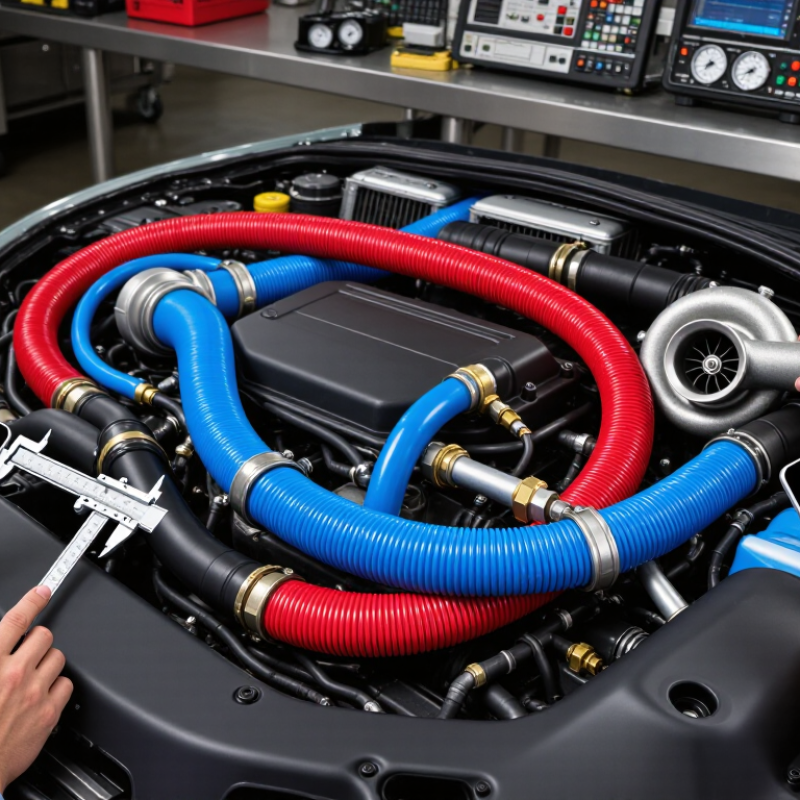
Silicone automotive hoses carry coolant, air, and—in suitable designs—other fluids through a vehicle’s tightly packed engine bay. Common locations include radiator and heater circuits, turbocharger charge-air plumbing, and some electric-vehicle thermal-management loops. Their flexibility helps them fit around brackets and hot components, while reinforcement helps resist pressure and vibration. They flex. They seal. Yet silicone is not automatically suitable for every fluid: standard formulations may perform poorly with oil or fuel.

The need to manage heat is changing with vehicle design. The International Energy Agency’s Global EV Outlook 2024 reports that nearly 14 million electric cars were sold worldwide in 2023, about 18% of total car sales. That figure does not mean every electric car uses silicone hoses, but it highlights the growing range of cooling systems engineers must accommodate. In workshops, a hose’s routing, bend radius, clamp position, and temperature rating matter as much as its material. A small kink can restrict flow; a misplaced clamp can create a slow leak.

Tips: Match the hose to the fluid and operating temperature, then check its pressure rating and inner diameter. Inspect for soft spots, abrasion, or coolant staining. SAE J20 provides performance requirements for many engine-coolant hoses, but always verify that a specific hose meets the application’s needs. Ratings can be easy to overlook.

Best Silicone Automotive Hose Suppliers in 2026? - What Silicone Automotive Hoses Do and Where They Are Used

A practical guide to common automotive silicone-hose applications and the specifications to verify when evaluating a supplier. Suitability depends on the hose design and the vehicle or system requirements.

Application Typical Hose Construction Where It Is Used Key Selection Checks Supplier Information to Request
Cooling system Silicone tube with reinforcing fabric plies; straight, formed, or elbow sections Radiator connections, coolant lines, and other engine-cooling circuits where the vehicle design permits silicone hose Coolant compatibility, temperature and pressure ratings, inner diameter, bend radius, and connection fit Published temperature and pressure limits, dimensional drawings, coolant compatibility details, and inspection requirements
Charge-air and intercooler plumbing Reinforced silicone couplers or formed hoses, often with multiple fabric plies Connections between turbochargers, charge-air coolers, and intake piping Boost pressure, temperature, reinforcement, clamp retention, and resistance to the specific air-path contaminants present Pressure test information, burst-test method, reinforcement details, and guidance on clamp and connection design
Turbocharger-area connections Heat-resistant reinforced silicone hose, where permitted by the system design Selected air-handling connections near hot engine components; not a substitute for a hose specified for oil or fuel service Local heat exposure, pressure, clearance from hot surfaces, and compatibility with any oil mist or other fluid Material and temperature documentation, fluid-compatibility statement, and installation or heat-shielding recommendations
Air intake and induction Flexible silicone couplers or formed intake hose with suitable reinforcement Air-filter, intake-pipe, and throttle-body connections when specified for the application Vacuum resistance where applicable, diameter, shape, wall construction, and secure sealing at connections Dimensional tolerances, vacuum or collapse data if relevant, and available custom shapes or lengths
Cabin heating circuit Reinforced silicone coolant hose Heater-core supply and return lines in vehicles designed to use silicone hose Coolant type, operating pressure and temperature, routing, bend radius, and connector compatibility Coolant compatibility data, size range, dimensional tolerances, and relevant production-quality documentation
Custom or formed hose assemblies Mandrel-formed or molded reinforced silicone hose, designed to a specified route Original-equipment replacement, specialist vehicles, or constrained engine-bay layouts Shape, end geometry, wall thickness, reinforcement, production repeatability, and fit in the installed route Drawing review, sample approval process, traceability options, quality checks, and lead-time information

Important: There is no single temperature or pressure rating that applies to all silicone automotive hoses. Confirm the exact product specification and operating conditions with the supplier. Silicone is generally not suitable for direct fuel or petroleum-oil service unless the specific hose is expressly designed and approved for that fluid.

How to Assess Silicone Hose Suppliers in 2026

Assessing a silicone hose supplier in 2026 takes more than comparing prices or catalog temperature ranges. Start with the operating conditions: coolant type, pressure, vibration, routing, and exposure to oil or ozone. Ask for written material specifications and test data that match your intended use. A hose rated for high heat may still fail if its reinforcement or bend radius is unsuitable.

Request samples and measure wall thickness, inside diameter, and fitting fit with basic inspection tools. Check whether the supplier can explain its cure process, reinforcement construction, and batch-traceability system. Ask how it verifies pressure performance and aging resistance, and whether reports are available for the exact product, not merely a similar design. Ask for proof.

Communication is part of quality. Send a drawing and operating profile, then note whether the supplier flags unclear tolerances or risks instead of promising everything will work. Discuss minimum order quantities, lead times, change notifications, and how defects are handled. That matters. A polished datasheet cannot replace application-specific checks, and one sample cannot reveal every production variation. Keep that uncertainty in view. Supplier selection is not a one-time box to tick; revisit performance after installation and record any swelling, cracking, or clamp movement.

Which Supplier Capabilities Matter for Automotive Applications

For automotive applications, a silicone hose supplier should prove repeatable performance, not just quote a wide temperature range. Ask for compound and reinforcement details, dimensional tolerances, batch traceability, and test results under the actual coolant, pressure, and temperature conditions. SAE J20 provides a useful reference for coolant-hose requirements, but confirm that the selected hose and test plan fit your application. A neat datasheet is not enough.

Production capability matters, too. OICA reported about 92.5 million motor vehicles produced worldwide in 2024, underscoring the scale and consistency expected across supply chains. The IEA reported that electric-car sales exceeded 17 million that year, changing thermal-management needs across vehicle platforms. Suppliers should explain how they control wall thickness, cure, and bend geometry across production runs, then provide samples for validation. Small variations can complicate assembly.

Request evidence from thermal cycling, pressure, coolant-compatibility, and clamp-retention tests, with acceptance limits clearly stated. Check whether the supplier can support design changes and maintain records for each production lot. Silicone is not automatically suitable for every fluid or location; petroleum-based fluids, for example, require careful compatibility review.

I would still challenge a strong headline specification: performance in a lab is not the same as durability under vibration, heat, and real assembly conditions.

How Supplier Products, Standards, and Customization Compare

Best Silicone Automotive Hose Suppliers in 2026?
How Supplier Products, Standards, and Customization Compare

Comparing suppliers starts with the hose’s actual job. Silicone hoses commonly serve coolant, turbocharger, and intake systems, but standard silicone is not automatically suitable for fuel or oil. Ask for the product’s temperature range, working pressure, reinforcement details, and fluid-compatibility data. Small details matter: a tight bend near a radiator can kink a hose that looks perfect on a flat sample. Reliable suppliers provide traceable specifications and test reports tied to the exact hose construction. Check which standard applies to your application; SAE J20, for example, covers certain coolant hoses, not every automotive hose. Paperwork alone is not proof of performance.

Tips: Send a drawing with inside diameter, bend angles, wall thickness, and connection points. Request a sample, then check fit and clamp seating on the actual assembly. Confirm how changes are controlled.

Customization is useful when stock shapes cannot clear nearby parts. Suppliers may offer molded bends, multiple plies, wire reinforcement, and custom lengths. Compare minimum order quantities, tooling charges, sample lead times, and production tolerances before approving a design. Ask how the hose performs after heat cycling and pressure testing, not just at room temperature. A neat-looking prototype can still rub against a bracket after installation; this is easy to miss. One honest limitation: supplier data may not reproduce your engine bay’s vibration or heat exposure. Validate the finished assembly under realistic conditions, and keep the approved drawing and material specification on file.

How to Choose and Verify a Supplier for Your Project

Best Silicone Automotive Hose Suppliers in 2026?

A capable supplier should explain how its hose fits your operating conditions, not just provide a catalog. Share the coolant or oil type, temperature range, working pressure, and routing constraints. Details matter. Ask for the hose’s inner diameter, wall thickness, reinforcement construction, and bend-radius guidance. A polished product sheet is useful, but it cannot replace evidence.

Request material specifications, batch traceability, and test reports relevant to your application. Check whether the stated temperature and pressure limits apply continuously or only briefly. Ask how the supplier evaluates aging, pressure cycling, and fluid compatibility. If possible, inspect a sample for even wall thickness, clean cuts, and secure reinforcement. Then test it in a representative assembly. A tight bend near a clamp can reveal problems that a straight sample hides.

Treat quality claims as items to verify. Compare documents with the actual sample, and ask how production batches are checked. An independent laboratory may help confirm important performance claims. Even a good sample is only one snapshot; it does not prove every future batch will match. That uncertainty deserves a direct conversation. Clear answers, consistent records, and willingness to discuss limitations are stronger signs than confident sales language.

Best Silicone Automotive Hose Suppliers in 2026? How to Choose and Verify a Supplier

Use these buyer-defined weights as a starting point when comparing suppliers. Verify material traceability, quality controls, and test reports against your application requirements and applicable specifications. The percentages are an illustrative evaluation framework, not measured supplier performance or market research.

Go to Top