Top 10 Benefits of Using Rapid Rate Thermal Cycle Chamber?
In today's fast-paced technological landscape, the rapid-rate thermal cycle chamber has become an essential tool in various industries. Dr. Emily Chen, an expert in thermal testing solutions, emphasizes its importance: “The rapid-rate thermal cycle chamber allows for quicker product validation, ensuring reliability and performance.” This technology excels at simulating extreme temperature fluctuations, which can significantly impact material and product durability.
Moreover, the benefits of using a rapid-rate thermal cycle chamber extend beyond mere speed. It enhances accuracy in testing and accelerates the research and development process. Manufacturers can spot design flaws early in the lifecycle, saving both time and resources. However, not all facilities invest in such advanced equipment, often leading to inconsistent testing results. This gap indicates a need for companies to reassess their thermal testing capabilities.
Despite its various advantages, some may overlook the rapid-rate thermal cycle chamber's operational costs and maintenance needs. Misconceptions about these factors can deter potential users. Understanding the full spectrum of its benefits requires an open mind and a willingness to innovate. Embracing this technology can lead to significant advancements in product testing and quality assurance.
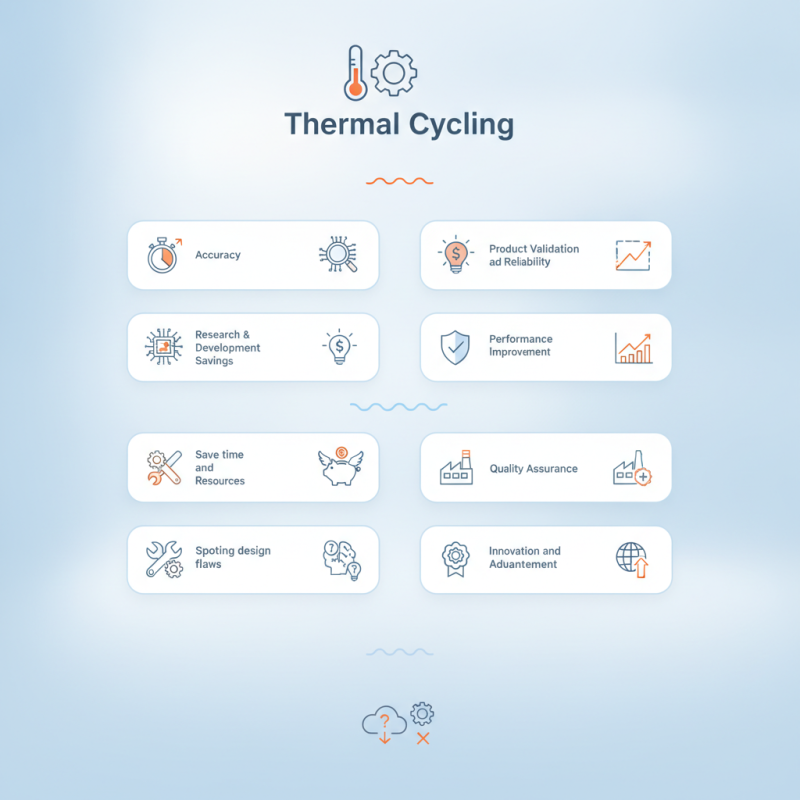
Benefits of Enhanced Temperature Control in Rapid Rate Thermal Cycling
Enhanced temperature control is crucial in many applications, particularly in material testing, electronics, and pharmaceuticals. A rapid rate thermal cycle chamber allows for precise temperature regulation. This accuracy leads to more reliable results. It tests materials under extreme conditions, simulating real-world environments. The ability to rapidly alternate between hot and cold enhances thermal shock testing.
Using such a chamber can reveal how materials respond to stress. It helps engineers identify potential failures. While these chambers provide numerous benefits, some issues might arise. For example, maintaining precise temperature levels can be challenging. Calibrating and monitoring the equipment is essential to ensure consistent performance. Moreover, understanding the limitations of thermal cycling is important for accurate interpretation of results.
The detailed data gathered from these tests fosters innovation. Researchers and manufacturers can optimize designs based on empirical evidence. However, there’s room for improvement in data analytics and interpretation. As technology evolves, better models and simulations can enhance understanding. Recognizing the gaps in current practices enables continuous growth in this critical field.
Increased Efficiency in Testing Procedures with Rapid Rate Thermal Chambers
Rapid Rate Thermal Cycle Chambers significantly enhance testing efficiency. These chambers achieve fast temperature changes. They provide precise control over thermal cycles, minimizing waiting time. This rapid response allows for quicker experiment iterations, crucial in product development. Researchers can obtain results faster, driving innovation.
Tips for effective usage include regularly calibrating your chamber. This ensures accuracy in temperature control. Additionally, avoid overloading the chamber. An overloaded unit can lead to uneven heat distribution. It may optimize results but require more time, defeating efficiency.
Realistic testing conditions are vital. Simulations must mimic real-world environments. Inadequate setups can yield unreliable data. Reflecting on your methodology will improve future experiments. Embrace the learning curve as you adapt to the rapid cycle capabilities. This approach strengthens your testing framework, fostering more reliable outcomes.
Reduction in Testing Time for Products Using Rapid Rate Thermal Cyclers
Rapid Rate Thermal Cycle Chambers have transformed product testing. These advanced systems significantly reduce the time required for thermal testing. Traditional methods often take days or weeks, but rapid rate thermal cyclers can streamline this to mere hours. This efficiency allows companies to fast-track their development cycles, bringing products to market much sooner.
With the pressure to innovate continually, every second counts. This technology creates a more efficient workflow, allowing engineers to focus on analysis and design improvements. It can simulate harsh environmental conditions, helping to identify potential failures quickly. However, one must ensure proper calibration of the chamber to maintain reliable results. Inaccurate settings may lead to flawed data, causing setbacks.
**Tips:** To maximize efficiency, regularly inspect the thermal cycler. Clean filters and calibrate sensors. Document all testing protocols for consistency. Collaboration among team members during testing phases can also enhance understanding and improve outcomes. Pay close attention to temperature transitions, as rapid shifts can reveal vulnerabilities in products. These small details can ultimately guide better design choices.
Top 10 Benefits of Using Rapid Rate Thermal Cycle Chamber
This bar chart represents the top 10 benefits of using Rapid Rate Thermal Cycle Chambers, illustrating how they contribute to testing speed, product reliability, and overall cost efficiency in the product development cycle.
Improved Reliability of Test Results through Consistent Conditions
Thermal cycling tests are critical for evaluating product reliability. A Rapid Rate Thermal Cycle Chamber offers consistent testing conditions, crucial for obtaining reliable results. Variability in temperature can lead to changes in material properties. Reports suggest that inconsistent thermal conditions can cause a 30% increase in test failures.
Consistency in environmental testing reduces uncertainty. A significant benefit of rapid thermal cycling is its ability to maintain uniform temperatures across samples. This uniformity ensures that all tested materials face the same conditions. Without it, tests can reflect artifacts of testing methods rather than actual material performance. A study indicated that 25% of product failures could be traced back to fluctuating test environments.
However, rapid cycling may also present challenges. Not all materials respond well to fast temperature changes. Some may experience stress that doesn't represent real-world conditions. Companies need to assess the suitability of tests for specific materials. Transparency in testing methodologies fosters trust. As more data accumulates, it’s essential to rethink whether current practices are adequate for tomorrow’s innovations.
Top 10 Benefits of Using Rapid Rate Thermal Cycle Chamber
| Benefit | Description | Impact on Reliability |
| Enhanced Temperature Control | Precise temperature management reduces variability in test conditions. | Increased consistency in results. |
| Faster Cycle Times | Rapid transitions between temperature extremes shorten testing durations. | Higher throughput and faster feedback. |
| Improved Data Accuracy | Minimized fluctuations lead to more reliable data retrieval. | Better decision-making based on data. |
| Versatility of Testing | Supports various materials and components for testing. | Wider application scope in reliability testing. |
| Reduced Risk of Equipment Failure | Consistent conditions lower the likelihood of unexpected failures. | Enhanced product longevity. |
| Regulatory Compliance | Facilitates adherence to industry standards and protocols. | Minimized legal and financial risks. |
| Automation Capabilities | Integrates with automated systems for efficient operation. | Reduced human error in testing. |
| Real-time Monitoring | Continuous data acquisition during tests for immediate analysis. | Timely interventions and adjustments. |
| Cost-effectiveness | Efficient use of time and resources lowers overall testing costs. | Better ROI on testing processes. |
| Enhanced User Experience | User-friendly interfaces and controls streamline operations. | Increased operator efficiency and satisfaction. |
Cost-Effectiveness of Rapid Rate Thermal Cycling in Long-Term Testing Projects
Rapid rate thermal cycling is gaining traction in long-term testing projects due to its cost-effectiveness. Studies show that this method can reduce testing time by up to 50%. As a result, companies can save significant resources while still obtaining reliable data. The ability to expose products to extreme temperature variations quickly simulates years of environmental stress. This leads to faster decision-making and product refinement.
The initial setup cost may seem high. However, when spread over multiple projects, the return on investment becomes clear. For instance, a 2022 industry report indicated that organizations utilizing rapid thermal cycling observed a 30% decrease in overall testing expenses over time. This efficiency allows teams to push innovation without compromising budgetary constraints.
Tip: Invest in proper training for your team to maximize the benefits of thermal cycling technology. Understanding the equipment is crucial for reliability.
Even with its advantages, not all results are perfect. Some products may not respond predictably under rapid thermal changes, leading to unexpected failures. Continuous assessment and adaptation of testing protocols may be required.
Tip: Regularly review test results and methodologies. This will help in identifying areas for improvement and ensuring the reliability of findings.